
One of my superpowers, I think, is my authenticity. I tend to go to deeper levels almost immediately, even in casual conversations. I don’t care if it’s someone I’ve known for years, someone I just met, or the guy pumping my gas. I’ll reveal things about myself that most people probably wouldn’t. I am extremely transparent.
I don’t have time for superficial conversations, and I’ve benefited from some amazing conversations in the most unusual places. The Uber driver or gas station attendant whose grandmother lived in the same tiny town in Armenia as mine. It’s amazing what you learn when you actually speak to people.
I was talking recently with someone I absolutely love. I think he’s fucking brilliant. He has this incredible range of knowledge, and I sometimes just sit there listening to him in awe, whether he’s talking about AI, Kabbalah, Christianity, King Solomon or David. He’s going to write a book, and I think it’s going to be phenomenal. But while we were talking, I realized something.
Here is this incredibly intelligent and capable person, and yet I could see something holding him back — perhaps from the 10 books he should have written already, all of which I would have happily bought and enjoyed. And I’ve seen the same thing in a number of my friends. I see their greatness, but sometimes the way they allow themselves to be treated, the relationships they stay in, or the things they are obviously capable of achieving don’t match the person I see standing in front of me.
And I think part of the reason is that many of us are still afraid of being hurt the way we could be hurt as children. If you’re three or four years old and a parent is hurting you, rejecting you, humiliating you or withholding love, you really don’t have any options. You can’t leave. You can’t support yourself. You can’t decide this isn’t a healthy relationship and move on. You’re completely dependent on the very people who have the power to hurt you.
But you’re not three or four anymore. As an adult, you have something that child didn’t have: choices. Someone you’re dating treats you badly? You don’t have to see them again. Someone repeatedly disrespects you? You can erase their number. Someone doesn’t recognize your value? That’s their loss. Someone doesn’t like you? You’ll survive it.
Obviously, I’m not talking about physical violence, abusive relationships, financial dependence or situations where someone’s safety is genuinely at risk. Those are completely different circumstances, and I’m certainly not qualified to reduce something that complicated to “just leave.” I’m talking about something much more ordinary: the fear of rejection, disapproval and abandonment. The fear that if you stand up for yourself, someone might leave. The fear that if you say what you really think, somebody won’t like you anymore.
Here’s the problem: knowing all of this intellectually may not be enough. You can be a highly intelligent, successful adult and consciously know that you’re no longer that helpless child, while your subconscious is still running an old program written decades ago. And you may not even know it’s happening.
Before you’ve had time to logically think something through, that old voice may already be telling you: Don’t do this. Don’t trust this person. Don’t take that chance. Don’t say what you really feel. Don’t risk being rejected again. And that’s where this gets difficult, because you can’t change something you don’t realize is controlling you.
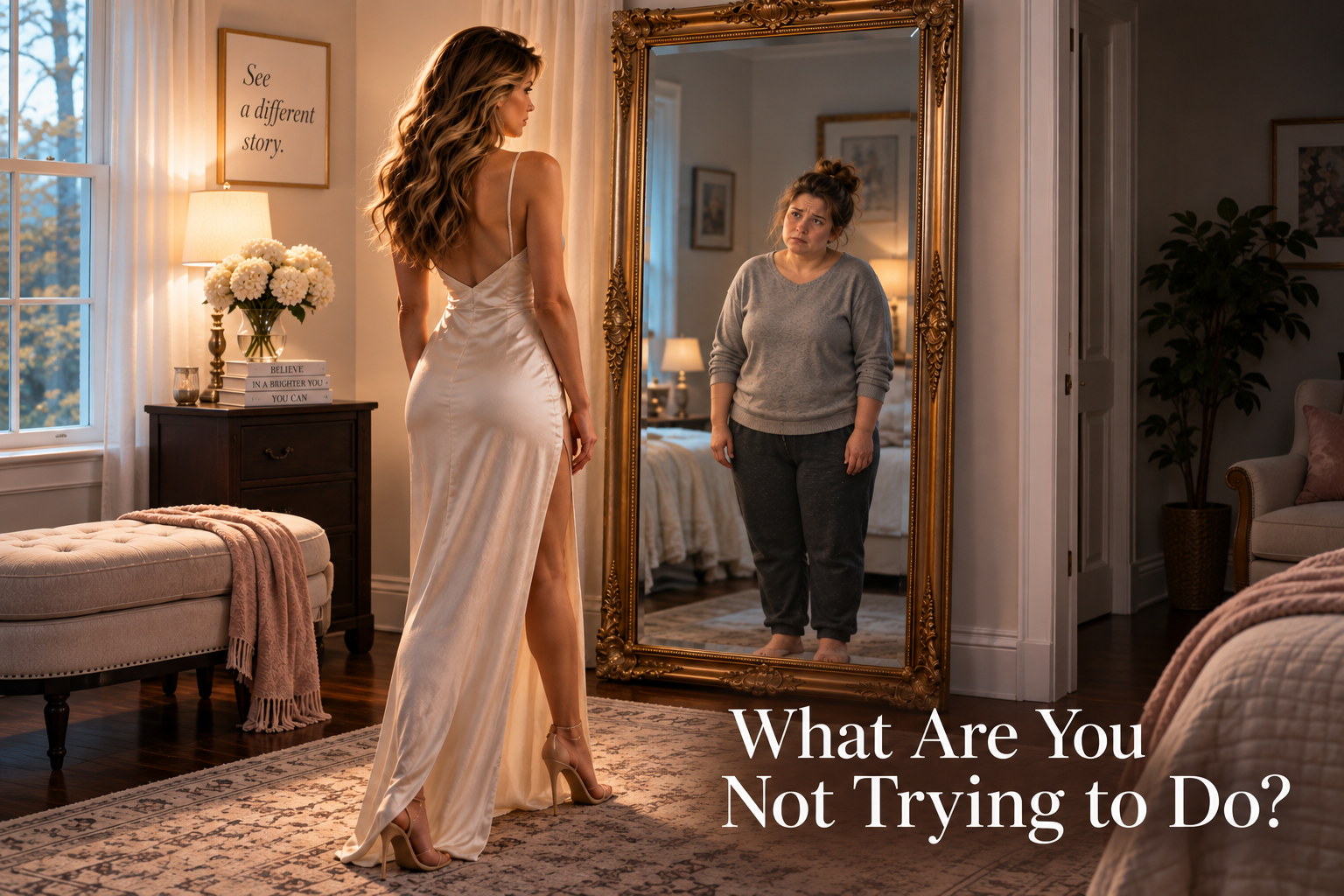
Maybe the person standing in your way isn’t your partner, your parents, your boss or the person who rejected you. Maybe nobody is standing in your way. Maybe it’s an old subconscious belief, created when you were four years old to protect you, still trying to protect you at 40, 50 or 70. Except you don’t need that protection anymore.
How you change that is going to be different for everybody. It might be counseling. It might be something like the Sedona Method and learning to let go of the fear. It might simply begin with becoming conscious of the pattern and catching yourself when that old programming takes over. I’m not going to pretend there’s one technique that works for everyone.
But I do think the first step is recognizing the distinction: what protected you as a child may be imprisoning you as an adult. People can still disappoint you. They can reject you and hurt your feelings. But you’re no longer helpless. You have choices now, and perhaps the work is getting that message past your conscious mind and into the part of you that still doesn’t believe it.
Because that invisible fear may be blocking you from the success you deserve, the life you want and, maybe most importantly, the love you want. And by the way, I’m not writing this from the mountaintop. I wasn’t beaten as a child, but I didn’t get much love either. So at 73, I’m working on love this week.
But that’s a whole other story. My family survived the Armenian genocide, and perhaps stoicism, toughness and keeping your emotions buried were necessary to help them survive. But those same things can become the emotional inheritance of the next generation. Words like “I love you” simply weren’t part of the language in my family.
And here’s the funny thing: I’m actually learning about myself as I write this, which might be something worth trying yourself. It’s sometimes called “writing to release.” You start writing about something you think you understand, and somewhere along the way, you discover something you didn’t know was there.


Leave a Reply