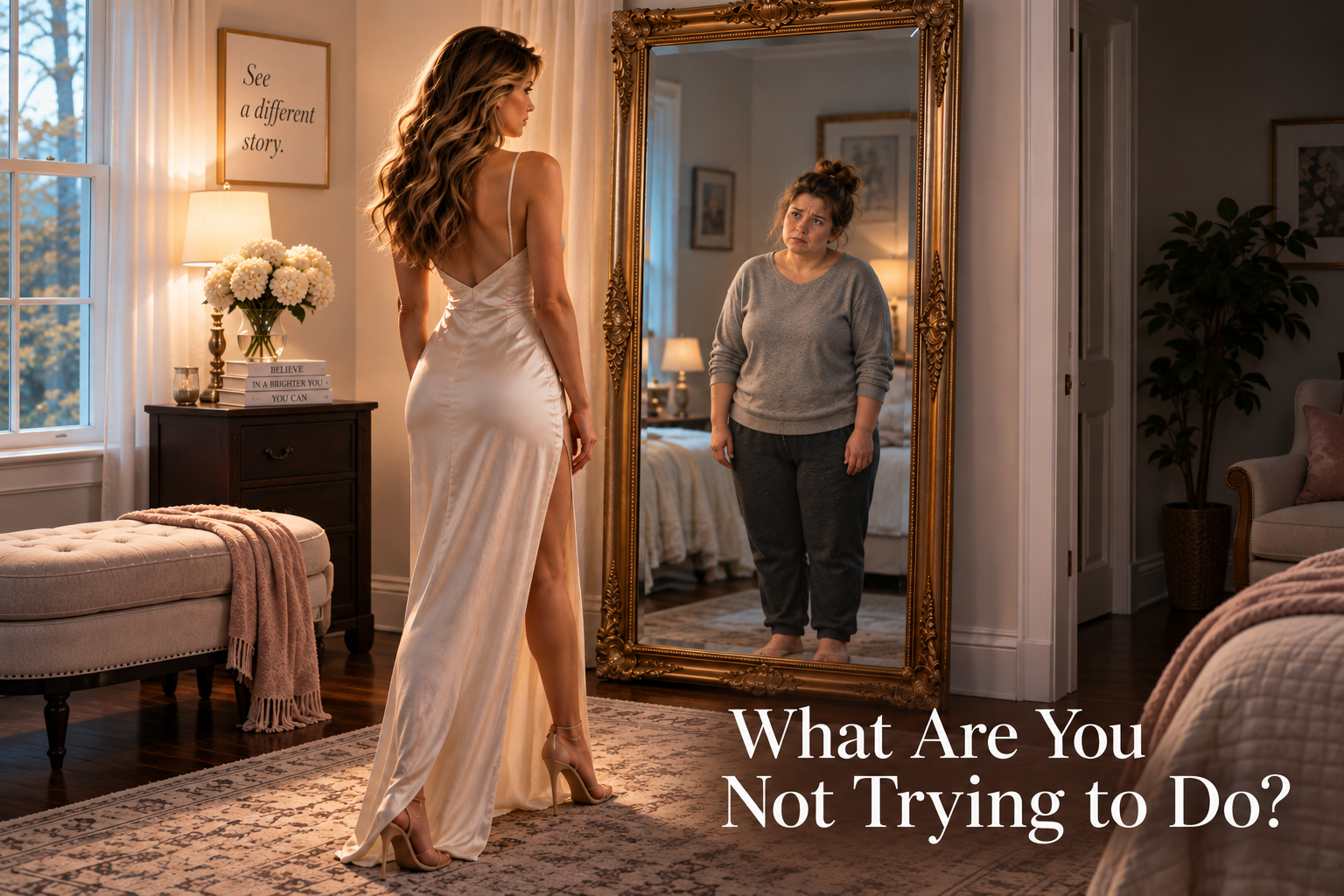
We hear a lot about impostor syndrome. People become successful—sometimes extraordinarily successful—and yet somehow still feel like they don’t deserve it. They think they aren’t really good enough, that they somehow fooled everyone, and that eventually someone is going to figure it out.
But what about the opposite of impostor syndrome? Most people I know are exceptionally good at something they aren’t pursuing. They have a talent, an ability, or even a dream that they may be completely capable of turning into something extraordinary, but they never really try. What about all the people who never become successful at something they might have been extraordinarily good at because they never believed they were good enough to try?
I actually Googled it. I couldn’t find a name that really captures it. There are psychological terms that come close—low self-esteem, low self-efficacy, learned helplessness, fear of failure—but none of them quite describes what I’m talking about. I’m talking about the person who is completely capable of doing something but has spent a lifetime believing they aren’t.
Maybe your parents didn’t encourage you. Maybe nobody told you that you were smart or beautiful. Maybe nobody told you they loved you enough. Maybe nobody looked you in the eye and said, “You can do anything you set your mind to.” After enough years of not hearing those words, you stop needing someone else to tell you that you aren’t good enough. You start telling it to yourself.
In some ways, that may be more destructive than impostor syndrome. The person with impostor syndrome has at least gotten into the room. They took the chance. They started the company, wrote the book, applied for the job, asked the person out, or stood on the stage. They may be terrified that they don’t belong there, but at least they’re there. The person I’m talking about never walked through the door.
What If the Story You Were Given Was Wrong?
I was talking to a friend today and afterward sent her a text telling her to take some baby steps toward her dreams and reprogram herself. I told her to pretend that her parents had told her every day how beautiful she was, how much they loved her, and that she could do anything she set her mind to.
Years ago, I remember Tony Robbins describing an exercise in which you get into a deeply relaxed state and revisit memories, replacing or reframing the negative emotional associations with positive ones. It made me wonder whether, instead of spending a lifetime analyzing everything we didn’t get, we could consciously begin giving some of it to ourselves.
Imagine for a moment that your parents really did tell you every day that they loved you, believed in you, and thought you could accomplish anything you set your mind to. Obviously, imagining that doesn’t change what happened, but it has been said that the brain can respond to a deeply vivid imagined experience in many of the same ways it responds to a real one. We also know that memories aren’t fixed recordings; they can change each time we recall them. So perhaps we can begin to change the story we’ve been carrying forward from what happened.
We aren’t children anymore. At some point, we get to decide whether the voices we inherited are going to remain the voices in our heads for the rest of our lives.
What Are You Not Trying to Do?
I’ve written before about asking yourself, “What did you fail at today?” I’m becoming a big believer in failure because failure means you tried. But perhaps there is an even more important question: What haven’t you attempted because somewhere along the way you decided you weren’t smart enough, talented enough, attractive enough, young enough, educated enough, or simply good enough?
Think about what you would try if you had grown up hearing every single day that you were loved, that someone believed in you, and that you could accomplish anything you truly set your mind to. Whatever answer comes into your head may be worth paying attention to.
Maybe you don’t have to believe you’re capable of accomplishing it yet. Maybe you just have to believe you’re capable of taking the first step.




Leave a Reply