
In Your Life or on Your Phone?

I don’t see anyone in their life these days. I challenge you to walk one block, whether you’re in the suburbs or the city. I’d bet that 90% of the people you pass are looking at a device, risking getting run over by a car, or they’re talking to someone on their device. Parents have to fight with their kids to get off their phones, even at mealtime. It’s actually rare to hear a parent say that devices are not allowed at the dinner table. That is crazy.

The whole “Be here now” concept no longer exists. Sure, you might be one of those who doesn’t allow devices at the dinner table—woo hoo! But what about the other 23 hours of the day when your kids or even your partner are glued to their devices?

I don’t know where this is going. I hope we don’t all get brain cancer. Cell phones have only been commercially available for around 40 years, compared to the millions of years humans have been on this planet. But even worse is that no one is present in their life anymore. The most important interaction in life is completely missing. How can you possibly listen to another human being while you’re looking at your device?

How often have you seen the person you are with distracted by a beep, buzz, or ding on their phone? How important does that make you feel? In fact, we all make allowances for that. “Sure, if you get an important call, no problem—just drop me, we are friends?” That’s a weird statement, but I make it all the time. So I guess that makes our device the most important person in our life, doesn’t it?

We all need to spend a lot more time trying to be present in our lives and turn our devices off. Or at least spend a lot less time on them. Being present is not just a quaint idea—it’s essential for meaningful connections and a fulfilling life. Let’s challenge ourselves to put down the phone and truly engage with the world and the people around us.
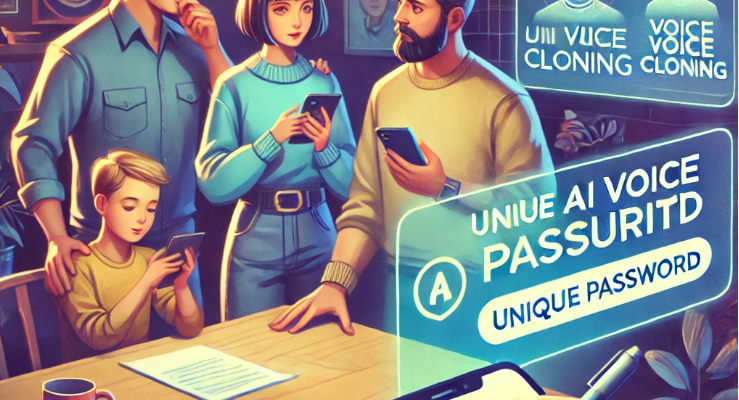
Free Advice to Not Get Robbed by AI: This Could Save You a Fortune

In the age of advanced artificial intelligence, we face new and unprecedented risks. One of the most alarming is AI’s ability to clone voices. Imagine receiving a frantic call from your child’s voice claiming they are stranded, broken down, or arrested and urgently need $5,000 or $10,000. It sounds exactly like them, and they can answer personal questions convincingly. What do you do?

The Solution: A Family Password

To protect yourself and your loved ones from this sophisticated scam, establish a family password. Here’s how it works:

  1. Create a Unique Password: Choose a phrase that only your family knows. It can be something quirky or memorable, like “mommy wears army boots.”
  2. Communicate the Password: Make sure every member of your family knows and remembers the password. This includes kids, parents, and grandparents.
  3. Practice Using It: Regularly remind your family to use the password in any emergency situation where verification is needed.

When you receive a call from someone claiming to be a loved one in distress, simply ask for the family password. If they can’t provide it, you’ll know it’s a scam.

The Growing Threat

AI voice cloning technology is rapidly improving. Scammers can now create a convincing clone of your voice with just a few samples. They can use this cloned voice to impersonate you or your loved ones, potentially leading to significant financial losses.

Real-Life Example

Let me demonstrate. Here is a $5 version of my voice created by an AI tool called Eleven Labs compared to my real voice. The resemblance is uncanny, and it’s easy to see how someone could be fooled. This is why having a family password is crucial.

The Ease of Fraud

With AI, fraud has never been easier. Scammers can gather vast amounts of personal information from your online profiles and photos. They can scrape contact details of financial advisors from major firms in seconds and use LinkedIn to compile pages of personal data. Combining this information with AI voice cloning, they can orchestrate highly convincing scams.

Take Action Now

Don’t wait until it’s too late. Take five minutes today to set up a family password. Share this advice with your family and friends to help them protect themselves from AI-driven fraud.

My Experiment

To show how easy and quick this is, I used AI to send a voice message to my sisters, brother-in-law, and niece suggesting we establish a family password. It only took a few minutes and provides an additional layer of security for our family.

Conclusion

We are on the brink of an unimaginable flood of fraud facilitated by AI. The billions lost to scams today will pale in comparison to what’s coming. By implementing simple measures like a family password, you can safeguard your loved ones against these sophisticated threats.

So, go make a family password now. It’s a small step that can save you a fortune and provide peace of mind in this rapidly evolving digital landscape.