Shit for Brains: The Most Common Path to Success

Yes, original thinking leads to amazing things like the lightbulb, Tesla, and other great inventions. But you might argue that even Apple started as a mismatch of the Sony Walkman and Blackberry. The more common route to success I’ve witnessed requires suspending all critical thinking and blindly following a formula. It’s not glamorous, but it works. Let’s dive into why “shit for brains” might just be the most reliable path to success.

The Common Path: Shit for Brains

Franchises: The Recipe for Wealth

Take franchises, for example. They’re a goldmine if you follow the rules. McDonald’s even has a university to ensure franchisees do everything by the book. Divergent thinking? Not allowed. Stick to the formula, and you’re set for life.

Multilevel Marketing (MLM) Companies

Then there’s Amway and other MLMs. People have made untold fortunes by following the company’s script without applying any of their own critical thinking. Just do what they tell you, and you could end up wealthy.

Real Estate and Courses

Consider your friend who took a course on flipping houses or accumulating real estate. They didn’t think; they just followed the steps. If their timing was right, and they hit a boom period in real estate, they’re probably sitting on millions now.

Anecdotal Evidence: The Mainframe Distributor

I’ll never forget my childhood friend who got a distributorship for large mainframe computers in the seventies. He didn’t dot every I or cross every T, and some of his computers ended up in Russia. He had to clear up his troubles in DC later, but he’s obscenely rich now. Not thinking and just plowing ahead worked out for him.

The Middle Path: Challenges and Realities

Most of us fall somewhere in the middle, balancing between blind conformity and radical originality. This middle path is tricky. It requires you to follow some guidelines while thinking outside the box just enough to make improvements or find unique solutions.

The Road Not Travelled: The Thrill of Divergence

Then there’s the road not travelled, filled with excitement and unknowns. For some of us, like me, this path is where we find our joy. It’s not always the way to immense wealth, but it’s rich with personal fulfillment and adventure.

Embracing Originality

Those of us who love the road not travelled have what I call a mismatching brain. We crave exploration and innovation, even if others don’t always understand us. It’s a lonelier path, but incredibly rewarding when our ideas catch on.

Personal Happiness: The Traditional Route

I’m sure some of you have friends who followed the traditional marriage route. They married through arranged marriages or chose partners within their community, religion, or culture. Many of them went on to have extremely happy, successful lives surrounded by like-minded people. This route, too, can lead to personal happiness and fulfillment, reinforcing the idea that following a well-known path without questioning can lead to a happy and successful life.

Conclusion: Two Paths to Success

In summary, both paths—the shit for brains route and the road not travelled—are valid routes to success. The former is reliable and often leads to wealth and happiness by following proven formulas. The latter is for those who seek excitement and fulfillment through originality.

For those of us who thrive on the unconventional, the road not travelled offers a richness of experience that conventional paths lack. It may not always lead to immense wealth, but it brings joy and discovery.

A Proposal for Reflection

So here’s my proposal: either follow the well-known path without question or embrace original thinking to become a one-in-a-billion innovator. Reflect on where you stand and choose the journey that fits your personality and aspirations. For me, the road not travelled is where I find my excitement and joy, and I wouldn’t have it any other way.


Next time, let’s delve deeper into the joy and challenges of the road not travelled. For those of us who love adventure and the unknown, it’s a journey worth every step.

The Power of Original Thinking: Embracing Mismatching for Innovation

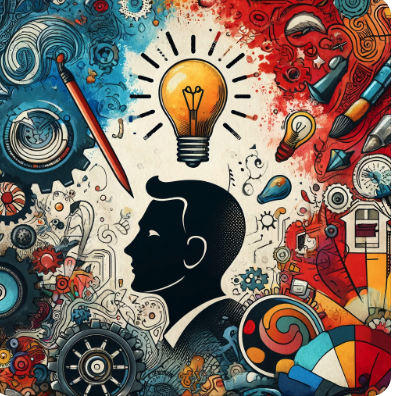
Original thinking often refers to the ability to generate new ideas, concepts, or perspectives that are not simply a rehash of existing thoughts or conventions. But what qualifies as original thinking, and how can we cultivate it to foster truly great ideas or innovations? One essential aspect is what is commonly called “mismatching.” This involves deliberately diverging from conventional patterns or norms, which can lead to groundbreaking discoveries and creative breakthroughs. Let’s explore what makes thinking original and why mismatching is crucial for innovation.

Qualities of Original Thinking

Novelty

  • Uniqueness: The idea or concept should be new and not something that has been widely discussed or implemented before.
  • Innovation: Bringing a fresh perspective or approach to solving a problem or viewing a situation.

Creativity

  • Imagination: Utilizing one’s imagination to create something different from the standard or expected.
  • Divergent Thinking: The ability to think in varied and unique directions, rather than following a linear path of thought.

Critical Thinking

  • Analysis: Deeply analyzing existing ideas and concepts to find gaps, inconsistencies, or areas for improvement.
  • Synthesis: Combining different ideas, perspectives, or pieces of information in new ways to generate unique conclusions or solutions.

Perspective

  • Personal Insight: Drawing from personal experiences, observations, and reflections to create ideas that reflect one’s unique viewpoint.
  • Challenging Norms: Questioning established norms and conventions to explore alternative possibilities.

Practicality

  • Application: Developing ideas that not only are new but can also be applied in practical ways to bring about change or improvement.
  • Feasibility: Considering the feasibility and potential impact of the new idea in real-world scenarios.

Mismatching: Essential for Original Thinking

Breaking Conventional Patterns

  • Questioning Assumptions: Mismatching involves questioning widely accepted assumptions and exploring alternatives that may not be immediately obvious.
  • Non-Conformity: Choosing to think or act differently from the majority can lead to unique perspectives and solutions.

Encouraging Diverse Perspectives

  • Interdisciplinary Thinking: Drawing from various fields of knowledge to create hybrid ideas that transcend traditional boundaries.
  • Cultural and Contextual Differences: Embracing diverse cultural perspectives and contextual factors to enrich the creative process.

Stimulating Innovation

  • Disruptive Thinking: Introducing ideas that challenge the status quo and have the potential to create significant change.
  • Creative Problem-Solving: Using mismatching to approach problems from unconventional angles, leading to innovative solutions.

Fostering Resilience and Adaptability

  • Embracing Failure: Understanding that not all mismatched ideas will succeed, but each attempt contributes to learning and improvement.
  • Adaptability: Being open to change and willing to pivot when new information or perspectives arise.

Enhancing Cognitive Flexibility

  • Mental Agility: Practicing mismatching helps develop the ability to switch between different modes of thinking, enhancing overall cognitive flexibility.
  • Reducing Cognitive Bias: Challenging one’s own cognitive biases by considering and integrating opposing viewpoints.

Examples of Mismatching Leading to Innovation

  • Scientific Breakthroughs: Many scientific discoveries, such as Einstein’s theory of relativity, came from questioning established norms and thinking differently about space and time.
  • Artistic Movements: Art movements like Cubism and Surrealism emerged from artists deliberately diverging from traditional artistic techniques and perspectives.
  • Technological Innovations: Companies like Apple and Tesla have succeeded by challenging conventional industry standards and creating products that redefine their markets.
  • Business Models: The sharing economy, exemplified by companies like Airbnb and Uber, mismatched traditional business models by leveraging technology to create new ways of accessing goods and services.

Conclusion

Original thinking is the lifeblood of innovation. By embracing mismatching, we challenge the status quo, encourage diverse perspectives, and stimulate groundbreaking ideas. Whether in science, art, technology, or business, the willingness to diverge from conventional patterns and explore uncharted territories can lead to profound and impactful innovations. So, let’s cultivate our creativity, question norms, and embrace the power of mismatching to drive the future of original thinking.


By fostering an environment where mismatching is encouraged, we can unlock new levels of creativity and innovation. Whether you’re an entrepreneur, a scientist, an artist, or just someone looking to think differently, remember that the path to original thinking often lies in the willingness to break away from the norm and explore the unconventional.

Emotional Energetic States: Energy vs. Anti-Energy

  1. Fun vs. Rigidity
    • Fun: Represents a state of joy, playfulness, and light-heartedness. This energy is infectious and can uplift those around you.
    • Rigidity: Signifies strictness, inflexibility, and a serious demeanor. It can create barriers in communication and make interactions feel tense.
  2. Goddess in the Heart vs. Thinking (in the Head)
    • Goddess in the Heart: Symbolizes being present, compassionate, and connected to your emotions and intuition. It allows for deep, heartfelt connections with others.
    • Thinking (in the Head): Indicates being overly analytical, focused on the past or future, and disconnected from the present moment. This state can hinder genuine emotional connection.
  3. Aspirational Inspired vs. Negativity
    • Aspirational Inspired: Involves being motivated, hopeful, and driven by positive goals. This energy can inspire and motivate others.
    • Negativity: Involves pessimism, doubt, and negative vibrations. It can drain energy and discourage those around you.
  4. Zeus Decisive Fulfillment Achievement vs. Fear and Uncertainty
    • Zeus Decisive Fulfillment Achievement: Embodies confidence, decisiveness, and a sense of accomplishment. This state exudes strength and can lead others with assurance.
    • Fear and Uncertainty: Represents anxiety, hesitation, and lack of confidence. It can create instability and prevent effective communication.

The Importance of Emotional Energy in Communication

You cannot effectively communicate with others if you are stuck in a state of rigidity, overthinking, negativity, or fear. True connection happens on an energetic level, where emotions play a crucial role.

Key Points to Remember:

  • We connect energetically: Our emotional states influence our ability to connect with others. Being in a positive and present state enhances our interactions.
  • Physical Actions to Shift States: If you find yourself in misery, grief, or depression, physical actions like a hand clap or fist pump can help shift your energy.
  • Communicating Emotionally: To take people on an emotional journey with you, you need to be in touch with your own emotions. This allows you to communicate with authenticity and empathy.

By being aware of your emotional state and actively choosing positive energy, you can improve your ability to connect and communicate with others. This not only enhances personal relationships but also professional interactions and overall well-being.

Credit Michael Smikun July 5, 2024 morning huddle Unblinded my notes to the best of my ability

You Can Lead a Horse to Water, But What If the Horse Wants to Drink but Doesn’t Know Where the Water Is?

In business, we often hear the saying, “You can lead a horse to water, but you can’t make him drink.” It’s a metaphor for presenting opportunities that people may not take advantage of. But let’s flip that perspective. What if the horse is thirsty and desperately wants to drink but doesn’t know where to find the water?

This scenario is far more common than we might think. Many businesses are surrounded by potential customers who are eager for what they offer but simply don’t know they exist. These are the thirsty horses, yearning for a sip of the water you provide. The challenge is not just about leading them to the water but making sure they know where to find it.

Understanding Your Unique Offering

Every business has its unique nuances—elements that set it apart from the competition. It could be the exceptional quality of your products, the unparalleled service of your staff, or the strategic location of your business. These differences might seem subtle but are crucial in attracting and retaining customers.

  1. Personnel: Your team is your greatest asset. Their skills, attitudes, and interactions with customers create a unique experience that can’t be replicated elsewhere.
  2. Location: Your business’s location can offer conveniences or charm that attract a particular clientele.
  3. Product Differentiation: Even slight variations in your product can appeal to specific needs and preferences of your target audience.

Making Your Presence Known

To connect with these thirsty horses, you need to ensure they are aware of your existence and what you offer. Here are some strategies to achieve this:

  1. Effective Marketing: Utilize various marketing channels—social media, SEO, content marketing, and traditional advertising—to increase visibility. Tailor your message to highlight what makes your business unique.
  2. Customer Engagement: Engage with your customers regularly. Encourage them to share their experiences and refer others. Word-of-mouth remains a powerful tool.
  3. Community Involvement: Be active in your local community. Sponsoring events, participating in community service, and partnering with local organizations can increase your visibility and credibility.
  4. Feedback and Improvement: Regularly seek feedback from your customers and use it to improve your services. Showing that you value their opinions can build loyalty and attract new customers.
  5. Social Media: Leverage social media platforms to reach a broader audience. Share engaging content, respond to comments, and interact with followers to build a strong online presence. Use targeted ads to reach specific demographics interested in your unique offerings.
  6. Networking: Attend industry events, join business associations, and network with other professionals. Building relationships with others in your field can lead to referrals and collaborations that increase your visibility.
  7. Speaking Engagements: Position yourself as an expert in your industry by speaking at conferences, workshops, and seminars. Sharing your knowledge and insights can enhance your reputation and attract potential customers who are eager to learn from you.
  8. Podcasts: Start your own podcast or be a guest on others. Podcasts are a great way to reach an engaged audience and discuss topics relevant to your business. Sharing your expertise can draw in listeners who are interested in what you have to offer.

The Awareness Challenge

The real challenge is not just to be found but to be remembered. It’s about creating a lasting impression that keeps customers coming back and referring others. This involves consistently delivering on your promises and maintaining the quality and uniqueness of your offerings.

Remember, the world is full of thirsty horses looking for the water you have. Your task is to ensure they know where to find it. Highlight your unique strengths, engage with your community, and use every tool at your disposal to make your presence known. Because once they find you, they’ll keep coming back for more.

Are You Taking the Shots?

In both sports and life, taking the shot is a metaphor for seizing opportunities. Whether it’s shooting a basketball, kicking a soccer ball, or swinging a baseball bat, the willingness to take the shot is what ultimately leads to success. But what are the actual percentages of these shots resulting in success in professional sports? Let’s dive into some statistics to understand the reality of taking the shot.

Basketball: Field Goal Percentage

In professional basketball, the percentage of shots that result in baskets, known as the field goal percentage, varies by player and position. However, as of recent NBA seasons:

  • Average Field Goal Percentage: Approximately 45-46%
  • Top Players: Often exceed 50%, with centers and forwards typically having higher percentages due to taking shots closer to the basket.

Soccer: Shots on Goal to Goals

In soccer, the conversion rate of shots on goal to actual goals can be quite low:

  • Average Conversion Rate: Around 10-12%
  • Top Strikers: The best forwards might have a conversion rate of 20% or higher, showcasing their ability to capitalize on scoring opportunities.

Baseball: Batting Average

In baseball, the batting average represents the percentage of at-bats that result in hits:

  • Average Batting Average: Approximately .250 to .260 (25-26%)
  • Top Hitters: Averages above .300 (30%) are considered excellent, with the very best reaching .350 or higher.

Hockey: Shots on Goal to Goals

In hockey, the percentage of shots on goal that result in goals, known as the shooting percentage, is typically:

  • Average Shooting Percentage: Around 9-10%
  • Top Players: Can achieve shooting percentages of 15% or higher, reflecting their precision and skill.

Additional Sports:

  • American Football: Completion percentage for quarterbacks, which measures the percentage of passes completed:
    • Average: Around 63-65%
    • Top Quarterbacks: Often exceed 70%
  • Tennis: First serve percentage, which measures the percentage of first serves that are in:
    • Average: Around 60-65%
    • Top Players: Often exceed 70%, with the best reaching 75-80%
  • Golf: Greens in Regulation (GIR), which measures the percentage of holes where the ball reaches the green in the expected number of strokes:
    • Average: Around 65-70%
    • Top Players: Often exceed 75%

Cold Calls: Success Rates Across Industries

In the business world, taking shots often means making cold calls. The success rate of cold calls—calls to potential customers who have had no prior contact with the salesperson—varies by industry:

  • Overall Average: Approximately 2% (meaning 2 out of every 100 cold calls result in a sale).
  • Technology Industry: Success rates can be higher, around 5-10%, due to targeted approaches and higher-value sales.
  • Insurance: Typically lower, around 1-2%, given the competitive nature and high customer skepticism.
  • Real Estate: Approximately 1-3%, depending on market conditions and lead quality.
  • B2B Sales: Can range from 2-5%, with higher rates for well-qualified leads.

Are You Taking the Shots in Your Life?

Let’s reflect on how these statistics translate to personal and professional growth. Are you the player who passes the ball to someone else, thinking they’re a better shooter? Do you find yourself primarily blocking, getting rebounds, or setting picks rather than taking the shot yourself?

If you took as many shots as the next guy, wouldn’t you score more?

In life, just like in sports, success often requires stepping out of your comfort zone and taking the shot. Whether it’s pursuing a new career opportunity, starting a business, or simply voicing an idea in a meeting, the willingness to take risks is crucial.

Key Takeaways:

  • Take the Shot: Embrace the opportunity to act, even if it means facing failure.
  • Learn from Misses: Each missed shot is a learning opportunity, bringing you closer to success.
  • Celebrate Hits: Acknowledge and celebrate your successes, no matter how small they may seem.

Conclusion

The statistics from professional sports remind us that even the best athletes do not succeed every time. In fact, success often means converting less than half of their attempts. The key takeaway here is that taking the shot, despite the risk of failure, is essential.

In life, just like in sports, the willingness to take the shot, to seize opportunities, and to embrace the possibility of failure is what leads to growth and success. Whether you’re pursuing a career goal, starting a new project, or striving for personal improvement, remember that the act of taking the shot is a victory in itself.

So, are you taking the shots in your life? Are you stepping up and giving yourself the chance to succeed? Embrace the mindset of a professional athlete: take the shot, learn from the misses, and celebrate the hits. Over time, your persistence and willingness to try will lead to your own version of success.

One Last Kick in the Butt. What 80% misses gets you paid

The highest-paid athlete in the world for 2024 is Cristiano Ronaldo, with earnings totaling $260 million. His income includes $200 million from his salary with Al Nassr and $60 million from endorsements​ (Forbes Australia)​​ (Wikipedia)​.

Cristiano Ronaldo’s Performance:

In soccer, Ronaldo’s shots on goal conversion rate varies, but on average, a top striker like him has a goal conversion rate of around 20-25%. This means that for every 100 shots on goal, approximately 20-25 result in goals, illustrating the high standard expected in professional soccer.

Act Like an Alcoholic and You Will Be Much More Successful

Imagine approaching your goals with the discipline of someone committed to recovery, taking it one day at a time. This philosophy isn’t just for overcoming addiction—it’s a powerful strategy for achieving success in any endeavor.

Andrew Huberman’s insights into neurochemistry shed light on this approach. Even the smallest accomplishment triggers a dopamine release, fueling motivation to tackle bigger challenges. It’s a simple yet profound principle: set small goals, achieve them, and build momentum.

Think back to moments when you spontaneously cleaned a counter or tidied up a room. Starting with a tiny task often snowballs into completing the entire job. Harness this natural inclination. Tell yourself, “Just do it,” or “Just start.” The key lies in action; stress only arises from dwelling on what needs to be done.

Whether it’s filing taxes or organizing your home, break tasks into manageable steps. Start with downloading a few documents or cleaning a small area. Notice how each accomplishment boosts your mood and propels you forward.

What if you set multiple tiny goals? Each one adds to your sense of achievement and builds confidence. Embrace the mindset of progress, one step at a time.

Humans: Nature’s Addicts

It’s a funny but profound truth: humans are, in essence, drug addicts. But not in the way you might first imagine. Our brains are wired to seek out experiences that release pleasure-inducing chemicals. These “drugs” are the neurotransmitters and hormones like endorphins, oxytocin, dopamine, and serotonin. Let’s take a closer look at how these natural highs influence our behavior and choices, and the myriad ways we chase them.

Choosing Your “Drugs”

1. Exercise and Endorphins: When you exercise, your brain releases endorphins, often referred to as the body’s natural painkillers. This chemical surge can give you a euphoric feeling, known as the “runner’s high.” It’s a healthier way to get your fix, boosting mood, reducing stress, and enhancing overall well-being.

2. Sweets and Sugar Rushes: Eating sweets can trigger a rapid release of dopamine, the brain’s reward chemical, making you feel good and crave more. This is why it’s so hard to resist that piece of chocolate or that scoop of ice cream—our brains are wired to love sugar.

3. Alcohol and Relaxation: Alcohol consumption increases the release of dopamine, giving you a temporary feeling of euphoria and relaxation. However, it’s a double-edged sword, as overindulgence can lead to dependence and a myriad of health issues.

4. Physical Touch and Oxytocin: Cuddling with your pet, hugging a loved one, or even holding hands can release oxytocin, known as the “love hormone.” This not only feels good but also strengthens social bonds and reduces stress.

5. Avoidance and Stress Reduction: Sometimes, not making a decision or avoiding a task can be a way to sidestep the fear and anxiety that come with certain activities. This avoidance can temporarily shield us from the flood of stress-related chemicals like cortisol.

6. Politics and Adrenaline: Getting riled up about politics or other contentious topics can flood your brain with adrenaline, making you feel alive and engaged. This explains why people can become so passionately involved in debates or political discussions, often thriving on the emotional intensity.

7. Social Media and Dopamine: Social media is designed to keep us hooked. Every like, comment, or share triggers a release of dopamine, reinforcing our desire to keep scrolling and engaging. This constant hit of pleasure is why so many find themselves addicted to their screens.

8. Healthy Social Interactions: Interacting with others can release a cocktail of beneficial chemicals—oxytocin, dopamine, serotonin, and endorphins. These interactions boost our mood, enhance social bonds, and contribute to our overall health and well-being.

Why Social Media is So Addictive

Social media is like a digital playground for our brain’s reward system. It offers instant gratification and constant feedback, making it a potent source of dopamine hits without the need to leave the house. This explains why scrolling through feeds can be so hard to put down—it’s a quick, easy, and effective way to feel good.

Balancing Your Brain’s Needs

Understanding that we are all seeking these chemical rewards can help us make more conscious choices about how we get them. Opting for healthier activities like exercise, social interactions, and hobbies can provide the same pleasurable effects as more harmful behaviors but with lasting benefits for our well-being.

So, next time you reach for that piece of chocolate, decide to binge-watch a series, or opt to hit the gym, remember—you’re just trying to get your next fix. Make sure it’s one that truly enhances your life.

Conclusion: The Dual Nature of Our Urges

Humans are hardwired to seek out chemical rewards from various activities, a trait that has ensured our survival through evolution. These chemical urges—whether it’s the endorphin rush from exercise or the dopamine hit from social media—are essential for motivating us to eat, drink, and connect with others. Without these built-in triggers, we might neglect basic survival needs, much like how some older adults lose their thirst mechanism and risk dehydration.

However, in today’s world, these same survival mechanisms can also lead to our downfall. The abundance of unhealthy foods, coupled with technologies designed to exploit our urge for instant gratification, can steer us towards detrimental habits.

Understanding this dual nature is crucial. While these urges help us thrive, they can also be manipulated, pushing us to make choices that ultimately harm our health and well-being. By becoming aware of these impulses and how they influence our behavior, we can make more conscious decisions, opting for activities that provide lasting benefits over fleeting pleasures.

It’s a delicate balance, but by choosing healthier ways to satisfy our urges—like exercising, engaging in meaningful social interactions, or pursuing hobbies—we can harness our natural instincts to live more fulfilling and healthier lives.

Who is Running Your Brain?

Have you ever paused to consider who’s really in control of your actions and decisions? Is it the thoughtful, goal-oriented part of you or something more primal? The truth is, our brains are complex and often influenced by different aspects of our evolutionary past. To gain control, we need to understand these influences and how they impact our everyday lives.

Evolutionary Hangovers

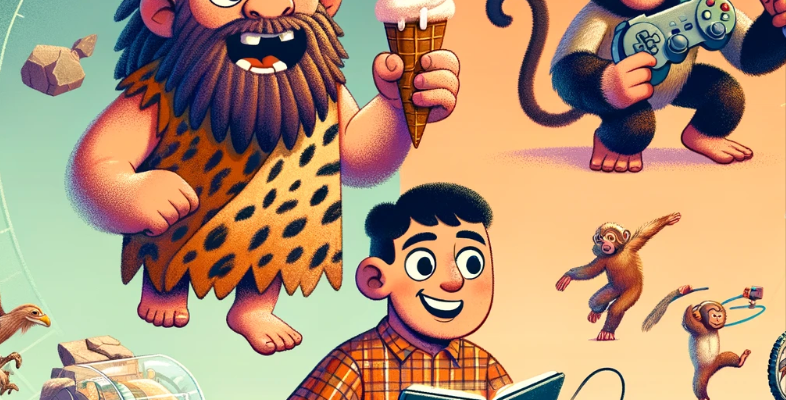
You weren’t the first human to walk this earth. Our ancestors have been evolving for millions of years, adapting to their environments long before modern civilization appeared. Even if we just go back 10,000 years, our ancestors lived without the refined sugars and digital distractions that dominate our lives today. Despite these changes, our brains still carry the wiring of those ancient times—a relic from our caveman days.

So, why are we letting our “caveman” instincts run our modern lives?

Understanding the Monkey Brain

We often joke about having a “monkey brain,” but there’s truth to it. The term refers to the parts of our brain that are driven by instant gratification and impulsive behaviors. This primitive aspect can drive us to overeat, procrastinate, or seek constant entertainment, even when we have more pressing goals and responsibilities.

Recognizing the Real You

You are not just your primal instincts. You have dreams, ambitions, and the ability to think and plan for the future. Yet, we frequently let our caveman brain take over. This brain urges us to seek comfort in snacks, avoid difficult tasks, and indulge in distractions. But recognizing that this caveman is not the real you is the first step toward change.

The Reality of Modern Hunger

Consider this: when was the last time you were truly hungry? In today’s world, about 80% of people are overweight or obese, while only around 12% are hungry. If you’re reading this, chances are you fall into the 80% who have access to more food than they need. Understanding this context can help us see how our caveman brain’s drive for food is often out of sync with our actual needs.

Awareness as a Tool for Change

Simply acknowledging that your primitive brain is often in control can be enough to initiate change. When I quit smoking, a technique that helped me was writing down my feelings before reaching for a cigarette. This small act of awareness reduced my urges significantly. It’s the same with other habits like snacking. By asking myself what I’m avoiding when I reach for a snack, I gain insight into my impulses.

Simple Strategies to Outsmart Your Primitive Brain

  • Physical Barriers: Placing snacks in a less accessible place, like a high shelf or a different room, can help reduce impulsive eating.
  • The Five-Minute Rule: Most urges, whether for sweets, alcohol, or even anger, don’t last more than five minutes. Commit to waiting it out, and you might find the urge passes.
  • Healthy Alternatives: Stock your house with healthier options like nuts and fruit instead of cookies and ice cream.

Harnessing Your Inner Rebel

Human beings have a natural tendency to resist being told what to do. Think about the times you did the opposite of what your parents or partner suggested, just out of rebellion. Use this instinct to your advantage. Don’t let a caveman or a monkey boss you around. Rebel against these primitive impulses and take control.

Focus on What Really Matters

Remember, you don’t need to check social media, play video games, or watch TV. These are distractions that your primitive brain craves for instant gratification. Instead, focus on what you truly need to do:

  • Finish that report for work or school.
  • Take care of your finances.
  • Pursue that next big client.
  • Improve your health and fitness.

Take Control Back

It’s time to stop letting the caveman and monkey run your life. You have the power to make conscious choices that align with your long-term goals and values. Start by becoming aware of your urges, challenge them, and take small steps towards a more controlled and fulfilling life.

FOMO is in everything

The concept of FOMO, or Fear of Missing Out, is typically associated with the anxiety of missing out on social events, opportunities, or the latest trends. However, this fear extends beyond just social or financial contexts. It seeps into various aspects of our lives, subtly influencing our actions and decisions. Let’s delve into how FOMO manifests in the realm of procrastination and other life areas.

FOMO and Procrastination

Procrastination is often seen as a mere avoidance of tasks. Yet, at its core, it can be deeply intertwined with a variant of FOMO—Fear of Missing Something. This form of FOMO can paralyze us with the fear that we’re not fully prepared or that we’re lacking a critical piece of information. Here’s how this fear plays out:

  1. Taxes and Paperwork: The fear of missing a 1099 form. This is a perfect example of how FOMO creates a blockade. The anxiety of potentially overlooking a single detail can lead to delaying the task altogether. This fear is not just about missing out on social activities but about the apprehension of incomplete information or preparedness.
  2. Public Speaking: The hesitation to give a speech due to feeling underprepared can also stem from this fear. The thought that we might be missing a crucial piece of information can stop us from moving forward. It’s the fear that our preparation isn’t sufficient, that we might miss out on delivering the perfect presentation.
  3. Interpersonal Interactions: When we hesitate to call someone because we feel we haven’t gathered enough background information, it’s another example of this nuanced FOMO. It’s the anxiety that we might miss a critical detail that could affect the outcome of our conversation.

Broader Implications of FOMO

FOMO isn’t just about social events or investment opportunities. Here are other ways it can influence our lives:

  1. Career Decisions: Fear of missing the ‘perfect’ job can make us hesitant to apply for or accept roles. We might constantly seek additional qualifications or experience, fearing we aren’t yet ready or missing some key competency.
  2. Personal Growth: We often delay starting new hobbies or learning new skills due to the fear that we don’t have the right resources or enough knowledge. This fear of not having all the necessary components can hinder our personal development.
  3. Relationships: In relationships, FOMO can manifest as the fear of missing out on better opportunities or the perfect partner. This can lead to commitment issues or dissatisfaction with current relationships, driven by the anxiety that something better might be out there.
  4. Health and Wellness: The fear of missing out on the latest diet, exercise trend, or wellness advice can lead to constantly changing routines or never fully committing to a health plan. This can create a cycle of perpetual dissatisfaction and insecurity.

Overcoming the Fear of Missing Something

To combat this form of FOMO, we need to:

  • Embrace Imperfection: Understand that perfection is often an illusion. It’s okay to start with what you have and improve along the way. Action breeds clarity and progress.
  • Set Clear Goals: Define what ‘enough’ looks like for each task. This helps in setting realistic boundaries and knowing when you have sufficient information to proceed.
  • Prioritize and Simplify: Focus on the core essentials of what you need to achieve. By narrowing your focus, you reduce the overwhelm that leads to procrastination.
  • Build Confidence Through Action: The more we act, the more we realize that missing a small piece of information rarely leads to disaster. This builds confidence in our ability to handle situations even when not everything is perfectly aligned.
  • Mindful Reflection: Regularly reflect on your decisions and outcomes. This helps to recognize patterns where FOMO might be unnecessarily holding you back and allows for conscious adjustments.

By shifting our perspective on FOMO from a social context to a broader life context, we can begin to see how this fear subtly influences our decisions and actions. Acknowledging it is the first step towards managing it and moving forward with greater confidence and less anxiety.