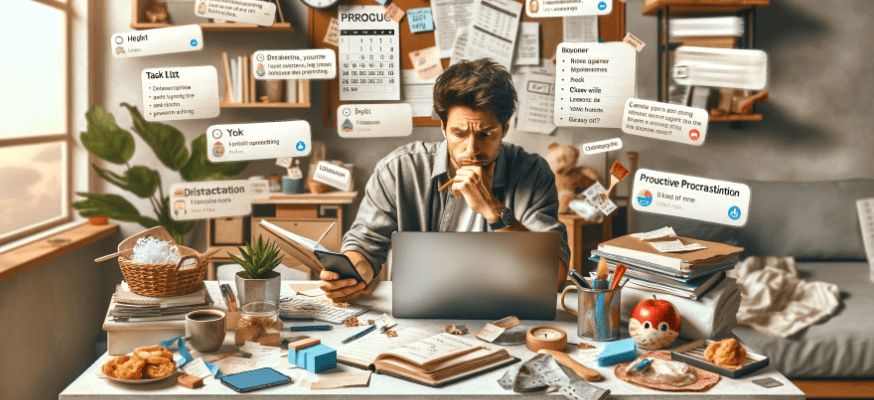
Procrastination: A Doctor who has written 7 books knows nothing about it.


I’m listening to all these experts, and it’s clear—they don’t have a procrastination bone in their bodies. They are doctors. They got through medical school, authored multiple books. They dont have a single procrastination bone in their body. You need to hear from someone who truly understands the struggle—someone like a crack addict, the ultimate dopamine seeker, who knows nothing about postponing pleasure to get something done.

Now, crack was after my time. I stopped using drugs in 1980, 44 years ago, long before crack and even before Richard Pryor’s infamous freebasing accident. So, I’m as close as you’re going to get to an expert.

From the Lowest of the Low to Success

How did I go from the lowest point to becoming extremely successful, making nearly a million dollars a year in commissions, and running a $30 million-a-year company? I also ran for Congress—both the United States Congress and subsequently the New Jersey Congress. I transmitted the first PDF advertisement to Time Magazine after contributing to the world wide PDF standards. Then I founded and managed a non-surgical cosmetic office that has delivered over 20,000 successful treatments and has become an international destination with patients flying in weekly.

I could go on, but I find people who boast about their accomplishments boring and in need of a shrink. Just know that I was the lowest form of life and reached reasonable levels of success. Now, let’s segue into what worked for me and, more importantly, what can work for you.

What Works for You?

Assuming you’ve managed to prepare or order a meal and aren’t sitting in your own mess, you have some level of motivation to get things done. Maybe your dishes are piled to the ceiling, but at least you made a meal or ordered one.

I’m pondering this today because, after listening to all the experts—doctors, best-selling authors—I’ve heard a few good ideas but nothing close to an aha moment. So, it’s time for me to tackle this topic.

Let’s Get Down to It

  1. Just Get Started: One expert suggested working for five minutes. I agree. For me, during tax season, I didn’t set a time limit. I just promised to start, and an hour flew by. Don’t let fear of failure stop you. It will get done imperfectly, as all things do. Promise yourself one minute or whatever works for you. Just get started.
  2. More on #1 A body in motion tends to stay in motion. Its a universal law that applies to us as well.
  3. Good Procrastination for Energy: Huh? Sometimes, I clean or clear clutter to open up space and get started. Clearing clutter can release energy, but you know when it crosses the line into procrastination. This isnt the time to vacuum the whole house.
  4. Clear Your Desk: Put papers into one pile, Apps like Getting Things Done or Things recommend just clearing the desk and making a pile without sorting or reading each paper. Open space and eliminate distractions.
  5. Time of Day: Identify when you’re most productive. Telling someone when to do something is idiotic. You might be most productive at 6 am, 10 am, 2 pm, 8 pm, or 10 pm. Study yourself—this is my number one rule for life.
  6. Study Yourself Again: When are you successful at getting things done versus procrastinating? Is it after your second cup of coffee at 8 am or 10 am? Is it when you’ve had protein and fat for breakfast? For me, eggs work best—they provide all the amino acids, fatty acids and choline for the brain.
  7. Don’t Waste Your Most Productive Time: Do the hardest mental tasks when you have your best energy. Don’t clean the house during your magic hours of productivity. That’s a rote task you can do anytime.
  8. Understand Your Task: I’m addressing people procrastinating on mental tasks that require research and trial and error. If you’re procrastinating on physical cleaning, the rules might be different. You might want to reverse the rules and do a little paperwork to break up house cleaning.
  9. Celebrate Your Successes: There’s a book called The One Minute Manager that suggests catching even the worst worker doing something right and congratulating them. If you’re treating yourself as the “worst worker” or procrastinator, celebrate your successes. Notice what led to the moment when you started on your taxes. Was it after a good meal? How long after eating? What supplements did you take?
  10. Different Forms of Procrastination: Eustress is good stress, coined by Hans Selye in 1976. I’m inventing “eu-procrastination”—Good procrastination.
  11. Euprocrastination (Good Procrastination):
    • A 5-minute exercise break.
    • A 5-minute cleaning break.
    • A 5-minute clutter clearing break.
    • A 5-minute walk.
    • 5 minutes of stretching.
    • 5 minutes of meditating.
    • 5 minutes of visualizing how good you’ll feel when it’s done.
    • A 5-minute break for water or a protein-based snack.
    • A 5-minute important phone call with a timer.
    • 5 minutes of “task changing.”
  1. Task Changing: You have to do your taxes, but you also need to schedule your yearly physical, send out a client invoice, and call your mother-in-law. Bringing a number 2 priority item to the forefront isn’t the end of the world. For some, it helps you get the hard task done. For others, it might lead you down a rabbit hole.
  2. Avoid Rabbit Holes: You know when you’re going down a rabbit hole. Don’t use replying to emails or Facebook comments as an excuse to procrastinate. Be aware of what you’re doing and stay focused.
  3. Study Yourself: Did I say that already? Repeat it. No one knows you better than you. We can all offer suggestions, but only you know what works for you and what you might still be hiding.

Final Thoughts

If you take nothing else away, remember to study yourself and be aware. You are the expert on you. Recognize what leads to procrastination and what leads to productivity. Great suggestions are everywhere, but only you can determine which ones apply to you.

Unless you have Tinker Bell, Jiminy Cricket, or Kazoo from the Flintstones, sitting on your shoulder, no one knows exactly what you’re doing except for you. I may be repeating myself, but it’s important to remember. This might lead to our next blog. Dont ask anyone about something specific. No one was there.


Getting Started is Simple Physics

I can’t tell you how many things I’ve read about getting started on tasks. In fact, I was just reading yet another article that proposed the usual BS: breaking tasks into smaller parts and other hints we’ve all heard so often that if they actually worked, I wouldn’t be reading yet another article on the topic—nor would you. Maybe the solution is a lot simpler and staring us right in the face.

I would bet real money you’ve experienced this phenomenon. It’s a fact, no different than gravity. But let’s not only use it but embrace it on every level. It’s simple physics.

What if it’s truly that simple? It’s true in the universe. Ask yourself: How many times have you said, “I’ll just put this one thing away,” and 15 minutes later, you’ve embarked on cleaning the whole room? How many times have you procrastinated doing your taxes, week after week? Finally said you began downloading some 1099s, and then realized you were all done and just needed to send them to the accountant? How many times have you said you’d just walk one block and found yourself walking a mile? How many times have you said you’d give up sugar, alcohol, or whatever for just one day, and it became a week or even a lifetime habit? “A body in motion tends to stay in motion” 

In fact, that’s what AA is based on. Life is a lot simpler than we make it out to be. By the way, guess what all the books on habits are based on? It’s all the same: do it once or for a few moments, and you’re often off to the races.

But don’t forget another part of the first law: a body at rest will tend to stay at rest. Or closer to how it’s written: Newton’s First Law of Motion states that a body at rest will remain at rest unless acted upon by an unbalanced force. This law is also known as the law of inertia.

So, you have to apply a disproportionate amount of force to get back in motion.

Have you also noticed how many of your 5-minute breaks turned into an hour? Talking to the guys here (I know you’re the gamers)—you took a break after working for an hour or a few hours (probably because you’re working from home), then decided to play one video game, and it turned into three or four? Or what about turning on the TV to catch up on the news, only to hear something designed to trigger you, and you just had to share it with a friend? (Okay, that one applies to all the myriad sexes.)

But don’t take my word for it. I’m merely asking you to look back on your life, even the past few weeks, months, or years, and ask if Newton’s Law applies to you. How many times have you gotten started on something difficult simply because you started—aka got in motion? I think it’s that simple. It applies to cleaning, decluttering, working on difficult things, and even the creative process. I’m pretty sure creatives are told to just start throwing out random ideas, thoughts, or paintings to see what evolves. Let me know with a comment.

PS: My previous idea a few posts ago was to do something for just one minute. That worked for me. My posture is almost perfect—better than it was even going back to my twenties. All I do is, for a moment—not even a minute—apply what the physical therapist taught me: stick your chest out and up a bit to open up your chest and relieve your back. The chest is where we get tight, and that rounds our shoulders. I often look to the right and left, up to 90%. That range of motion has also improved. I often grab the door frame to open up my shoulders, and on and on.

The point is, as in that post, even adding up one minute a day here and there—or, God forbid, a few times every hour (assuming you’re awake 18 hours a day, that’s 54 minutes a day)—I’ve now exceeded the amount of time you work out. And I would bet getting your body in motion all day is probably more beneficial than going to the gym for an hour and being a slug the rest of the day.

Back to the point of this blog—it’s actually a corollary to the one-minute idea. If you want to get something big done that requires sustained action, simply start. Or maybe it doesn’t require sustained action. But be cognizant that all you need is the initial push. Newton’s law is obvious. Does it take more motion to continue watching TV or scrolling on your phone, or does it require a certain amount of push just to get up out of bed or off your chair? It’s almost comical that I’m even posing this question.

Perhaps I need to hook up a pulley with a device to measure how many pounds of force it requires to lift your hopefully not-too-heavy body. So be cognizant of how many pounds of real physical and mental strength it takes to get started. And while you’re at it, how about making a habit of stretching your neck too? Otherwise, X, Z, and the youngest ones are all going to be hunched over, looking like 90-year-olds by the time they’re 40.

Sorry if this is too much information. I still have a functioning brain that brings other good things to mind when I try to convey even the simplest idea. So to recap: just get in motion. Hmm, what would be a good saying for that? Maybe “just do it”? How about “just start doing it”?

I would bet that might catch on. Just start doing it. Just start doing anything. Sure, the new AI, website, or article is going to hit some bumps and require a bit more work, but just start doing it. And if it ends up only being a minute, but you try every hour, that’s 18 minutes a day. And if you weren’t using a stopwatch, I would bet it might turn into an hour.

But one more time: the point of this is just get in motion. Often it’s actually easier to stay in motion.

PS It actually takes energy to stop a body in motion. Chew on that one. What if you became a perpetual motion machine. We have had days like that. We all certainly have had hours like that where we were on what we call “a tear” ripping through and getting an enormous amount of things done.

Most of us see ourselves less than what we truly are?

The Imposter Syndrome

What if what we think of as our imposter is actually our real identity? And what we think of as our real identity is just miles below what we truly are—and how others see us?

I see this in myself and in many of my friends—really accomplished people in their respective fields. And yet, I don’t think I have a single friend who truly sees how great they are. Let’s face it—we’ve all accomplished great things. We are doing things that are on par with some of the most famous people in the world. The only difference between us and “them” is that they have no humility. Or maybe it is us that is too humble.

I see this same pattern in all my friends. They’ve done incredible things—helped people find homes, in NJ Miami, secure financing, build websites more beautiful than those of the most prestigious studios in Beverly Hills. And yet, they don’t see themselves as remarkable. The only difference between them and those with millions of followers? Their opinion of themselves.

I see many doing astonishing things—raising an autistic child completely drug-free against doctors’ orders and standard of care, creating awards shows for legends like Quentin Tarantino and Robert De Niro, building things, helping people, coaching people, creating new paradigms in real estate—residential, commercial, even wholesale. The list is endless.

We all grew up with parents or guardians who, even with the best intentions, warned us about dangers to protect us. But in today’s world, there are no lions, tigers, or bears roaming the streets of New York City. Instead, we fear humiliation, rejection, or failure. We hesitate to start businesses, share our opinions, or take bold chances. And yet, the ones who do—who see themselves as capable—often meet with obscene success.

Most of us, aside from a few creatively or scientifically gifted individuals, have roughly the same abilities. The only real differentiator is how we see ourselves—or more precisely, who we believe ourselves to be.

The billionaires brag all the time about ordinary things. Their only difference is that they shout to the world that they are the best at what they do. I’m not talking about physical achievements, which can be easily measured. I mean in real estate, financing, law and other every day industries and professions.

In mine the gap is extraordinary. I can’t tell you how many lectures I’ve attended where a doctor is promoting CoolSculpting. Now, CoolSculpting is finally being recognized for the dangers it poses. In fact, supermodel Linda Evangelista sued them for $50 million. I was horrified by this technology back in 2016 and created two websites—coolsculpting.nyc and fatfreezingnewyork—to warn people. Yet there are still over 5,000 doctors still offering it, when there are dozens of safe radiofrequency alternative that dont post the risk of disfigurement and actually have a side effect of smoother tighter skin. 

Every day, I talk to people who have gone through unnecessary procedures because they didn’t trust their own judgment. Today, I spoke with a young woman who got so much Botox that she now thinks she needs a brow lift. That’s insane. Too much Botox—shame on that doctor. The Botox will wear off in three to five months, and now he is recommending a surgery? A brow lift could permanently disfigure her. Instead, we’ll likely reinvigorate her muscles with Emface.

I’ve done many things that, by any objective measure, I could consider myself world-famous for. In my old career in Graphic Arts, I lectured at the Harvard Club in New York, helped create the standards for PDF, and transmitted the first digital ad to Time Magazine. But

The only difference between you and the ones with millions of followers is how you see yourself. PERIOD. No one can see you higher than you see yourself. And often, we see ourselves much lower than everyone else does.

It’s time to shift that perspective. PS kudos to Anthony Robbins, he alluded to attaching ourselves to our “imposter” version of ourselves.

Getting Started is Simple Physics

I can’t tell you how many things I’ve read because I, probably like everyone, have trouble getting started on tasks. In fact, I was just reading yet another article that proposed the usual BS: breaking tasks into smaller parts and other hints we’ve all heard so often that if they actually worked, I wouldn’t be reading yet another article on the topic—nor would you. Maybe the solution is a lot simpler and staring us right in the face.

Not only that, but I would bet real money you’ve experienced this phenomenon—or should we call it a fact? It’s a fact, no different than gravity. But let’s not only use it but embrace it on every level. It’s simple physics.

What if it’s truly that simple? It’s true in the universe. Ask yourself: How many times have you said, “I’ll just put this one thing away,” and 15 minutes later, you’ve embarked on cleaning the whole room? How many times have you procrastinated doing your taxes, week after week, in February after you get your W-2? In March, you finally said you’d begin downloading some 1099s, and then realized you were all done and just needed to send them to the accountant? How many times have you said you’d just walk one block and found yourself walking a mile? How many times have you said you’d give up sugar, alcohol, or whatever for just one day, and it became a lifetime habit? ““A body in motion tends to stay in motion” 

In fact, that’s what AA is based on. Life is a lot simpler than we make it out to be. By the way, guess what all the books on habits are based on? It’s all the same: do it once or for a few moments, and you’re often off to the races.

But don’t forget another part of the first law: a body at rest will tend to stay at rest. Or closer to how it’s written: Newton’s First Law of Motion states that a body at rest will remain at rest unless acted upon by an unbalanced force. This law is also known as the law of inertia.

So, you have to apply a disproportionate amount of force to get back in motion.

Have you also noticed how many of your 5-minute breaks turned into an hour? Talking to the guys here (I know you’re the gamers)—you took a break after working for an hour or a few hours (probably because you’re working from home), then decided to play one video game, and it turned into three or four? Or what about turning on the TV to catch up on the news, only to hear something designed to trigger you, and you just had to share it with a friend? (Okay, that one applies to all the myriad sexes.)

But don’t take my word for it. I’m merely asking you to look back on your life, even the past few weeks, months, or years, and ask if Newton’s Law applies to you. How many times have you gotten started on something difficult simply because you started—aka got in motion? I think it’s that simple. It applies to cleaning, decluttering, working on difficult things, and even the creative process. I’m pretty sure creatives are told to just start throwing out random ideas, thoughts, or paintings to see what evolves. Let me know with a comment.

PS: My previous idea a few posts ago was to do something for just one minute. That worked for me. My posture is almost perfect—better than it was even going back to my twenties. All I do is, for a moment—not even a minute—apply what the physical therapist taught me: stick your chest out and up a bit to open up your chest and relieve your back. The chest is where we get tight, and that rounds our shoulders. I often look to the right and left, up to 90%. That range of motion has also improved. I often grab the door frame to open up my shoulders, and on and on.

The point is, as in that post, even adding up one minute a day here and there—or, God forbid, a few times every hour (assuming you’re awake 18 hours a day, that’s 54 minutes a day)—I’ve now exceeded the amount of time you work out. And I would bet getting your body in motion all day is probably more beneficial than going to the gym for an hour and being a slug the rest of the day.

Back to the point of this blog—it’s actually a corollary to the one-minute idea. If you want to get something big done that requires sustained action, simply start. Or maybe it doesn’t require sustained action. But be cognizant that all you need is the initial push. Newton’s law is obvious. Does it take more motion to continue watching TV or scrolling on your phone, or does it require a certain amount of push just to get up out of bed or off your chair? It’s almost comical that I’m even posing this question.

Perhaps I need to hook up a pulley with a device to measure how many pounds of force it requires to lift your hopefully not-too-heavy body. So be cognizant of how many pounds of real physical and mental strength it takes to get started. And while you’re at it, how about making a habit of stretching your neck too? Otherwise, X, Z, and the youngest ones are all going to be hunched over, looking like 90-year-olds by the time they’re 40.

Sorry if this is too much information. I still have a functioning brain that brings other good things to mind when I try to convey even the simplest idea. So to recap: just get in motion. Hmm, what would be a good saying for that? Maybe “just do it”? How about “just start doing it”?

I would bet that might catch on. Just start doing it. Just start doing anything. Sure, the new AI, website, or article is going to hit some bumps and require a bit more work, but just start doing it. And if it ends up only being a minute, but you try every hour, that’s 18 minutes a day. And if you weren’t using a stopwatch, I would bet it might turn into an hour.

But one more time: the point of this is just get in motion. Often it’s actually easier to stay in motion.

PS It actually takes energy to stop a body in motion. Chew on that one. What if you became a perpetual motion machine. We have had days like that. We all certainly have had hours like that where we were on what we call “a tear” ripping through and getting an enormous amount of things done.

What is a Vacation? You Can Do It Right Here, Right Now

One of the biggest aspects or renewal factors of a vacation is that you are someplace different. Consider this: we all have 70,000 thoughts a day and 80% of them are the same as yesterday. We wake up in the same bed. We use the same coffee maker and make our coffee the exact same way. We have other countless routines. But these routines bring up routine thoughts. You pick up your phone, call the same friend or relative that you know might be up early. That person might suck you into a political conversation, or whatever. Are you starting to get the picture?

The Renewal Aspect of a Vacation

The renewal aspect of a vacation is not that you are in Paris or the Bahamas; it’s that you are someplace else, stimulating different thoughts. I remember one day when I was living on 59th and 1st in NYC. I walked out of my building and challenged myself to simply walk two blocks and notice things I never saw before. I remember it like it was yesterday, even though it might have been 30 years ago. I might as well have been walking down the Champs Elysee.

I looked up at buildings I had walked past for 20 years. I noticed they were all four- to five-story walk-ups with interesting cornices at the top. I never even noticed how many stores and restaurants were in that one block, as I usually went straight to the Chinese or sushi place. There were actually a few other nooks and crannies I had never seen before. I was so lost in the thought of noticing things I had never seen before, it was literally like a vacation. Normally, I would purposely walk down that street for 20 years, seeing nothing and planning or worrying about my day. It’s that simple. Think differently.

Ways to Take a Vacation Right Now

  • Meditate: Meditation can help clear your mind and bring fresh perspectives.
  • Reconnect: Call a friend you haven’t spoken to in years.
  • Play a Sport: Engage in a sport you haven’t played in years.
  • Take a Class: Enroll in a class on something of interest to you.
  • Learn a Language: Even try the first free module.
  • Get Involved: Engage in someone else’s life outside of your small circle.
  • Listen to Something New: Discover new music or podcasts.
  • Walk a Different Path: Walk down a street you’ve never walked down before.
  • Rediscover Your Routine: Walk down the same street but challenge yourself to see things you never saw before. Look only at the rooftops (PS: don’t trip).

The Uncomfortable but Renewing Experience

Creating the renewal of a vacation can be as simple as changing your routine. It might be uncomfortable, but that is the renewal aspect of a vacation. When you’re in Paris, you don’t know where you’re going to get a coffee, how to order it, how much it will cost, or what it will taste like. Your mind is 100% occupied with new and different things, and for most of us, that is a “break” or a vacation from the boredom and the unpleasant aspects of our daily routine.

Conclusion

You don’t need to travel far to experience the renewal of a vacation. By simply changing your routine and thinking differently, you can stimulate new thoughts and experiences that refresh your mind and spirit. So take a trip down a different path, engage in new activities, and see the world around you with fresh eyes. Your vacation can start right here, right now.

FOMO is in everything

The concept of FOMO, or Fear of Missing Out, is typically associated with the anxiety of missing out on social events, opportunities, or the latest trends. However, this fear extends beyond just social or financial contexts. It seeps into various aspects of our lives, subtly influencing our actions and decisions. Let’s delve into how FOMO manifests in the realm of procrastination and other life areas.

FOMO and Procrastination

Procrastination is often seen as a mere avoidance of tasks. Yet, at its core, it can be deeply intertwined with a variant of FOMO—Fear of Missing Something. This form of FOMO can paralyze us with the fear that we’re not fully prepared or that we’re lacking a critical piece of information. Here’s how this fear plays out:

  1. Taxes and Paperwork: The fear of missing a 1099 form. This is a perfect example of how FOMO creates a blockade. The anxiety of potentially overlooking a single detail can lead to delaying the task altogether. This fear is not just about missing out on social activities but about the apprehension of incomplete information or preparedness.
  2. Public Speaking: The hesitation to give a speech due to feeling underprepared can also stem from this fear. The thought that we might be missing a crucial piece of information can stop us from moving forward. It’s the fear that our preparation isn’t sufficient, that we might miss out on delivering the perfect presentation.
  3. Interpersonal Interactions: When we hesitate to call someone because we feel we haven’t gathered enough background information, it’s another example of this nuanced FOMO. It’s the anxiety that we might miss a critical detail that could affect the outcome of our conversation.

Broader Implications of FOMO

FOMO isn’t just about social events or investment opportunities. Here are other ways it can influence our lives:

  1. Career Decisions: Fear of missing the ‘perfect’ job can make us hesitant to apply for or accept roles. We might constantly seek additional qualifications or experience, fearing we aren’t yet ready or missing some key competency.
  2. Personal Growth: We often delay starting new hobbies or learning new skills due to the fear that we don’t have the right resources or enough knowledge. This fear of not having all the necessary components can hinder our personal development.
  3. Relationships: In relationships, FOMO can manifest as the fear of missing out on better opportunities or the perfect partner. This can lead to commitment issues or dissatisfaction with current relationships, driven by the anxiety that something better might be out there.
  4. Health and Wellness: The fear of missing out on the latest diet, exercise trend, or wellness advice can lead to constantly changing routines or never fully committing to a health plan. This can create a cycle of perpetual dissatisfaction and insecurity.

Overcoming the Fear of Missing Something

To combat this form of FOMO, we need to:

  • Embrace Imperfection: Understand that perfection is often an illusion. It’s okay to start with what you have and improve along the way. Action breeds clarity and progress.
  • Set Clear Goals: Define what ‘enough’ looks like for each task. This helps in setting realistic boundaries and knowing when you have sufficient information to proceed.
  • Prioritize and Simplify: Focus on the core essentials of what you need to achieve. By narrowing your focus, you reduce the overwhelm that leads to procrastination.
  • Build Confidence Through Action: The more we act, the more we realize that missing a small piece of information rarely leads to disaster. This builds confidence in our ability to handle situations even when not everything is perfectly aligned.
  • Mindful Reflection: Regularly reflect on your decisions and outcomes. This helps to recognize patterns where FOMO might be unnecessarily holding you back and allows for conscious adjustments.

By shifting our perspective on FOMO from a social context to a broader life context, we can begin to see how this fear subtly influences our decisions and actions. Acknowledging it is the first step towards managing it and moving forward with greater confidence and less anxiety.

Procrastination: A Doctor who has written 7 books knows nothing about it.


I’m listening to all these experts, and it’s clear—they don’t have a procrastination bone in their bodies. They are doctors with degrees and have authored multiple books. Easy tasks for a procrastinator, right? Not exactly. You need to hear from someone who truly understands the struggle—someone like a crack addict, the ultimate dopamine seeker, who knows nothing about postponing pleasure to get something done.

Now, crack was after my time. I stopped using drugs in 1980, 44 years ago, long before crack and even before Richard Pryor’s infamous freebasing accident. So, I’m as close as you’re going to get to an expert.

From the Lowest of the Low to Success

How did I go from the lowest point to becoming extremely successful, making nearly a million dollars a year in commissions, and running a $30 million-a-year company? I also ran for Congress—both the United States Congress and subsequently the New Jersey Congress. I transmitted the first PDF advertisement to Time Magazine after contributing to the PDF standards. Then I founded and managed a non-surgical cosmetic office that has delivered over 20,000 successful treatments and has become an international destination with patients flying in weekly.

I could go on, but I find people who boast about their accomplishments boring and in need of a shrink. Just know that I was the lowest form of life and reached reasonable levels of success. Now, let’s segue into what worked for me and, more importantly, what can work for you.

What Works for You?

Assuming you’ve managed to prepare or order a meal and aren’t sitting in your own mess, you have some level of motivation to get things done. Maybe your dishes are piled to the ceiling, but at least you made a meal or ordered one.

I’m pondering this today because, after listening to all the experts—doctors, best-selling authors—I’ve heard a few good ideas but nothing close to an aha moment. So, it’s time for me to tackle this topic.

Let’s Get Down to It

  1. Just Get Started: One expert suggested working for five minutes. I agree. For me, during tax season, I didn’t set a time limit. I just promised to start, and an hour flew by. Don’t let fear of failure stop you. It will get done imperfectly, as all things do. Promise yourself one minute or whatever works for you. Just get started.
  2. Good Procrastination for Energy: Huh? Sometimes, I clean or clear clutter to open up space and get started. Clearing clutter can release energy, but you know when it crosses the line into procrastination. This isnt the time to vacuum the whole house.
  3. Clear Your Desk: Put papers into one pile, Apps like Getting Things Done or Things recommend just clearing the desk and making a pile without sorting or reading each paper. Open space and eliminate distractions.
  4. Time of Day: Identify when you’re most productive. Telling someone when to do something is idiotic. You might be most productive at 6 am, 10 am, 2 pm, 8 pm, or 10 pm. Study yourself—this is my number one rule for life.
  5. Study Yourself Again: When are you successful at getting things done versus procrastinating? Is it after your second cup of coffee at 8 am or 10 am? Is it when you’ve had protein and fat for breakfast? For me, eggs work best—they provide all the amino acids, fatty acids and choline for the brain.
  6. Don’t Waste Your Most Productive Time: Do the hardest mental tasks when you have your best energy. Don’t clean the house during your magic hours of productivity. That’s a rote task you can do anytime.
  7. Understand Your Task: I’m addressing people procrastinating on mental tasks that require research and trial and error. If you’re procrastinating on physical cleaning, the rules might be different. You might want to reverse the rules and do a little paperwork to break up house cleaning.
  8. Celebrate Your Successes: There’s a book called The One Minute Manager that suggests catching even the worst worker doing something right and congratulating them. If you’re treating yourself as the “worst worker” or procrastinator, celebrate your successes. Notice what led to the moment when you started on your taxes. Was it after a good meal? How long after eating? What supplements did you take?
  9. Different Forms of Procrastination: Eustress is good stress, coined by Hans Selye in 1976. I’m inventing “euprocrastination”—beneficial procrastination.
  10. Euprocrastination (Good Procrastination):
    • A 5-minute exercise break.
    • A 5-minute cleaning break.
    • A 5-minute clutter clearing break.
    • A 5-minute walk.
    • 5 minutes of stretching.
    • 5 minutes of meditating.
    • 5 minutes of visualizing how good you’ll feel when it’s done.
    • A 5-minute break for water or a protein-based snack.
    • A 5-minute important phone call with a timer.
    • 5 minutes of “task changing.”
  1. Task Changing: You have to do your taxes, but you also need to schedule your yearly physical, send out a client invoice, and call your mother-in-law. Bringing a number 2 priority item to the forefront isn’t the end of the world. For some, it helps you get the hard task done. For others, it might lead you down a rabbit hole.
  2. Avoid Rabbit Holes: You know when you’re going down a rabbit hole. Don’t use replying to emails or Facebook comments as an excuse to procrastinate. Be aware of what you’re doing and stay focused.
  3. Study Yourself: Did I say that already? Repeat it. No one knows you better than you. We can all offer suggestions, but only you know what works for you and what you might still be hiding.

Final Thoughts

If you take nothing else away, remember to study yourself and be aware. You are the expert on you. Recognize what leads to procrastination and what leads to productivity. Great suggestions are everywhere, but only you can determine which ones apply to you.

Unless you’re Tinker Bell, Jiminy Cricket, or Kazoo from the Flintstones, no one knows exactly what you’re doing except for you. I may be repeating myself, but it’s important to remember. This might lead to our next blog. Dont ask anyone about something specific. No one was there.

Reconciling: No one is more or less than you.

Everyone Has a Little Boy or Girl Inside: Understanding Imposter Syndrome

Have you ever found yourself in a moment of doubt, feeling like you don’t quite belong or deserve the success you’ve achieved? Maybe you’ve heard a little voice inside saying, “Who do you think you are?” This inner critic, this feeling of being an imposter, is surprisingly common. It’s called imposter syndrome, and it affects people from all walks of life.

The Little Boy or Girl Inside Us

At the heart of imposter syndrome is the notion that deep within each of us, there exists a little boy or girl who still harbors childhood insecurities and fears. This inner child is the part of us that remembers the times we felt unsure, inadequate, or simply not good enough. As we grow older, we often carry these feelings with us, even as we accumulate knowledge, skills, and achievements.

Why Do We Feel Like Imposters?

  1. High Expectations: Society often sets incredibly high standards, making it easy to feel like we’re falling short. When we measure our worth against these standards, it’s no wonder we sometimes feel like imposters.
  2. Comparison Culture: In today’s world of social media, it’s easy to compare our behind-the-scenes with others’ highlight reels. This comparison can amplify feelings of inadequacy, as we only see the polished success of others and not their struggles and failures.
  3. Perfectionism: Many of us strive for perfection, believing that anything less than flawless is not good enough. This mindset can lead to constant self-doubt and fear of being exposed as a fraud.

Embracing Our Inner Child

To overcome imposter syndrome, it’s essential to embrace and nurture that little boy or girl inside us. Here are some steps to help:

  1. Acknowledge Your Inner Child: Recognize that the feelings of inadequacy are a part of your inner child. Acknowledge these emotions without judgment and understand that they are a natural part of being human.
  2. Practice Self-Compassion: Be kind to yourself. Treat yourself with the same compassion and understanding you would offer to a dear friend. Remember that everyone makes mistakes and has moments of self-doubt.
  3. Celebrate Your Achievements: Take time to reflect on your accomplishments and the hard work that got you there. Celebrate your successes, no matter how small they may seem.
  4. Seek Support: Share your feelings with trusted friends, family, or a therapist. Talking about your experiences can help you realize that you’re not alone and that imposter syndrome is something many people face.
  5. Reframe Your Thinking: Challenge negative thoughts and reframe them in a more positive light. Instead of thinking, “I don’t belong here,” try thinking, “I worked hard to get here, and I deserve this.”

Moving Forward with Confidence

Imposter syndrome doesn’t have to hold you back. By acknowledging and nurturing your inner child, practicing self-compassion, and celebrating your achievements, you can move forward with confidence. Remember, everyone has that little boy or girl inside, and it’s okay to feel vulnerable sometimes. Embrace your journey, with all its ups and downs, and trust in your ability to grow and succeed. You are not an imposter; you are wonderfully and uniquely you.

Enter at Their Speed Limit

In the bustling world we live in, where interactions are constant and varied, there’s a subtle art to connecting with others that can significantly enhance our communication. This art is known as matching and mirroring, a concept rooted in Neuro-Linguistic Programming (NLP). Today, I want to dive into this fascinating technique and explore how matching or matching minus the energy of the person you’re speaking to can transform your conversations.

The Essence of Matching and Mirroring

At its core, matching and mirroring involves adopting aspects of another person’s behavior, speech, or body language to build rapport and create a sense of harmony. It’s a natural process we often do unconsciously with people we feel comfortable with. By consciously applying this technique, we can enhance our ability to connect with others, making our interactions more fluid and effective.

Imagine you’re speaking with someone who is very calm and soft-spoken. If you approach them with high energy and a loud voice, it might create a disconnect, making the conversation feel awkward or even overwhelming. Instead, by matching their calm demeanor, you can create a sense of comfort and understanding. This is entering at their speed limit.

The Power of Matching Minus

Sometimes, it’s not about fully mirroring the other person but slightly dialing back your energy to match theirs. This technique, often referred to as “matching minus,” involves subtly aligning with their pace and tone without completely mimicking them. It’s a delicate balance that shows empathy and respect for their state of being while still maintaining your own unique presence.

For example, if someone is expressing sadness or frustration, you don’t need to mirror their emotions exactly. Instead, you can match minus by adopting a more subdued tone and calm body language. This approach acknowledges their feelings and creates a safe space for them to open up, without amplifying their emotional state.

Practical Applications in Everyday Life

Whether you’re in a professional setting, such as our aesthetic doctor’s office at Precision Aesthetics, where we go to great lengths to ensure everyone’s comfort and privacy, or interacting with friends and family, mastering the art of matching and mirroring can have profound benefits. Here are a few practical tips to get started:

  1. Observe and Listen: Pay attention to the other person’s body language, tone of voice, and speech patterns. This observation is the first step in effectively matching their energy.
  2. Subtle Adjustments: Make small adjustments to your own behavior. If they’re speaking slowly, slow down your own speech. If they’re using specific gestures, incorporate similar ones naturally into your conversation.
  3. Practice Empathy: Show genuine interest and empathy in your interactions. People can sense when you’re truly engaged and respectful of their emotional state.
  4. Stay Authentic: While it’s important to match and mirror, it’s equally crucial to remain authentic. The goal is to create rapport, not to mimic or lose your own identity.

Conclusion

“Enter at Their Speed Limit” is more than just a technique; it’s a mindset of empathy, respect, and connection. By consciously matching or matching minus the energy of those we interact with, we can create more meaningful and effective communication. In a world that often feels rushed and disconnected, this simple yet powerful approach can make all the difference. Let’s embrace this art and enhance our relationships, one conversation at a time.

Remember, the next time you engage with someone, consider their speed limit. Adjust your approach, and watch as your connections deepen and flourish.

Feel free to share your thoughts or experiences with matching and mirroring in the comments below. Let’s continue the conversation and learn from each other.

With warmth and respect, John