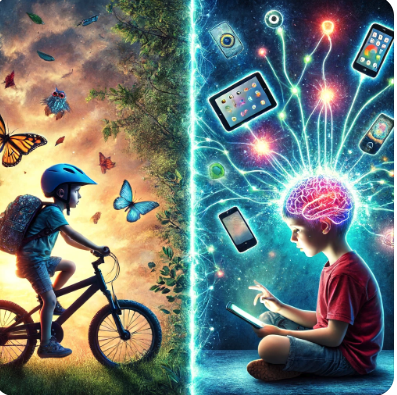
As parents and guardians, we instinctively protect our children from physical harm. We put helmets on them when they ride bikes, use car seats to secure them during travels, and hover over them to prevent falls. Yet, there’s an invisible danger we’re often less vigilant about—one that directly targets their developing brains: the pervasive presence of digital devices.
The Paradox of Protection
In our digitally saturated world, children’s brains are constantly exposed to electronic devices designed to captivate and stimulate them with a flood of immediate rewards. This paradox raises a critical question: why do we rigorously safeguard our children’s physical heads while neglecting the more profound and lasting impacts on their cognitive development from digital overstimulation?
The Hijacking of the Dopamine Reward System
At the core of this issue is the brain’s dopamine reward system. Dopamine, a neurotransmitter, plays a pivotal role in how we experience pleasure and motivation. It’s the brain’s “feel-good” chemical, released during enjoyable activities like eating, playing, or achieving goals. However, the structure and functioning of the dopamine system are particularly susceptible to external influences during childhood.
- Short-Term Stimulation:
- Instant Gratification: Many digital devices and apps are engineered to deliver constant, quick bursts of dopamine. Every notification, like, or level up in a game provides a small, immediate reward, conditioning the brain to expect continuous stimulation.
- Reduced Attention Span: This relentless barrage of stimuli can train children to seek instant gratification, making it difficult for them to focus on tasks that require sustained attention or to delay gratification for more significant, long-term rewards.
- Long-Term Consequences:
- Altered Brain Development: Children’s brains are exceptionally plastic, meaning they are highly adaptable and continually developing. Persistent exposure to rapid, short-term rewards can alter the brain’s natural reward pathways, potentially leading to conditions like attention deficit disorders, anxiety, and difficulties in self-regulation.
- Impaired Decision-Making: A brain accustomed to immediate rewards may struggle with decision-making processes that require patience and long-term thinking. This can impact their academic performance, social interactions, and future career prospects.
Digital Devices: Double-Edged Swords
While technology offers educational and entertainment benefits, its potential drawbacks, particularly for young minds, are profound:
- Cognitive Overload: Excessive use of digital devices can overwhelm a child’s cognitive capacities. This overload can impair learning, memory, and critical thinking skills.
- Emotional Dysregulation: The emotional highs and lows induced by digital interactions can disrupt a child’s ability to manage emotions effectively, leading to increased irritability and mood swings.
- Social Isolation: Despite their connectivity, digital devices can foster social isolation. Real-world interactions are essential for developing empathy, communication skills, and strong interpersonal relationships.
The Role of Parents and Guardians
Protecting our children’s brains from digital overstimulation requires a multi-faceted approach:
- Setting Boundaries:
- Screen Time Limits: Establishing clear limits on the amount of time children can spend on digital devices helps mitigate their exposure to overstimulation.
- Tech-Free Zones and Times: Designating certain areas and times (like during meals or an hour before bedtime) as tech-free encourages other forms of interaction and relaxation.
- Encouraging Alternative Activities:
- Physical Play: Promoting outdoor and physical activities supports overall health and provides natural, balanced stimulation for the brain.
- Creative Endeavors: Engaging children in creative activities like drawing, reading, or building with blocks fosters sustained attention and imaginative thinking.
- Modeling Healthy Behaviors:
- Demonstrating Balance: Children often mimic the behavior of adults. Showing them how to balance screen time with other activities sets a positive example.
- Mindful Consumption: Being mindful of how we use digital devices and their content can help us better understand and guide our children’s digital habits.
The Path Forward
In an age where digital devices are ubiquitous, balancing their benefits with their risks is crucial. As we protect our children’s physical well-being, we must also be vigilant in safeguarding their cognitive and emotional development. By recognizing and addressing the impacts of digital overstimulation, we can help nurture resilient, thoughtful, and well-adjusted individuals capable of thriving in the ever-evolving digital landscape.
Conclusion
The unseen impact of digital devices on our children’s brains is an issue that demands our attention and action. Just as we wouldn’t leave their heads unprotected during a fall, we must not leave their minds unguarded against the subtle yet profound effects of digital overstimulation. By fostering healthy digital habits and promoting diverse activities, we can ensure that our children grow up with the capacity to delay gratification, engage deeply with the world around them, and develop into well-rounded individuals ready to navigate the complexities of modern life.
 Happiness Health and Beauty Secrets