Don’t Hold Yourself to an Impossible Standard: Embrace Progress Over Perfection

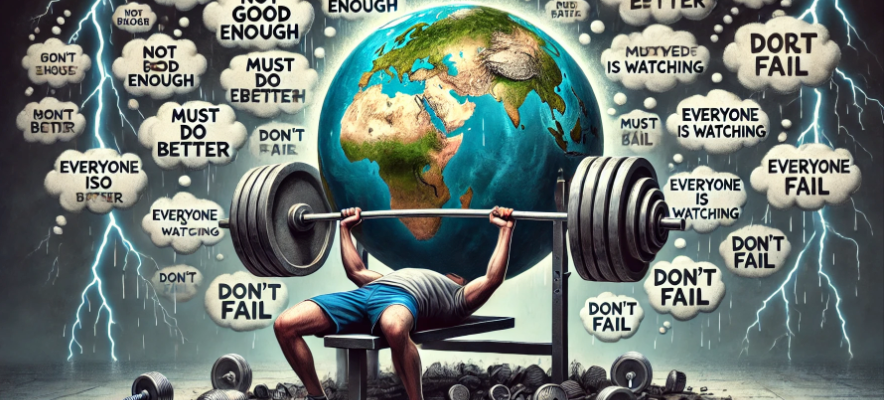
In a world where we are constantly bombarded with messages urging us to do better and give more, it’s easy to fall into the trap of perfectionism. We’ve all heard the phrase, “Don’t be a perfectionist.” Yet, it seems that striving for excellence has been ingrained in us from an early age. The voices of well-meaning parents, teachers, and mentors echo in our minds, pushing us to reach higher and achieve more. While this drive can be beneficial, it can also become a significant barrier to our growth and creativity.

The Paradox of Perfection

The adage “Good is the enemy of great” suggests that settling for mediocrity can prevent us from achieving our full potential. However, there’s a lesser-known but equally important counterpart: “Great is also the enemy of good.” This means that in our pursuit of greatness, we may delay, overanalyze, and ultimately, never take action. Perfectionism can paralyze us, making us hesitant to share our ideas, launch our projects, or even express our true selves.

The Burden of a Thousand Voices

From a young age, we are conditioned to seek approval and validation. The voices of parents, teachers, and society at large can create an internal narrative that we must constantly improve and outdo ourselves. This can lead to a perpetual state of dissatisfaction, where nothing we do ever feels good enough. The pressure to meet an impossible standard can stifle our creativity and prevent us from taking risks.

When Is It Okay to “Launch”?

1. When You Have a Solid Foundation:

  • Preparation Is Key: Ensure that you have done your due diligence. Research your topic, refine your skills, and lay a solid foundation. This doesn’t mean everything has to be perfect, but you should feel confident in the basics.

2. When You Can Offer Value:

  • Focus on Impact: If what you are sharing can help others, provide value, or inspire someone, it’s worth putting out there. Your work doesn’t have to be flawless to make a positive impact.

3. When You’re Ready to Learn and Improve:

  • Embrace Feedback: Understand that launching is just the beginning. Be open to feedback and willing to make adjustments. Growth comes from learning and iterating.

Finding Your Voice

Your voice is unique, and it deserves to be heard. Waiting for the perfect moment or the perfect version of yourself to emerge will only keep you silent. Here are some steps to help you find and share your voice:

1. Accept Imperfection: Embrace the fact that imperfection is a part of the human experience. Authenticity is far more compelling than flawlessness.

2. Start Small: Begin by sharing your thoughts and ideas in smaller, more comfortable settings. This could be through a blog, social media, or within a supportive community.

3. Practice Self-Compassion: Be kind to yourself. Acknowledge your efforts and progress, no matter how small. Celebrate your wins and learn from your mistakes without harsh self-criticism.

Teach and Share with Confidence

1. Understand Your Value: Recognize that you have unique experiences and knowledge that others can benefit from. You don’t need to know everything to teach; you just need to be a few steps ahead of those you are guiding.

2. Engage with Your Audience: Create a dialogue with your audience. Their questions, comments, and feedback can provide valuable insights and help you grow as a teacher and creator.

3. Continuous Improvement: Remember that teaching and sharing are dynamic processes. Your methods and content will evolve over time, and that’s okay. Allow yourself the flexibility to grow and adapt.

Conclusion

In the journey of personal and professional growth, holding yourself to an impossible standard can be more of a hindrance than a help. Embrace the idea that “good enough” is often good enough to start. By allowing yourself to launch, teach, and share without the burden of perfectionism, you open the door to creativity, learning, and authentic connection. So, take that first step, share your voice, and let your unique light shine.

Sharing is Not Listening & The Power of Mini Outcomes

In our quest to build stronger relationships, two powerful concepts often get overlooked: the distinction between sharing and listening, and the importance of being mini outcome-oriented. These ideas, when understood combined and applied, can transform how we connect with others, especially our loved ones.

The Misconception: Sharing is Listening

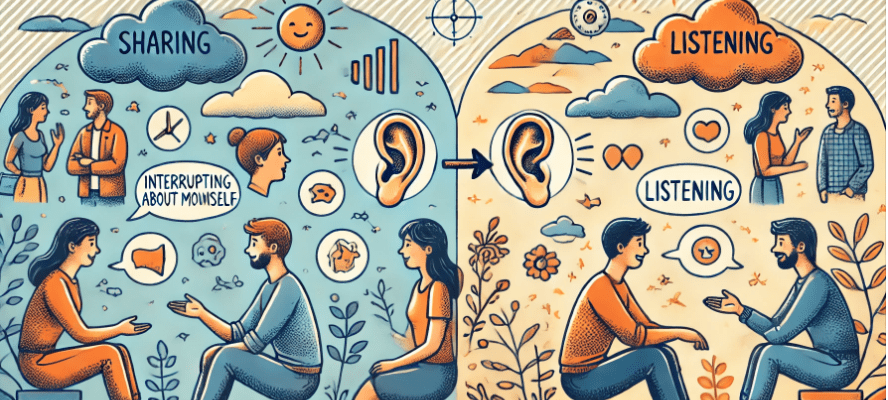
It’s easy to confuse sharing with listening. We might believe that talking about our day, our experiences, or our thoughts is a way of connecting with others. While sharing has its place, it is not synonymous with listening. Listening requires presence and silence, allowing the other person to feel truly heard and valued.

Key Points:

  1. Presence Over Sharing: When our goal is to build closer rapport with a child, friend, or partner, listening takes precedence over sharing. True connection is often found in the silent spaces where the other person feels acknowledged and understood.
  2. Purpose of Interaction: Every interaction, even a quick chat, has a purpose or a mini outcome. If the goal is to make someone feel loved and appreciated, then listening is far more effective than sharing about oneself.
  3. Counterproductive Sharing: Interrupting or butting into a conversation with our own stories or thoughts can undermine the goal of making someone feel valued. It shifts the focus away from them and back to us, which can be counterproductive.

Being Mini Outcome Oriented

Why isn’t everything outcome-oriented? More specifically, why don’t we adopt a mini outcome-oriented approach in our interactions? Mini outcomes refer to small, specific goals that guide our actions and conversations. By focusing on these, we can enhance the quality and impact of our interactions.

Key Points:

  1. Defining Mini Outcomes: A mini outcome is a clear, small goal for an interaction. For example, if you’re having a five-minute phone call with a friend, the mini outcome might be to make them feel appreciated.
  2. Clarity and Intention: By defining mini outcomes, we bring clarity and intention to our interactions. This helps us stay focused and ensures that our actions align with our goals.
  3. Higher Purpose: While this approach might seem serious and business-like, it serves a higher purpose: sharing the love and appreciation we have for our loved ones. When we listen more and share less, we create a space for others to feel genuinely valued.

The Transformative Power of Listening

Listening, in its truest form, is a powerful act of love and presence. It goes beyond mere silence; it’s about being fully present and engaged with the other person. This type of listening can lead to profound connections and deeper relationships.

Personal Reflections:

  1. Experiences and Acknowledgements: I’ve experienced astonishing life-altering acknowledgements and feedback from people who already appreciated my presence in their lives. Yet, with each distinction and focus on listening, these connections have taken quantum leaps.
  2. Learning and Growth: Interacting with friends and partners who are also committed to learning and growth has shown me the magic of deep connections. By focusing on listening and being present, we uplevel each other and find joy in every moment, regardless of circumstances.

Conclusion

Sharing and listening are not the same. When our goal is to build stronger, more meaningful relationships, we must prioritize listening and adopt a mini outcome-oriented approach. By being present and silent, we create a space for others to feel truly valued and loved. This simple yet powerful shift can transform our interactions and deepen our connections with those we care about most. Would you be willing to try it? To listen more, share less, and see the magic unfold in your relationships?

John’s Hierarchy, Not Maslow: Feel, Do, Be

It’s simply: Feel, Do, Be. Feeling being the lowest? Huh? Yes, if you operate solely by your feelings, you are no different than animals or a baby. Thats when you have those days when you feel like you are being bounced around in a pinball machine. Not good. Yet, this becomes a bit paradoxical because at our highest level of being, we are indeed feeling. So let’s break it down and see if we can integrate it all.

Feeling, Doing, Being: A Hierarchy of Living Life

In our journey through life, we often navigate different stages of existence, each with its own set of challenges and rewards. One way to conceptualize this journey is through the hierarchy of feeling, doing, and being. These stages represent a progression from basic emotional responses to purposeful actions, and ultimately, to a state of mindful existence.

Feeling: The Foundation of Experience

At the most fundamental level, our lives are driven by feelings. Emotions are the immediate, often instinctive responses to our surroundings and experiences. They form the foundation of our interactions with the world, influencing our decisions and actions. While living in the realm of feeling can be intense and overwhelming, it is an essential part of our humanity. Embracing and understanding our emotions is the first step towards personal growth. It becomes a challenge to respond vs react, and often purposeful action becomes elusive.

Doing: The Stage of Action

As we move beyond mere feelings, we enter the stage of doing. This is where our actions take shape, driven by goals, responsibilities, and ambitions. Emotional maturity kicks in, and we do regardless of how we feel. Doing involves applying our emotional insights to create tangible outcomes. It is in this stage that we build our careers, nurture relationships, and contribute to society. While doing is often associated with productivity and achievement, it is also about finding purpose and meaning in our daily activities.

Being: The Pinnacle of Existence

The final stage, being, is about achieving a state of mindfulness and authentic existence. It transcends the immediate reactions of feeling and the purposeful actions of doing. Being is characterized by self-awareness, inner peace, and a deep connection to the present moment. It is about living in harmony with oneself and the world, embracing both the highs and lows of life with equanimity. In the state of being, we find true fulfillment and contentment.

Integrating Feeling, Doing, and Being

While these stages can be seen as a hierarchy, they are not mutually exclusive. A balanced life involves integrating feeling, doing, and being in a way that allows us to navigate the complexities of existence with grace and wisdom. By acknowledging our emotions, taking purposeful actions, and cultivating mindfulness, we can lead richer, more meaningful lives.

This hierarchy is not about prioritizing one stage over the other but about recognizing their interdependence. Feeling is the foundation that informs our doing, and being is the state that allows us to reflect on and appreciate both.

By embracing this hierarchy, we can strive to live fully, acknowledging our emotions, taking action with intention, and cultivating a mindful presence. In fact at this point we should probably add a final step called Flow. That is when you are being and everything is just flowing. You have had those moments. Reflect back on some of them. It was when everything magically fell into place. It had a lot to do with where you were at and how you were acting and being. Being in the flow, where magic happens and everything falls into place can be cultivated and experienced more often. Life should be lived as much as possible in the flow where you enjoy the most joy every moment of your short time on this planet.

Exploring Your “Woulds”: Bringing Clarity to Your Dreams

What about your “woulds”? We often find ourselves saying, “I would do this if…” But what if we truly considered these “woulds”? What would you do if it were easy, if you had the money, if the steps were clear, if you had part-time help, or if you had the time? Isn’t it worth considering your “woulds”? Perhaps bringing your “woulds” out of the woods might truly bring you clarity.

The Power of “Would”

How many people have found themselves saying, “This is what I would do if I had the money”? Some of those people were lucky. They lost their jobs and were forced to follow their dreams and their passions, ultimately becoming successful in pursuing their dreams. It’s time to stop and examine your “woulds.” Great clarity, greater success, fulfillment, and purpose will be found when you get out of the darkness of the woods and bring out your true “woulds”—the ones that are in your heart and soul.

Identifying Your True “Woulds”

Your true “woulds” are often apparent. How many times have you spoken to a friend, and they are blown away by your passion when you speak about your art, music, love of healthy foods, cooking, exercise, teaching, or any other interests? There are as many vocations and avocations as there are people. In today’s connected society, you could be teaching a course to people anywhere in the world. With today’s AI technology, it could be simulcast in many languages in real time, and even questions and answers can be handled in real time.

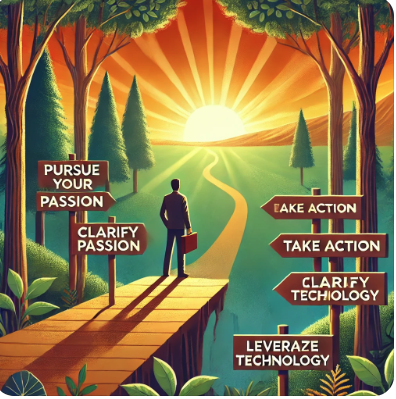
Steps to Bringing Your “Woulds” to Life

  1. Identify Your Passion:
    • What is it that you would do if all obstacles were removed? Consider your hobbies, interests, and the things that make you feel alive.
  2. Clarify the Steps:
    • Break down the process into clear, manageable steps. What do you need to do first, and what comes next?
  3. Seek Resources:
    • What resources do you need? Consider financial resources, time, help from others, and any tools or equipment.
  4. Create a Plan:
    • Develop a step-by-step plan to turn your “woulds” into actionable goals. Set deadlines and milestones to track your progress.
  5. Leverage Technology:
    • Use technology to your advantage. Teach online courses, create digital content, or start a virtual business. The world is your potential customer base.
  6. Take Action:
    • Start small if necessary, but take the first step. As you progress, adjust your plan as needed and keep moving forward.

Real-Life Inspiration

Consider the stories of people who turned their “woulds” into reality:

  • Entrepreneurs who started businesses with little money but a lot of passion.
  • Artists and musicians who pursued their crafts despite financial uncertainty.
  • Teachers and coaches who reached global audiences through online platforms.

These individuals found great success by following their passions and bringing their “woulds” out of the woods.

Conclusion

There is no excuse to not pursue your passion in today’s world. The whole world is your potential audience, and with the right steps and mindset, you can bring your “woulds” to life. It’s time to stop shoulding on yourself and others and start exploring the possibilities of your “woulds.” Embrace your passions, clarify your steps, and take action to create the fulfilling life you envision.