
The Serendipity Factor: How Luck, Proximity, and Hard Work Shape Our Lives

Have you ever wondered why some people seem to effortlessly stumble upon success while others toil away without seeing much progress? It’s a question that intertwines elements of chance, environment, and individual effort. Many decisions and life paths are influenced more by the circumstances and opportunities we encounter than we might realize.

Proximity and Serendipity

From the college we attend to the friends we make, proximity often dictates our choices. For instance, people frequently choose their college based on where their friends are going. It’s not uncommon for individuals to take up hobbies, experiment with substances, or even enter relationships simply because of the people and opportunities that happen to be nearby. Shows like 90 Day Fiancé fascinate us not just because they are a train wreck, but because they highlight the rare few who venture far beyond their local bar to find love.

Luck and Opportunity

Success stories often hinge on serendipitous moments. Take Bill Gates, for example. According to Malcolm Gladwell’s Outliers, Gates had access to a free public library with vast computer resources, an opportunity not available to most kids at the time. Similarly, many athletes born in January are literally a year older than their peers in youth sports, giving them a significant early advantage that often leads to professional careers.

Oprah Winfrey’s journey is another testament to the role of chance. She was reportedly fired as a news anchor and reassigned to daytime television just to fulfill her contract. This “failure” turned into an extraordinary success as she transformed daytime TV with her unique style.

Many people have also lost a fortune or a large amount of their savings investing in their best friends’ businesses. While early associates of Bill Gates and Mark Zuckerberg made fortunes, an equal amount of money has likely been lost by people investing with whoever was in their proximity, highlighting the risks of making decisions based solely on personal connections.

Hard Work and Preparedness

While luck and chance provide opportunities, it’s often hard work and preparedness that allow individuals to seize these moments. Consistent effort and skill development enable people to capitalize on the chances they encounter. The combination of being ready when luck strikes and having the tenacity to overcome setbacks is crucial.

The Dangers of Stumbling into Substances

A significant and often tragic example of serendipity is the exposure to substances. Many adolescents and young adults start using drugs or alcohol because their friends do. This proximity-based decision can lead to addiction, health problems, or even death. It’s a stark reminder of how critical it is to make informed, conscious choices rather than simply following the crowd.

  • Learn to Say No: It’s essential to develop the ability to say no to harmful influences. Just because friends or acquaintances are experimenting with substances doesn’t mean you should too. Making conscious decisions to avoid these pitfalls can significantly impact your health and future.

Expanding Horizons with Technology

Today, we have the internet, which offers unprecedented access to information and opportunities beyond our local environments. This connectivity allows individuals to make more informed decisions and connect with resources and people worldwide, mitigating some of the limitations of proximity. For example, instead of relying on the local bar to find a partner, people can use dating apps to expand their search globally.

The Balance of Factors

Success is often the result of a complex interplay of luck, environment, hard work, and informed decision-making. Understanding how these elements interact can help individuals navigate their paths more effectively. Acknowledging the role of luck and chance can lead to a more balanced view of success and reduce the tendency to attribute outcomes solely to individual merit or effort.

Practical Application

Using the Web for Opportunities: The internet is a powerful tool that can help you explore opportunities beyond your immediate environment. Whether it’s for business, education, or personal relationships, leveraging online resources can significantly broaden your horizons.

Mindful Decision-Making: Be present and intentional with your decisions. Use available tools and resources to expand your horizons and create more opportunities for success. By being proactive and leveraging technology, you can enhance your chances of success by seeking out opportunities that align with your goals and interests.

Saying No to Harmful Choices: Make a conscious effort to avoid negative influences, especially when it comes to substances. Understanding the long-term impact of these decisions and being strong enough to say no can save your life and improve your overall well-being.

Conclusion

In conclusion, while luck and proximity play significant roles in shaping our lives, hard work and informed decision-making are equally crucial. By understanding and leveraging the interplay of these factors, we can navigate our paths more effectively and create more opportunities for success. So, whether you find yourself inspired by the unusual love stories on 90 Day Fiancé or the serendipitous success of a tech mogul, remember that you have the power to influence your journey through a blend of preparation, opportunity, and intentional action.
Exploring Your “Woulds”: Bringing Clarity to Your Dreams

What about your “woulds”? We often find ourselves saying, “I would do this if…” But what if we truly considered these “woulds”? What would you do if it were easy, if you had the money, if the steps were clear, if you had part-time help, or if you had the time? Isn’t it worth considering your “woulds”? Perhaps bringing your “woulds” out of the woods might truly bring you clarity.

The Power of “Would”

How many people have found themselves saying, “This is what I would do if I had the money”? Some of those people were lucky. They lost their jobs and were forced to follow their dreams and their passions, ultimately becoming successful in pursuing their dreams. It’s time to stop and examine your “woulds.” Great clarity, greater success, fulfillment, and purpose will be found when you get out of the darkness of the woods and bring out your true “woulds”—the ones that are in your heart and soul.

Identifying Your True “Woulds”

Your true “woulds” are often apparent. How many times have you spoken to a friend, and they are blown away by your passion when you speak about your art, music, love of healthy foods, cooking, exercise, teaching, or any other interests? There are as many vocations and avocations as there are people. In today’s connected society, you could be teaching a course to people anywhere in the world. With today’s AI technology, it could be simulcast in many languages in real time, and even questions and answers can be handled in real time.

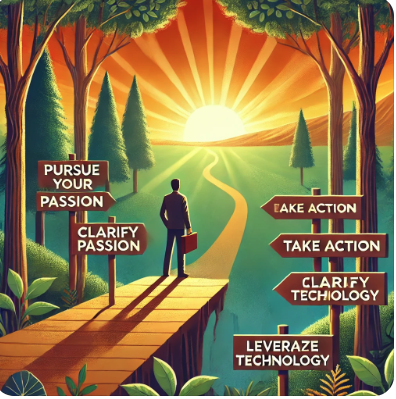
Steps to Bringing Your “Woulds” to Life

  1. Identify Your Passion:
    • What is it that you would do if all obstacles were removed? Consider your hobbies, interests, and the things that make you feel alive.
  2. Clarify the Steps:
    • Break down the process into clear, manageable steps. What do you need to do first, and what comes next?
  3. Seek Resources:
    • What resources do you need? Consider financial resources, time, help from others, and any tools or equipment.
  4. Create a Plan:
    • Develop a step-by-step plan to turn your “woulds” into actionable goals. Set deadlines and milestones to track your progress.
  5. Leverage Technology:
    • Use technology to your advantage. Teach online courses, create digital content, or start a virtual business. The world is your potential customer base.
  6. Take Action:
    • Start small if necessary, but take the first step. As you progress, adjust your plan as needed and keep moving forward.

Real-Life Inspiration

Consider the stories of people who turned their “woulds” into reality:

  • Entrepreneurs who started businesses with little money but a lot of passion.
  • Artists and musicians who pursued their crafts despite financial uncertainty.
  • Teachers and coaches who reached global audiences through online platforms.

These individuals found great success by following their passions and bringing their “woulds” out of the woods.

Conclusion

There is no excuse to not pursue your passion in today’s world. The whole world is your potential audience, and with the right steps and mindset, you can bring your “woulds” to life. It’s time to stop shoulding on yourself and others and start exploring the possibilities of your “woulds.” Embrace your passions, clarify your steps, and take action to create the fulfilling life you envision.

Are You on the Road Less Travelled, Most Travelled, or Not Travelled?

The book “The Road Less Travelled” sparked a movement towards meditation and self-reflection. It’s great to reflect on your life and your soul, but what about the actual path you’re on? The road we choose in life shapes our experiences, our happiness, and our fulfillment. So, let’s explore the roads most travelled, less travelled, and not travelled at all, along with their benefits and pitfalls.

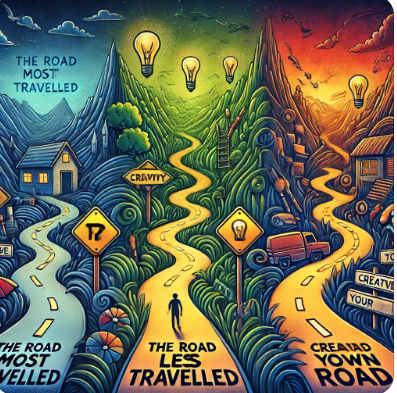
The Road Most Travelled

This path is well-worn and widely accepted by society. It often includes marrying within one’s culture and religion, settling down, having a stable job, and following societal norms.

Benefits:

  • Predictability: Provides a stable, predictable life.
  • Support System: Surrounded by like-minded people and a strong community.
  • Less Risk: Fewer unknowns and generally fewer risks.

Pitfalls:

  • Lack of Exploration: May leave you wondering about life outside the bubble.
  • Conformity Pressure: Pressures to conform can stifle individual growth and creativity.
  • Potential for Regret: Following a set path without questioning may lead to mid-life crises or regrets.

I often think about what my life would have been like if I had taken this road. My parents wanted me to marry a nice girl within our culture and religion, which likely would have led to a peaceful life. But I always questioned everything and still do. Considering the high divorce rate, the road most travelled might not work for everyone.

The Road Less Travelled

This path involves questioning societal norms, exploring different lifestyles, and often pursuing passions that aren’t mainstream.

Benefits:

  • Self-Discovery: Provides opportunities for personal growth and self-discovery.
  • Fulfillment: Pursuing passions and interests can lead to deep fulfillment.
  • Innovation: Encourages creativity and original thinking.

Pitfalls:

  • Uncertainty: Constant unknowns and instability.
  • Isolation: Can be lonely and isolating, as fewer people understand or support your choices.
  • Risk: Higher risk of failure and facing numerous challenges.

I always wondered what life would be like on this path. Despite the unknowns and perils, this road is filled with excitement and exhilaration. However, life comes with no guarantees, and it’s like a puzzle with an unknown picture, regardless of the path you choose.

The Road Not Travelled

This is the path of constant adventure and discovery, where you forge your way through unknown territories and create your own rules.

Benefits:

  • Excitement: Constant novelty and adventure.
  • Independence: Complete freedom to chart your own course.
  • Unique Experiences: Rich, diverse experiences that few others have.

Pitfalls:

  • High Risk: Extreme uncertainty and potential for significant setbacks.
  • Loneliness: Often a solitary journey with limited support.
  • Stress: High levels of stress and the need for constant decision-making.

I’ve often said I wish my brain allowed me to join the union, get married to a “nice” girl, settle down in Staten Island or NJ, have kids and a dog, and watch my family multiply. But my brain craves adrenaline, endorphins, and dopamine. My life will continue on the road not travelled, filled with excitement, novelty, and adventure.

Reflection and Balance

Regardless of the path you’re on, it’s valuable to step onto the opposite road occasionally. If you’re on the road most travelled, try something new or different. If you’re on the road not travelled, take a break and spend some time on the comfortable, well-worn path. It’s okay to take a break from fighting dragons and navigating the unknown jungle every day.

A Proposal for Reflection

Reflect on the road you’re on and consider taking a few steps on the opposite path. Life is a journey with no guarantees, and exploring different roads can provide a richer, more fulfilling experience. Embrace the adventure, the stability, or the novelty that each path offers, and find your own unique way to navigate through life.

P.S. Whether you are aware of it or not, you are on the road not travelled. Every little thing that made you who you are is unique. No one had the exact same parents as you. Were they domineering, demanding, not around, divorced, loving, nasty, abusive? No one went to the same kindergarten, grade school, high school, and college as you. No one had all the same teachers and coaches you had. Even if you had an identical twin, your paths diverged here and there. So, enjoy your road.

And when is it time to create a road that literally doesnt exist but is of your making.

Study Your Successes: The Key to Navigating Life’s Challenges

Life is a journey full of ups and downs, moments of triumph, and periods of struggle. One crucial aspect of navigating this journey is understanding not only our mistakes but also our successes. Too often, we focus on what went wrong, driven by the pain of our failures. However, by studying our successes, we can better prepare ourselves for when life inevitably throws us off track.

The Lesson in Pain

We learn from our mistakes because of the pain they cause. Put your hand in fire once, and you’ll remember the lesson forever. Pain serves as a powerful teacher, ingraining the memory of our errors deeply within us. However, this focus on pain means we often overlook the equally valuable lessons our successes can teach us.

The Mystery of Sudden Failures

How many times have you felt like everything was going perfectly, only to have it all fall apart unexpectedly? The train falls off the tracks, and you’re left wondering why. Without understanding what contributed to your previous successes, it’s challenging to pinpoint what might have gone wrong. This lack of insight can leave you feeling lost and frustrated.

The Importance of Self-Reflection

To avoid these pitfalls, it’s essential to study your successes as diligently as you analyze your mistakes. One practical way to do this is by keeping a diary or an Excel sheet where you annotate moments when you “feel great” or note any significant achievements. Use keywords that resonate with you and that you will remember.

Creating a Success Log

When life does go off course, you can refer back to this log. Use the “find” function to search for those key moments of success and identify patterns. Perhaps you’ll discover that regular exercise, a morning walk, a particular supplement, or abstaining from TV were part of your routine during successful periods. The possibilities are endless, but without documentation, these insights remain hidden.

The Power of Positive Habits

By studying what you were doing right, you can recreate those conditions. Understanding the habits, routines, and activities that contributed to your success gives you a roadmap to follow. It’s about recognizing that success isn’t just about avoiding pain; it’s also about cultivating the positive habits that lead to thriving.

A Call to Action

Start today by creating your success log. Write down what you did, how you felt, and any small details that might seem insignificant now but could be crucial later. Study yourself when you are successful. This proactive approach will equip you with the knowledge and tools to get back on track faster when challenges arise.

Embrace a Balanced Perspective

Remember, life is a balance of learning from pain and celebrating triumphs. By giving equal weight to your successes, you ensure a more comprehensive understanding of yourself and your journey. This balanced perspective will empower you to navigate life’s inevitable ups and downs with greater confidence and resilience.

Conclusion

Study your successes or you will have no idea what to do when the train falls off the tracks. Pain teaches us what to avoid, but understanding our successes shows us what to embrace. Keep track of your positive moments, reflect on them, and use them as a guide to maintain and replicate those successes. Your future self will thank you.