John’s Hierarchy, Not Maslow: Feel, Do, Be

It’s simply: Feel, Do, Be. Feeling being the lowest? Huh? Yes, if you operate solely by your feelings, you are no different than animals or a baby. Thats when you have those days when you feel like you are being bounced around in a pinball machine. Not good. Yet, this becomes a bit paradoxical because at our highest level of being, we are indeed feeling. So let’s break it down and see if we can integrate it all.

Feeling, Doing, Being: A Hierarchy of Living Life

In our journey through life, we often navigate different stages of existence, each with its own set of challenges and rewards. One way to conceptualize this journey is through the hierarchy of feeling, doing, and being. These stages represent a progression from basic emotional responses to purposeful actions, and ultimately, to a state of mindful existence.

Feeling: The Foundation of Experience

At the most fundamental level, our lives are driven by feelings. Emotions are the immediate, often instinctive responses to our surroundings and experiences. They form the foundation of our interactions with the world, influencing our decisions and actions. While living in the realm of feeling can be intense and overwhelming, it is an essential part of our humanity. Embracing and understanding our emotions is the first step towards personal growth. It becomes a challenge to respond vs react, and often purposeful action becomes elusive.

Doing: The Stage of Action

As we move beyond mere feelings, we enter the stage of doing. This is where our actions take shape, driven by goals, responsibilities, and ambitions. Emotional maturity kicks in, and we do regardless of how we feel. Doing involves applying our emotional insights to create tangible outcomes. It is in this stage that we build our careers, nurture relationships, and contribute to society. While doing is often associated with productivity and achievement, it is also about finding purpose and meaning in our daily activities.

Being: The Pinnacle of Existence

The final stage, being, is about achieving a state of mindfulness and authentic existence. It transcends the immediate reactions of feeling and the purposeful actions of doing. Being is characterized by self-awareness, inner peace, and a deep connection to the present moment. It is about living in harmony with oneself and the world, embracing both the highs and lows of life with equanimity. In the state of being, we find true fulfillment and contentment.

Integrating Feeling, Doing, and Being

While these stages can be seen as a hierarchy, they are not mutually exclusive. A balanced life involves integrating feeling, doing, and being in a way that allows us to navigate the complexities of existence with grace and wisdom. By acknowledging our emotions, taking purposeful actions, and cultivating mindfulness, we can lead richer, more meaningful lives.

This hierarchy is not about prioritizing one stage over the other but about recognizing their interdependence. Feeling is the foundation that informs our doing, and being is the state that allows us to reflect on and appreciate both.

By embracing this hierarchy, we can strive to live fully, acknowledging our emotions, taking action with intention, and cultivating a mindful presence. In fact at this point we should probably add a final step called Flow. That is when you are being and everything is just flowing. You have had those moments. Reflect back on some of them. It was when everything magically fell into place. It had a lot to do with where you were at and how you were acting and being. Being in the flow, where magic happens and everything falls into place can be cultivated and experienced more often. Life should be lived as much as possible in the flow where you enjoy the most joy every moment of your short time on this planet.

The Power of Pauses: Rethinking Our Conversation Dynamics

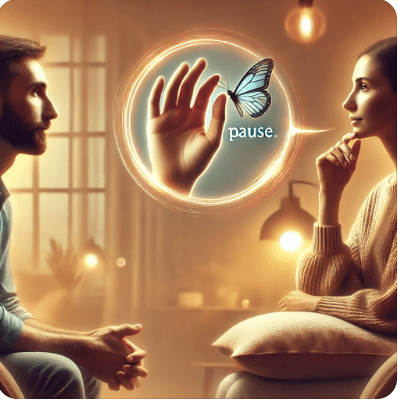
Introduction: This morning, while working with AI on a video I had made, I noticed it automatically removed all the filler words like “um” and pauses. A conversation with a friend later reminded me that pauses are sometimes better left in for emphasis. This got me thinking about the nuances of our everyday conversations.

The Role of Pauses and Fillers:

  1. Do we use filler words like “um” out of fear that a long pause might prompt others to start talking, interrupting our thought process?
  2. How do different speaking and thinking styles affect our conversations?
  3. What about those who enjoy multiple conversation threads versus those who prefer focused, single-topic discussions?

The Pause Experiment: What if we intentionally paused for 5 seconds before responding in every conversation?

  • Would this make the other person feel more heard and understood?
  • Is 5 seconds the ideal duration, or should it vary?

Alternative Listening Techniques:

  1. Repeating back what we’ve heard for accuracy
  2. Asking follow-up “why” questions
  3. Being more specific in our responses, similar to giving detailed compliments

Call to Action: I’m challenging myself to experiment with these ideas over the next few weeks. I invite you to join me in this experiment. Consider how your relationships might benefit from:

  1. Allowing for natural pauses
  2. Ensuring you’ve heard everything the other person has to say
  3. Providing specific feedback to show you’ve truly listened and understood

Conclusion: Just as we’ve discussed the importance of being specific with compliments in a previous blog, perhaps we need to apply the same level of intentionality to our listening and feedback. This could be the key to making others feel genuinely heard and understood in our conversations.

Who is Running Your Brain?

Have you ever paused to consider who’s really in control of your actions and decisions? Is it the thoughtful, goal-oriented part of you or something more primal? The truth is, our brains are complex and often influenced by different aspects of our evolutionary past. To gain control, we need to understand these influences and how they impact our everyday lives.

Evolutionary Hangovers

You weren’t the first human to walk this earth. Our ancestors have been evolving for millions of years, adapting to their environments long before modern civilization appeared. Even if we just go back 10,000 years, our ancestors lived without the refined sugars and digital distractions that dominate our lives today. Despite these changes, our brains still carry the wiring of those ancient times—a relic from our caveman days.

So, why are we letting our “caveman” instincts run our modern lives?

Understanding the Monkey Brain

We often joke about having a “monkey brain,” but there’s truth to it. The term refers to the parts of our brain that are driven by instant gratification and impulsive behaviors. This primitive aspect can drive us to overeat, procrastinate, or seek constant entertainment, even when we have more pressing goals and responsibilities.

Recognizing the Real You

You are not just your primal instincts. You have dreams, ambitions, and the ability to think and plan for the future. Yet, we frequently let our caveman brain take over. This brain urges us to seek comfort in snacks, avoid difficult tasks, and indulge in distractions. But recognizing that this caveman is not the real you is the first step toward change.

The Reality of Modern Hunger

Consider this: when was the last time you were truly hungry? In today’s world, about 80% of people are overweight or obese, while only around 12% are hungry. If you’re reading this, chances are you fall into the 80% who have access to more food than they need. Understanding this context can help us see how our caveman brain’s drive for food is often out of sync with our actual needs.

Awareness as a Tool for Change

Simply acknowledging that your primitive brain is often in control can be enough to initiate change. When I quit smoking, a technique that helped me was writing down my feelings before reaching for a cigarette. This small act of awareness reduced my urges significantly. It’s the same with other habits like snacking. By asking myself what I’m avoiding when I reach for a snack, I gain insight into my impulses.

Simple Strategies to Outsmart Your Primitive Brain

  • Physical Barriers: Placing snacks in a less accessible place, like a high shelf or a different room, can help reduce impulsive eating.
  • The Five-Minute Rule: Most urges, whether for sweets, alcohol, or even anger, don’t last more than five minutes. Commit to waiting it out, and you might find the urge passes.
  • Healthy Alternatives: Stock your house with healthier options like nuts and fruit instead of cookies and ice cream.

Harnessing Your Inner Rebel

Human beings have a natural tendency to resist being told what to do. Think about the times you did the opposite of what your parents or partner suggested, just out of rebellion. Use this instinct to your advantage. Don’t let a caveman or a monkey boss you around. Rebel against these primitive impulses and take control.

Focus on What Really Matters

Remember, you don’t need to check social media, play video games, or watch TV. These are distractions that your primitive brain craves for instant gratification. Instead, focus on what you truly need to do:

  • Finish that report for work or school.
  • Take care of your finances.
  • Pursue that next big client.
  • Improve your health and fitness.

Take Control Back

It’s time to stop letting the caveman and monkey run your life. You have the power to make conscious choices that align with your long-term goals and values. Start by becoming aware of your urges, challenge them, and take small steps towards a more controlled and fulfilling life.

Life is the Opposite of Puzzles

This will bring you more peace, happiness, and hope for the future than anything.

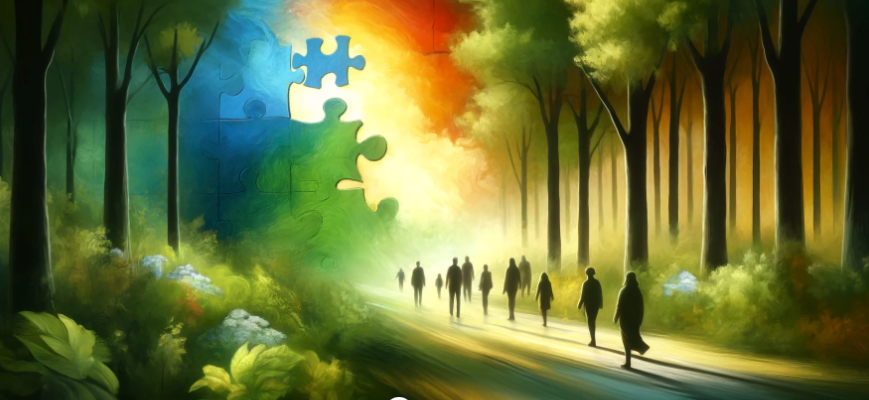
Remember those puzzles we used to do as children? The joy of carefully placing each piece, knowing that eventually, a complete and beautiful picture would emerge. Life, however, doesn’t come with such clear edges or a defined image on the box. It’s a journey full of surprises, where the final picture remains a mystery.

Embrace the Uncertainty

Unlike a puzzle where every piece has a predetermined place, life invites us to embrace the unknown. Each moment, each experience, adds to the mosaic of our existence, often in ways we can’t foresee. This unpredictability can be daunting, but it also holds the promise of endless possibilities.

Finding Peace in the Present

To navigate this journey with peace, it’s essential to find contentment in the present. Focus on the pieces you have right now, and appreciate how they fit together. Even if the bigger picture is unclear, the beauty lies in the process of discovery. Trust that each step forward, each decision made, contributes to the unfolding masterpiece of your life.

Cultivating Happiness

Happiness comes from cherishing the present and finding joy in the little things. The path through life, much like the one through a lush forest, is filled with moments of beauty if we take the time to notice. Spend time with loved ones, pursue passions, and allow yourself to dream without the constraints of knowing exactly where those dreams will lead.

Hope for the Future

Hope springs from the understanding that life’s unpredictability is not something to fear but something to embrace. Each twist and turn offers new opportunities and lessons. By letting go of the need to control every aspect and instead flowing with life’s rhythm, you open yourself up to a future filled with potential.

The Journey is the Reward

Life may not offer the certainty of a completed puzzle, but it provides something far more enriching – a journey of continuous growth, discovery, and connection. Embrace the mystery, find peace in the present, cultivate happiness, and maintain hope for the future. This approach will bring you a deeper sense of fulfillment and joy than any completed puzzle ever could.

PS * credit to Fernando Valencia who first brought the analogy of the puzzle concept to me and to ChatGPT for fleshing it out and writing it better than I could. And credit to ME for recognizing how powerful and useful the concept is FOR EVERYONE who might not be exactly where they want to be right now ( like everyone) and for prompting Chatgpt correctly and realizing it is worth sharing. Here was my prompt “blog post please write and make photo. this will bring you more peace happiness and hope for the future than anything. Life is the opposite of puzzles we used to do,, you dont know what the final picture is going to be. also make photo’

I am going to also make a ten best rules for life according to my 70 years many thousands of books countless seminars thousands of cassettes

Could you spend 1 day with only all fresh thoughts? No old thoughts allowed.

I am sure you have heard that we have around 80,000 thoughts a day. The huge problem is that 80% of them are the same thoughts you had yesterday and most of them are negative. Do you think that might cause a problem? Do you think that could steal your happiness? If you havent heard that google it. You will find it written a thousand times a thousand different places. It is what you are doing right now. You are asking yourself, “what is he talking about?” We talk to ourselves incessantly. That is literally the foundation of everything, “self help”. Lets test my theory. Meditation; duh. The goal is to get you to quiet your mind’s incessant chatter. Affirmations; the goal is to at least say positive things. Positive thinking; the goal is to think positive things. Anthony Robbins ( biggest self help guru you know the big guy) He goes through the plethora of things you tell yourself, your beliefs etc. Heck there are even books on self talk. I should ask AI how many books are written to address self talk. In one form or another, they all address self talk. What are you doing when you set goals? You are talking to yourself.

I have a novel idea, I havent seen anywhere. What if you spent one day without repeating a single thought you have had before. Think about that. There is no reason to repeat a thought from yesterday, the day before, and so on and so on. If there are things you have to do, just do it. Just stop repetitive talking to yourself. So now you are challenging your mind to actually “Think” with a capital T. I wrote about this previously. Babbling to yourself in anyone’s world can not possibly pass for thinking. The only place babbling to yourself incessantly is common is in an insane asylum. Worse yet if you are doing it in public. Are you any different, if you are calling up your friends every day and saying how about that Donald Trump or how about that Joe Biden? Or if you are simply repeating your money or health worries from yesterday? Seriously people, get a life.

Its funny I “let go” of so much with the Sedona Method, that my mind is extremely quiet. Yes I have some serious challenges with work that has me playing different options and decisions that are not black and white today. But for the most part, I dont talk to myself, not too much, LOL. When it gets real quiet, I start to “Think”, I write. Its when I wrote most of this blog. I think of things like this idea to have a day with only “thinking,” no vomiting repetitive thoughts. God only knows what will come to mind. And I mean that literally and figuratively. Where is this writing coming from? I am just spontaneously writing, or so it seems to me. We have a lot we can think about. In fact where is our thinking coming from, is easily one of the things to think about.

Maybe all of the great ideas and inventions of the past few hundred years of civilization came in moments of stillness when certain people were able to access the part of their mind where original thinking comes from. Or maybe the stillness allows the reception of collective consciousness, or even “God” in whatever way you choose to see the intelligence outside of yourself. In fact, I cant even believe how cohesively and seamlessly I am writing this, or am I? I am really impressed with this thought. I will have to ask others how they understand what I am saying

For me, I am going to spend the rest of the day in quiet “contemplation” allowing myself to have real thinking. Its almost like a living meditation. Being so quiet that maybe magic can happen. I am standing guard at my mind not allowing any thought I have had before to enter. Just like when you are meditating and when a “thought” comes by you just let it pass without giving it any attention. If a repetitive thought presents itself I am merely letting it gently pass without paying any attention to it. And why should that only happen while you meditate? Why not stand guard all day? Am I the only one that entertains repetitive thoughts? Or am I the only one recognizing and suggesting that we live without entertaining repetitive thoughts? Like, while we meditate, but constantly, throughout the day while we are awake.

Maybe tonight I might plan tomorrow and what my next steps are with my current overwhelming issue. But for the rest of the day I am going to enjoy my meditative state of “being” Perhaps that is another way of “being” Or maybe that is, the way to “be.” Or maybe, that is the path to “being.” Or maybe we should call “living in the now,” simply a human “being,” vs a human “thinking” small t. And are you actually being, if you are thinking BS ( repetitive thoughts)? Again my proposal is to either “be” or you can “Think” ideate, create. The only thing I am suggesting with this exercise it that you merely do not allow a single repetitive thought to be entertained. I know, no mere task. It is actually monumental, if you can experience a whole day without a single one of your 80,000 repetitive thoughts, from yesterday, hijacking your brain and, by the way, your happiness. It was also noted that most of those repetitive thoughts are negative. So there should be a plethora of benefits if you can spend your days without entertaining repetitive thoughts.

I will have to search to see if I am the only one suggesting this, because there are a lot of famous people out there that I listen to. I have yet to hear anyone suggest you even try to do this. They suggest meditating and positive thinking and visualizing. No one that I have heard, in my 40 plus years, reading self help, has ever suggested to merely try to live a day without entertaining a repetitive thought. No old thoughts allowed, only new thoughts. Good luck I will have to open the comments. PS I just found some moron suggesting blank mind is a problem. Not so fast Bozo. Pretty much every single one of us suffer from entertaining the same repetitive 80,000 thoughts pretty much every day of their life. That might be a bigger problem. Maybe people like Elon Musk and Thomas Edison are not repetitive thought monkeys. I doubt they would have the time to invent anything if there mind is merely repeating the same thoughts as yesterday. Think about how insane we have all been merely repeating the same thoughts every day. I will report back. This could be monumental. I might have to create a whole course around this if I succeed, and especially if it changes my life as I imagine it would.

Maybe I should ask a few friends to take the challenge. We might have to refine it, ie you are only allowed repetitive worrying thoughts for one hour a day, preferably early evening when you are preparing for the next day. This way you can tell yourself, as I am doing today, ” I can let that thought pass because I will make plans early this evening” vs just self flagellating by repeating my very serious decision I have to make this week. I also say that because I want to return to “no thoughts” before sleep.