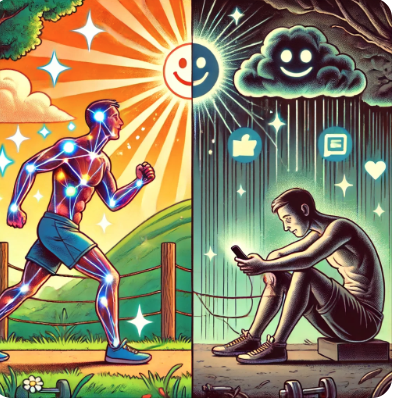
It’s a funny but profound truth: humans are, in essence, drug addicts. But not in the way you might first imagine. Our brains are wired to seek out experiences that release pleasure-inducing chemicals. These “drugs” are the neurotransmitters and hormones like endorphins, oxytocin, dopamine, and serotonin. Let’s take a closer look at how these natural highs influence our behavior and choices, and the myriad ways we chase them.
Choosing Your “Drugs”
1. Exercise and Endorphins: When you exercise, your brain releases endorphins, often referred to as the body’s natural painkillers. This chemical surge can give you a euphoric feeling, known as the “runner’s high.” It’s a healthier way to get your fix, boosting mood, reducing stress, and enhancing overall well-being.
2. Sweets and Sugar Rushes: Eating sweets can trigger a rapid release of dopamine, the brain’s reward chemical, making you feel good and crave more. This is why it’s so hard to resist that piece of chocolate or that scoop of ice cream—our brains are wired to love sugar.
3. Alcohol and Relaxation: Alcohol consumption increases the release of dopamine, giving you a temporary feeling of euphoria and relaxation. However, it’s a double-edged sword, as overindulgence can lead to dependence and a myriad of health issues.
4. Physical Touch and Oxytocin: Cuddling with your pet, hugging a loved one, or even holding hands can release oxytocin, known as the “love hormone.” This not only feels good but also strengthens social bonds and reduces stress.
5. Avoidance and Stress Reduction: Sometimes, not making a decision or avoiding a task can be a way to sidestep the fear and anxiety that come with certain activities. This avoidance can temporarily shield us from the flood of stress-related chemicals like cortisol.
6. Politics and Adrenaline: Getting riled up about politics or other contentious topics can flood your brain with adrenaline, making you feel alive and engaged. This explains why people can become so passionately involved in debates or political discussions, often thriving on the emotional intensity.
7. Social Media and Dopamine: Social media is designed to keep us hooked. Every like, comment, or share triggers a release of dopamine, reinforcing our desire to keep scrolling and engaging. This constant hit of pleasure is why so many find themselves addicted to their screens.
8. Healthy Social Interactions: Interacting with others can release a cocktail of beneficial chemicals—oxytocin, dopamine, serotonin, and endorphins. These interactions boost our mood, enhance social bonds, and contribute to our overall health and well-being.
Why Social Media is So Addictive
Social media is like a digital playground for our brain’s reward system. It offers instant gratification and constant feedback, making it a potent source of dopamine hits without the need to leave the house. This explains why scrolling through feeds can be so hard to put down—it’s a quick, easy, and effective way to feel good.
Balancing Your Brain’s Needs
Understanding that we are all seeking these chemical rewards can help us make more conscious choices about how we get them. Opting for healthier activities like exercise, social interactions, and hobbies can provide the same pleasurable effects as more harmful behaviors but with lasting benefits for our well-being.
So, next time you reach for that piece of chocolate, decide to binge-watch a series, or opt to hit the gym, remember—you’re just trying to get your next fix. Make sure it’s one that truly enhances your life.
Conclusion: The Dual Nature of Our Urges
Humans are hardwired to seek out chemical rewards from various activities, a trait that has ensured our survival through evolution. These chemical urges—whether it’s the endorphin rush from exercise or the dopamine hit from social media—are essential for motivating us to eat, drink, and connect with others. Without these built-in triggers, we might neglect basic survival needs, much like how some older adults lose their thirst mechanism and risk dehydration.
However, in today’s world, these same survival mechanisms can also lead to our downfall. The abundance of unhealthy foods, coupled with technologies designed to exploit our urge for instant gratification, can steer us towards detrimental habits.
Understanding this dual nature is crucial. While these urges help us thrive, they can also be manipulated, pushing us to make choices that ultimately harm our health and well-being. By becoming aware of these impulses and how they influence our behavior, we can make more conscious decisions, opting for activities that provide lasting benefits over fleeting pleasures.
It’s a delicate balance, but by choosing healthier ways to satisfy our urges—like exercising, engaging in meaningful social interactions, or pursuing hobbies—we can harness our natural instincts to live more fulfilling and healthier lives.








 Happiness Health and Beauty Secrets