Finally, Science Catches Up: Viagra’s Potential in Alzheimer’s Treatment

I wrote about this after I read the study from 2021, I’ve believed in the untapped potential of existing drugs to treat complex conditions like Alzheimer’s disease. It seems the Cleveland Clinic has caught up to my thinking, this March 2024, as recent studies highlight the promising role of sildenafil (Viagra) in reducing the risk of Alzheimer’s. PS thanks to my sister who prompted me to check again for any research on women. Just to confirm what certainly seems like common sense.

The Groundbreaking Research

Researchers at the Cleveland Clinic have discovered that sildenafil, commonly known for treating erectile dysfunction, might significantly lower the risk of developing Alzheimer’s disease. This revelation comes from analyzing over 7 million medical records, showing that individuals taking sildenafil were 69% less likely to develop Alzheimer’s over a six-year period compared to non-users​ (Cleveland Clinic)​​ (Cleveland Clinic)​.

How Does It Work?

Sildenafil appears to influence both amyloid plaques and tau proteins, which are key factors in Alzheimer’s pathology. By enhancing brain cell growth and reducing tau protein hyperphosphorylation, sildenafil shows potential as a neuroprotective agent. These effects were confirmed in laboratory settings using neurons derived from Alzheimer’s patients​ (National Institutes of Health (NIH))​​ (Cleveland Clinic)​.

Broader Implications for Heart Health

Beyond its potential in Alzheimer’s prevention, sildenafil is also known for its cardiovascular benefits. It improves blood flow and endothelial function, which can reduce the risk of heart diseases—a crucial consideration since heart health and brain health are closely linked​ (Cleveland Clinic)​.

What This Means for You

This groundbreaking research underscores the importance of drug repurposing. Instead of starting from scratch, scientists can explore the benefits of already approved drugs for new therapeutic uses, potentially accelerating the availability of treatments for diseases like Alzheimer’s.

Looking Ahead

The Cleveland Clinic’s findings are just the beginning. Further clinical trials are needed to establish sildenafil’s efficacy in preventing or treating Alzheimer’s disease. However, these initial results are promising and pave the way for innovative approaches to combating neurodegenerative diseases.

Join the Conversation

I invite you to stay informed and engaged as we explore these exciting developments in medical research. Together, we can hope for a future where Alzheimer’s disease and similar conditions are a thing of the past.

For more detailed information, check out the full studies and findings from the Cleveland Clinic and the National Institutes of Health:

Feel free to share your thoughts and experiences. Let’s continue this journey together, exploring how science can unlock new possibilities for health and wellness.


Are You on the Road Less Travelled, Most Travelled, or Not Travelled?

The book “The Road Less Travelled” sparked a movement towards meditation and self-reflection. It’s great to reflect on your life and your soul, but what about the actual path you’re on? The road we choose in life shapes our experiences, our happiness, and our fulfillment. So, let’s explore the roads most travelled, less travelled, and not travelled at all, along with their benefits and pitfalls.

The Road Most Travelled

This path is well-worn and widely accepted by society. It often includes marrying within one’s culture and religion, settling down, having a stable job, and following societal norms.

Benefits:

  • Predictability: Provides a stable, predictable life.
  • Support System: Surrounded by like-minded people and a strong community.
  • Less Risk: Fewer unknowns and generally fewer risks.

Pitfalls:

  • Lack of Exploration: May leave you wondering about life outside the bubble.
  • Conformity Pressure: Pressures to conform can stifle individual growth and creativity.
  • Potential for Regret: Following a set path without questioning may lead to mid-life crises or regrets.

I often think about what my life would have been like if I had taken this road. My parents wanted me to marry a nice girl within our culture and religion, which likely would have led to a peaceful life. But I always questioned everything and still do. Considering the high divorce rate, the road most travelled might not work for everyone.

The Road Less Travelled

This path involves questioning societal norms, exploring different lifestyles, and often pursuing passions that aren’t mainstream.

Benefits:

  • Self-Discovery: Provides opportunities for personal growth and self-discovery.
  • Fulfillment: Pursuing passions and interests can lead to deep fulfillment.
  • Innovation: Encourages creativity and original thinking.

Pitfalls:

  • Uncertainty: Constant unknowns and instability.
  • Isolation: Can be lonely and isolating, as fewer people understand or support your choices.
  • Risk: Higher risk of failure and facing numerous challenges.

I always wondered what life would be like on this path. Despite the unknowns and perils, this road is filled with excitement and exhilaration. However, life comes with no guarantees, and it’s like a puzzle with an unknown picture, regardless of the path you choose.

The Road Not Travelled

This is the path of constant adventure and discovery, where you forge your way through unknown territories and create your own rules.

Benefits:

  • Excitement: Constant novelty and adventure.
  • Independence: Complete freedom to chart your own course.
  • Unique Experiences: Rich, diverse experiences that few others have.

Pitfalls:

  • High Risk: Extreme uncertainty and potential for significant setbacks.
  • Loneliness: Often a solitary journey with limited support.
  • Stress: High levels of stress and the need for constant decision-making.

I’ve often said I wish my brain allowed me to join the union, get married to a “nice” girl, settle down in Staten Island or NJ, have kids and a dog, and watch my family multiply. But my brain craves adrenaline, endorphins, and dopamine. My life will continue on the road not travelled, filled with excitement, novelty, and adventure.

Reflection and Balance

Regardless of the path you’re on, it’s valuable to step onto the opposite road occasionally. If you’re on the road most travelled, try something new or different. If you’re on the road not travelled, take a break and spend some time on the comfortable, well-worn path. It’s okay to take a break from fighting dragons and navigating the unknown jungle every day.

A Proposal for Reflection

Reflect on the road you’re on and consider taking a few steps on the opposite path. Life is a journey with no guarantees, and exploring different roads can provide a richer, more fulfilling experience. Embrace the adventure, the stability, or the novelty that each path offers, and find your own unique way to navigate through life.

P.S. Whether you are aware of it or not, you are on the road not travelled. Every little thing that made you who you are is unique. No one had the exact same parents as you. Were they domineering, demanding, not around, divorced, loving, nasty, abusive? No one went to the same kindergarten, grade school, high school, and college as you. No one had all the same teachers and coaches you had. Even if you had an identical twin, your paths diverged here and there. So, enjoy your road.

And when is it time to create a road that literally doesnt exist but is of your making.

Emotional Energetic States: Energy vs. Anti-Energy

  1. Fun vs. Rigidity
    • Fun: Represents a state of joy, playfulness, and light-heartedness. This energy is infectious and can uplift those around you.
    • Rigidity: Signifies strictness, inflexibility, and a serious demeanor. It can create barriers in communication and make interactions feel tense.
  2. Goddess in the Heart vs. Thinking (in the Head)
    • Goddess in the Heart: Symbolizes being present, compassionate, and connected to your emotions and intuition. It allows for deep, heartfelt connections with others.
    • Thinking (in the Head): Indicates being overly analytical, focused on the past or future, and disconnected from the present moment. This state can hinder genuine emotional connection.
  3. Aspirational Inspired vs. Negativity
    • Aspirational Inspired: Involves being motivated, hopeful, and driven by positive goals. This energy can inspire and motivate others.
    • Negativity: Involves pessimism, doubt, and negative vibrations. It can drain energy and discourage those around you.
  4. Zeus Decisive Fulfillment Achievement vs. Fear and Uncertainty
    • Zeus Decisive Fulfillment Achievement: Embodies confidence, decisiveness, and a sense of accomplishment. This state exudes strength and can lead others with assurance.
    • Fear and Uncertainty: Represents anxiety, hesitation, and lack of confidence. It can create instability and prevent effective communication.

The Importance of Emotional Energy in Communication

You cannot effectively communicate with others if you are stuck in a state of rigidity, overthinking, negativity, or fear. True connection happens on an energetic level, where emotions play a crucial role.

Key Points to Remember:

  • We connect energetically: Our emotional states influence our ability to connect with others. Being in a positive and present state enhances our interactions.
  • Physical Actions to Shift States: If you find yourself in misery, grief, or depression, physical actions like a hand clap or fist pump can help shift your energy.
  • Communicating Emotionally: To take people on an emotional journey with you, you need to be in touch with your own emotions. This allows you to communicate with authenticity and empathy.

By being aware of your emotional state and actively choosing positive energy, you can improve your ability to connect and communicate with others. This not only enhances personal relationships but also professional interactions and overall well-being.

Credit Michael Smikun July 5, 2024 morning huddle Unblinded my notes to the best of my ability

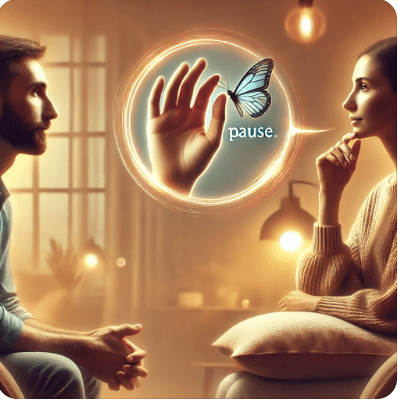
The Power of Pauses: Rethinking Our Conversation Dynamics

Introduction: This morning, while working with AI on a video I had made, I noticed it automatically removed all the filler words like “um” and pauses. A conversation with a friend later reminded me that pauses are sometimes better left in for emphasis. This got me thinking about the nuances of our everyday conversations.

The Role of Pauses and Fillers:

  1. Do we use filler words like “um” out of fear that a long pause might prompt others to start talking, interrupting our thought process?
  2. How do different speaking and thinking styles affect our conversations?
  3. What about those who enjoy multiple conversation threads versus those who prefer focused, single-topic discussions?

The Pause Experiment: What if we intentionally paused for 5 seconds before responding in every conversation?

  • Would this make the other person feel more heard and understood?
  • Is 5 seconds the ideal duration, or should it vary?

Alternative Listening Techniques:

  1. Repeating back what we’ve heard for accuracy
  2. Asking follow-up “why” questions
  3. Being more specific in our responses, similar to giving detailed compliments

Call to Action: I’m challenging myself to experiment with these ideas over the next few weeks. I invite you to join me in this experiment. Consider how your relationships might benefit from:

  1. Allowing for natural pauses
  2. Ensuring you’ve heard everything the other person has to say
  3. Providing specific feedback to show you’ve truly listened and understood

Conclusion: Just as we’ve discussed the importance of being specific with compliments in a previous blog, perhaps we need to apply the same level of intentionality to our listening and feedback. This could be the key to making others feel genuinely heard and understood in our conversations.

What If We Harnessed the Success of the $347 Billion Video Game Industry?

Did you know the video game industry rakes in a staggering $347 billion annually? It’s a behemoth that rivals even the military industrial complex in terms of economic impact. But what makes these games so successful, beyond their entertainment value?

Behind the scenes, teams of psychologists are likely analyzing the best intervals to hack our brains. Whether it’s Candy Crush or Call of Duty, these games are designed with various levels of rewards, from simple to complex. They train players to expect rewards every 5 to 30 seconds, gradually conditioning them. Then, at critical junctures, they offer in-game advantages for a fee—a strategy that keeps players engaged and spending.

For those unfamiliar with gaming, don’t dismiss its influence. The industry’s immense profitability speaks volumes about its effectiveness. At its core, gaming taps into our brain’s reward system, triggering the release of happy chemicals with each accomplishment.

Consider how we can apply these principles outside of gaming. What if we structured tasks and goals in our personal and professional lives to offer similar incremental rewards? By breaking down challenges into manageable levels of achievement, we can leverage the psychology of motivation and satisfaction.

Let’s explore how we can learn from the strategies that make gaming so addictive and engaging. Could adapting these techniques help us unlock greater productivity, motivation, and satisfaction in our daily lives?

Real Rapport: It’s Not What You Think

When we think about building rapport, the common assumption is to find similarities and share them eagerly. Imagine meeting someone and discovering that their mother was born in the same small city in Ukraine as yours. You’d think sharing this would instantly create a connection, right? Wrong. Buzzer please! On a scale of 1 to 5, that’s a zero.

Or picture this: a new acquaintance tells you their favorite sport is basketball. You jump in to share that baseball is yours, thinking it’s a great way to bond over sports. Buzzer again! Still level zero.

Why doesn’t this work?

Here’s the insight that flips the script on what real rapport is. I have to give 100% credit to Sean Callagy, the leader of Unblinded, for this profound understanding. During a conversation with a young lady who cherished watching the Yankees with her father and family, Sean didn’t just wait for his turn to speak or share his own baseball stories. Instead, he listened deeply. He recognized the emotional weight of her relationship with her father and how it colored her love for the Yankees. He listened so intently and empathically that he had to stop himself to avoid bringing her to tears. That’s a level 5 connection.

The key to real rapport isn’t in sharing our stories. It’s in deeply understanding and acknowledging theirs.

Think about it. How many times have you shared something that felt 110% relevant to the conversation, only to have the other person say, “I forgot what I was going to say”? What does that tell you? It suggests that while you were focused on your relevant contribution, they were waiting to share something important to them. They weren’t heard. They weren’t seen.

Earlier in the day on a morning call, Michael Smikun, another leader at Unblinded, explained the concept of “acknowledgement.” I realized its significance when I tried to help a friend transition out of grief without first acknowledging their pain. I had the right intention – I didn’t want them to suffer – but I missed the mark. They thought I didn’t care because I skipped over acknowledging their grief. My focus was on easing their suffering, but without recognition of their current state, it felt dismissive.

Real rapport is about more than matching and mirroring. It’s about being fully present and deeply acknowledging the other person’s experience.

This isn’t something new. I learned the basics of matching and mirroring 40 years ago with Anthony Robbins. But what I’m talking about here goes far beyond that. It’s not just about reflecting back behaviors or words. It’s about tuning into the emotional and relational frequencies of the people you engage with.

To truly connect, we must go beyond superficial similarities and dive into genuine understanding.

This takes practice and a lot of patience. It’s about listening not just with our ears, but with our hearts. It’s about being of true service and support to those we love. And when we master this, the connections we build are richer, more meaningful, and profoundly impactful.

So next time you find yourself in a conversation, resist the urge to share your own stories right away. Instead, listen deeply, acknowledge fully, and let the connection naturally deepen. That’s real rapport.


Final Thoughts

The insights shared here are inspired by the wisdom and teachings of Sean Callagy and Michael Smikun from Unblinded. Their guidance has profoundly reshaped my understanding of building meaningful connections. I would be remiss not to mention Fernando Valencia, who brings yet another nuance of rapport, which I will delve into in my next post. If you’re ready to take your relationships to the next level, start by practicing deep, empathetic listening. And remember, true connection lies in the heart of genuine understanding.

Why We Shield a Child’s Head but Neglect Their Brain: The Unseen Threat of Digital Overstimulation

As parents and guardians, we instinctively protect our children from physical harm. We put helmets on them when they ride bikes, use car seats to secure them during travels, and hover over them to prevent falls. Yet, there’s an invisible danger we’re often less vigilant about—one that directly targets their developing brains: the pervasive presence of digital devices.

The Paradox of Protection

In our digitally saturated world, children’s brains are constantly exposed to electronic devices designed to captivate and stimulate them with a flood of immediate rewards. This paradox raises a critical question: why do we rigorously safeguard our children’s physical heads while neglecting the more profound and lasting impacts on their cognitive development from digital overstimulation?

The Hijacking of the Dopamine Reward System

At the core of this issue is the brain’s dopamine reward system. Dopamine, a neurotransmitter, plays a pivotal role in how we experience pleasure and motivation. It’s the brain’s “feel-good” chemical, released during enjoyable activities like eating, playing, or achieving goals. However, the structure and functioning of the dopamine system are particularly susceptible to external influences during childhood.

  1. Short-Term Stimulation:
    • Instant Gratification: Many digital devices and apps are engineered to deliver constant, quick bursts of dopamine. Every notification, like, or level up in a game provides a small, immediate reward, conditioning the brain to expect continuous stimulation.
    • Reduced Attention Span: This relentless barrage of stimuli can train children to seek instant gratification, making it difficult for them to focus on tasks that require sustained attention or to delay gratification for more significant, long-term rewards.
  2. Long-Term Consequences:
    • Altered Brain Development: Children’s brains are exceptionally plastic, meaning they are highly adaptable and continually developing. Persistent exposure to rapid, short-term rewards can alter the brain’s natural reward pathways, potentially leading to conditions like attention deficit disorders, anxiety, and difficulties in self-regulation.
    • Impaired Decision-Making: A brain accustomed to immediate rewards may struggle with decision-making processes that require patience and long-term thinking. This can impact their academic performance, social interactions, and future career prospects.

Digital Devices: Double-Edged Swords

While technology offers educational and entertainment benefits, its potential drawbacks, particularly for young minds, are profound:

  1. Cognitive Overload: Excessive use of digital devices can overwhelm a child’s cognitive capacities. This overload can impair learning, memory, and critical thinking skills.
  2. Emotional Dysregulation: The emotional highs and lows induced by digital interactions can disrupt a child’s ability to manage emotions effectively, leading to increased irritability and mood swings.
  3. Social Isolation: Despite their connectivity, digital devices can foster social isolation. Real-world interactions are essential for developing empathy, communication skills, and strong interpersonal relationships.

The Role of Parents and Guardians

Protecting our children’s brains from digital overstimulation requires a multi-faceted approach:

  1. Setting Boundaries:
    • Screen Time Limits: Establishing clear limits on the amount of time children can spend on digital devices helps mitigate their exposure to overstimulation.
    • Tech-Free Zones and Times: Designating certain areas and times (like during meals or an hour before bedtime) as tech-free encourages other forms of interaction and relaxation.
  2. Encouraging Alternative Activities:
    • Physical Play: Promoting outdoor and physical activities supports overall health and provides natural, balanced stimulation for the brain.
    • Creative Endeavors: Engaging children in creative activities like drawing, reading, or building with blocks fosters sustained attention and imaginative thinking.
  3. Modeling Healthy Behaviors:
    • Demonstrating Balance: Children often mimic the behavior of adults. Showing them how to balance screen time with other activities sets a positive example.
    • Mindful Consumption: Being mindful of how we use digital devices and their content can help us better understand and guide our children’s digital habits.

The Path Forward

In an age where digital devices are ubiquitous, balancing their benefits with their risks is crucial. As we protect our children’s physical well-being, we must also be vigilant in safeguarding their cognitive and emotional development. By recognizing and addressing the impacts of digital overstimulation, we can help nurture resilient, thoughtful, and well-adjusted individuals capable of thriving in the ever-evolving digital landscape.

Conclusion

The unseen impact of digital devices on our children’s brains is an issue that demands our attention and action. Just as we wouldn’t leave their heads unprotected during a fall, we must not leave their minds unguarded against the subtle yet profound effects of digital overstimulation. By fostering healthy digital habits and promoting diverse activities, we can ensure that our children grow up with the capacity to delay gratification, engage deeply with the world around them, and develop into well-rounded individuals ready to navigate the complexities of modern life.

Positive and Negative Thoughts and Implications for our Health and Well being

I am not a neuroscientist. But if you accept the fact that we have between 50,000 and 90,000 thoughts a day and they all have energy. How much energy are you burning and is it enervating or destroying you, or elevating you? I would argue, you know exactly what I mean. You feel awful after entertaining negative thoughts and ideas and are totally excited when you think of positive outcomes and thoughts that make you happy. You dont even have to go to a Tony Robbins seminar and jump up and down. I would argue that you can go. But if you come back home and keep thinking lousy thoughts, well, at the least you are going to feel lousy.

I can not insure the accuracy of the detailed scientific numbers below. But you know when you feel great. And some of us make ourselves sick with our thoughts. You have experienced both excitement and feeling so bad you feel sick. Choose wisely your health and life depend on it. So you dont even have to read any further. Stop the stinking thinking you are at the very least making yourself sick at worst you could be killing yourself or setting yourself up for serious disease. Think ulcers, heart disease etc.

Positive vs. Negative Thoughts and Energy.

  1. Neuroscience of Positive and Negative Thoughts:
    • Activation Patterns: Positive and negative thoughts activate different regions of the brain. Positive thoughts often involve the prefrontal cortex and reward centers like the nucleus accumbens. Negative thoughts may engage areas associated with stress and emotion regulation, such as the amygdala and the anterior cingulate cortex.
    • Energy Usage: Both types of thoughts require energy for neural activation, but there’s no straightforward way to measure if one consumes more energy than the other. The content and emotional weight of a thought could influence the level of neural activation and, consequently, energy usage.
  2. Psychological Impact:
    • Negative Energy and Enervation: Persistent negative thoughts are linked to stress and anxiety, which can lead to increased cortisol production and prolonged activation of the stress response. This not only consumes energy but also can lead to fatigue and a feeling of being drained.
    • Positive Energy and Elevation: Positive thoughts are associated with the release of neurotransmitters like dopamine and serotonin, which enhance mood and can create a sense of vitality and energy.

The Broader Impact on Well-being

  1. Mental and Physical Health:
    • Chronic Stress: Sustained negative thinking and stress can weaken the immune system, contribute to chronic diseases, and diminish overall health. This process consumes a significant amount of energy and can leave individuals feeling depleted.
    • Positive Mindset: Positive thinking has been shown to improve mental health, reduce stress, and enhance overall well-being. This state of mind can lead to better health outcomes and a more efficient use of energy.
  2. Energy Dynamics:
    • Cognitive Load: Negative thoughts often involve rumination and high cognitive load, which can be mentally exhausting. In contrast, positive thoughts and a positive mindset might be less taxing and even invigorating.
    • Emotional Impact: Emotions associated with positive thoughts, such as joy and excitement, tend to energize us, while emotions linked to negative thoughts, like fear and sadness, can drain our energy.

Practical Implications

  1. Mindfulness and Thought Management:
    • Awareness: Being aware of the nature of our thoughts and their impact on our energy and well-being is crucial. Practices like mindfulness and cognitive-behavioral techniques can help shift the balance towards more positive thinking.
    • Energy Optimization: By fostering a positive mental attitude and managing stress effectively, we can potentially optimize our brain’s energy use and enhance our overall vitality.
  2. Lifestyle Adjustments:
    • Healthy Habits: Engaging in activities that promote positive thinking, such as regular exercise, social connections, and hobbies, can boost energy levels and counteract the effects of negative thoughts.
    • Stress Reduction: Techniques like meditation, deep breathing, and adequate sleep are essential in managing negative thought patterns and conserving energy.

Conclusion

While we cannot precisely quantify the energy of individual thoughts or differentiate the energy consumption between positive and negative thoughts directly, the overall patterns of brain activity and their impacts on well-being provide valuable insights. Positive thoughts and emotions tend to energize us, while negative ones can deplete our resources. Understanding and managing our thought processes can thus have significa

The Energy of a Thought: A Conceptual Overview

  1. Neuroscience Perspective:
    • Neural Activity: Thoughts are generated by the firing of neurons in the brain. Each neural impulse involves the movement of ions (charged particles) across the neuron’s membrane, creating tiny electric currents. The brain’s overall electrical activity can be measured using electroencephalography (EEG), which detects electrical signals from groups of neurons.
    • Metabolic Energy: Neuronal activity requires energy, primarily supplied by glucose and oxygen. Functional MRI (fMRI) scans can measure changes in blood flow to different brain areas, indicating which regions are more active during specific thoughts or tasks.
    • Energy Consumption: The brain consumes about 20% of the body’s energy, even though it only accounts for about 2% of body weight. During intense cognitive tasks, the energy consumption in specific brain areas increases. However, this increase is still relatively small compared to the brain’s overall energy use.
  2. Quantifying Thought Energy:
    • Electrical Energy: The electrical energy generated by neuronal activity is minuscule. Individual neurons generate tiny voltages (about 70 millivolts). When many neurons fire synchronously, the cumulative electrical activity can be detected as brain waves, but the actual energy in these electrical signals is extremely low.
    • Biochemical Energy: The energy used by the brain’s metabolic processes can be quantified in terms of ATP (adenosine triphosphate), the primary energy currency in cells. However, translating this into the “energy of a thought” is complex because thoughts involve dynamic and distributed neural processes.
  3. Quantum Perspective:
    • Quantum Brain Hypothesis: Some theoretical physicists propose that quantum processes could be involved in neural activity. If true, thoughts could be linked to quantum phenomena like wavefunction collapse. This is highly speculative and not widely accepted in mainstream neuroscience.
    • Quantum Energy: If quantum effects are involved in thought processes, measuring the energy would require understanding how quantum states interact at the neuronal level, which is currently beyond our technological capabilities.

Measuring Thought Energy: Current Tools

  1. EEG (Electroencephalography): Measures the electrical activity of the brain through electrodes placed on the scalp. It can provide insights into the brain’s electrical patterns during different cognitive states but doesn’t quantify energy in the conventional sense.
  2. fMRI (Functional Magnetic Resonance Imaging): Measures changes in blood flow, indirectly indicating brain activity. This technique shows which areas are consuming more energy but doesn’t directly measure the energy of thoughts.
  3. PET (Positron Emission Tomography): Uses radioactive tracers to measure metabolic processes in the brain, offering a view of how glucose and oxygen are consumed during cognitive activities.

Theoretical and Philosophical Considerations

  1. Information Theory: Some theorists suggest that information itself carries energy. In this view, thoughts as units of information could be said to possess energy, though quantifying this remains more philosophical than scientific at present.
  2. Mind-Body Connection: The energy of a thought might be better understood in terms of its effects on the body. For example, stress (a mental state) can lead to physical changes that consume significant energy, linking cognitive and physiological energy more tangibly.

Summary

While we can measure the brain’s electrical and metabolic activity and understand that these are linked to thoughts, the exact energy of a specific thought is challenging to quantify with current scientific methods. Most of our understanding comes from indirect measurements and theoretical models. The idea of measuring the energy of a thought remains an intriguing and evolving area of study.

If we have 50 to 90,000 thoughts a day, how much energy is that? and how much negative vs positive energy depending on the thoughts and which direction they are in . And does negative thought energy enervate us and postive energy elevate us?

The idea that thoughts have different energy levels depending on their nature (positive or negative) is a compelling blend of neuroscience, psychology, and metaphysics. Let’s explore this in detail.

Estimating the Energy Consumption of Daily Thoughts

  1. Energy Use by the Brain:
    • Baseline Energy Consumption: The human brain uses about 20% of the body’s total energy, which translates to approximately 300-500 calories per day for an average adult.
    • Energy per Thought: Given that the brain is constantly active, estimating the energy used specifically for each thought is complex. However, we can make a rough estimate by dividing the total daily energy consumption by the number of thoughts.
  2. Calculating Energy Per Thought:
    • If we assume 50,000 to 90,000 thoughts per day, and the brain consumes 500 calories daily:
      • 500 calories per day is roughly 2,090,000 joules (since 1 calorie = 4.18 joules).
      • Dividing this by 50,000 thoughts:
        • 2,090,000 joules / 50,000 thoughts ≈ 41.8 joules per thought.
      • Dividing this by 90,000 thoughts:
        • 2,090,000 joules / 90,000 thoughts ≈ 23.2 joules per thought.
    These are very approximate values because not all brain activity is tied directly to discrete, conscious thoughts.

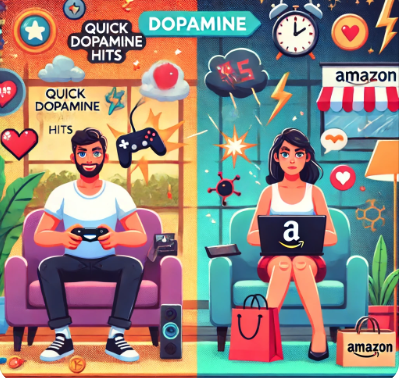
Amazon or Video Games? Depends are you a Man or a Woman

Men and women do have differences in how their brains respond to dopamine, which can influence behavior and the prevalence of certain disorders.

Dopamine Receptors and Gender Differences

  1. Dopamine Receptor Density: Studies have shown that men and women have differences in dopamine receptor density. Men generally have higher levels of dopamine D2 receptors in certain brain areas compared to women. These receptors are involved in the modulation of reward, motivation, and pleasure.
  2. Dopamine Transporter Density: The dopamine transporter (DAT) is responsible for the reuptake of dopamine from the synaptic cleft. Research indicates that women tend to have higher levels of dopamine transporters, especially in the striatum, which is a part of the brain involved in movement and reward processing. This higher DAT density could mean that dopamine is cleared from the synaptic cleft more quickly in women than in men, possibly affecting the duration and intensity of dopamine signaling.
  3. Hormonal Influence: Estrogen and testosterone can influence dopamine pathways. Estrogen has been shown to increase dopamine receptor density and dopamine release in some areas of the brain. This hormonal modulation might explain some of the sex differences in response to dopaminergic drugs and susceptibility to certain psychiatric conditions, like depression, which is more prevalent in women, and attention deficit hyperactivity disorder (ADHD), which is more common in men.
  4. Functional Brain Differences: Functional MRI studies have revealed that men and women might activate different brain regions in response to dopaminergic stimulation. For example, women may show more activity in the limbic regions (associated with emotional processing) while men might show more activity in cortical areas (associated with cognitive processing) in response to dopamine.

Behavioral Implications

  • Addiction: Differences in dopamine receptor and transporter densities may contribute to gender variations in addiction. Men are more likely to engage in riskier behaviors and substance abuse, potentially due to a higher baseline of dopamine receptor density which might modulate reward sensitivity differently compared to women.
  • Mental Health: The distinct dopaminergic responses between genders might also explain why women are more prone to mood disorders like depression and anxiety, while men are more susceptible to disorders such as ADHD and schizophrenia.

Summary

While men and women do not have entirely different types of dopamine receptors, the density, distribution, and regulation of these receptors vary between genders. These differences, influenced by genetic and hormonal factors, play a role in the distinct ways men and women experience reward, motivation, and susceptibility to certain psychiatric conditions.

Sources:

These differences underscore the importance of considering gender when studying brain function and developing treatments for neurological and psychiatric disorders.

Gender Differences and Shopping Preferences

  1. Men and Video Games:
    • Immediate Rewards: Video games are designed to provide continuous and rapid feedback. Each win, level-up, or achievement triggers a release of dopamine, catering to a desire for immediate gratification. Men, often having higher baseline dopamine receptor density, may find these immediate rewards particularly satisfying.
    • Competitive Element: Many games involve competition and quick decision-making, which might align more closely with traditionally masculine roles of hunting and competition, providing a dopamine rush that reinforces these behaviors.
  2. Women and Shopping:
    • Anticipation and Choice: While traditional shopping can involve social interactions and extended gratification, platforms like Amazon still appeal to the anticipation aspect. The delayed gratification of waiting for a product can be stimulating and rewarding, extending the dopamine response over a longer period.
    • Variety Seeking: Women might enjoy the process of browsing through a vast array of products, which can be stimulating and engaging as they explore different options and anticipate future satisfaction from their choices.

Modern Technology and Dopamine Triggers

Modern technology, including platforms like Amazon, leverages our brain’s dopamine pathways to keep us engaged. Here’s how:

  1. Frequent and Varied Rewards:
    • Algorithms and Suggestions: Personalized recommendations keep shoppers engaged by constantly presenting new items that might trigger interest and a dopamine response. This endless variety can lead to prolonged engagement as users seek the next rewarding find.
  2. Ease of Repetition:
    • One-Click Purchases: The simplicity of making purchases with a single click can encourage more frequent buying, each instance providing a quick dopamine hit. This ease of action supports the habit-forming potential of online shopping.

Conclusion

While shopping on Amazon may not be a social activity, it leverages the same dopamine pathways that make other behaviors rewarding. The mix of immediate purchase gratification and the anticipation of delivery combines to create a powerful engagement loop. This understanding helps explain why activities like online shopping and video gaming can be so compelling, despite differences in social and immediate reward structures.

Sources

  1. Psychology of Shopping
  2. How Dopamine Drives Our Addiction to Technology
  3. Gender Differences in Dopamine Functioning
  4. The Science Behind Why We Love Amazon

PS I am going to make a video game where women get to shoot their husbands. Perhaps that is a video game women will embrace.