Getting Started is Simple Physics

I can’t tell you how many things I’ve read about getting started on tasks. In fact, I was just reading yet another article that proposed the usual BS: breaking tasks into smaller parts and other hints we’ve all heard so often that if they actually worked, I wouldn’t be reading yet another article on the topic—nor would you. Maybe the solution is a lot simpler and staring us right in the face.

I would bet real money you’ve experienced this phenomenon. It’s a fact, no different than gravity. But let’s not only use it but embrace it on every level. It’s simple physics.

What if it’s truly that simple? It’s true in the universe. Ask yourself: How many times have you said, “I’ll just put this one thing away,” and 15 minutes later, you’ve embarked on cleaning the whole room? How many times have you procrastinated doing your taxes, week after week? Finally said you began downloading some 1099s, and then realized you were all done and just needed to send them to the accountant? How many times have you said you’d just walk one block and found yourself walking a mile? How many times have you said you’d give up sugar, alcohol, or whatever for just one day, and it became a week or even a lifetime habit? “A body in motion tends to stay in motion” 

In fact, that’s what AA is based on. Life is a lot simpler than we make it out to be. By the way, guess what all the books on habits are based on? It’s all the same: do it once or for a few moments, and you’re often off to the races.

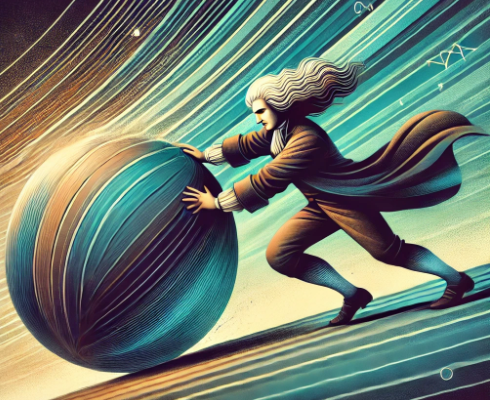
But don’t forget another part of the first law: a body at rest will tend to stay at rest. Or closer to how it’s written: Newton’s First Law of Motion states that a body at rest will remain at rest unless acted upon by an unbalanced force. This law is also known as the law of inertia.

So, you have to apply a disproportionate amount of force to get back in motion.

Have you also noticed how many of your 5-minute breaks turned into an hour? Talking to the guys here (I know you’re the gamers)—you took a break after working for an hour or a few hours (probably because you’re working from home), then decided to play one video game, and it turned into three or four? Or what about turning on the TV to catch up on the news, only to hear something designed to trigger you, and you just had to share it with a friend? (Okay, that one applies to all the myriad sexes.)

But don’t take my word for it. I’m merely asking you to look back on your life, even the past few weeks, months, or years, and ask if Newton’s Law applies to you. How many times have you gotten started on something difficult simply because you started—aka got in motion? I think it’s that simple. It applies to cleaning, decluttering, working on difficult things, and even the creative process. I’m pretty sure creatives are told to just start throwing out random ideas, thoughts, or paintings to see what evolves. Let me know with a comment.

PS: My previous idea a few posts ago was to do something for just one minute. That worked for me. My posture is almost perfect—better than it was even going back to my twenties. All I do is, for a moment—not even a minute—apply what the physical therapist taught me: stick your chest out and up a bit to open up your chest and relieve your back. The chest is where we get tight, and that rounds our shoulders. I often look to the right and left, up to 90%. That range of motion has also improved. I often grab the door frame to open up my shoulders, and on and on.

The point is, as in that post, even adding up one minute a day here and there—or, God forbid, a few times every hour (assuming you’re awake 18 hours a day, that’s 54 minutes a day)—I’ve now exceeded the amount of time you work out. And I would bet getting your body in motion all day is probably more beneficial than going to the gym for an hour and being a slug the rest of the day.

Back to the point of this blog—it’s actually a corollary to the one-minute idea. If you want to get something big done that requires sustained action, simply start. Or maybe it doesn’t require sustained action. But be cognizant that all you need is the initial push. Newton’s law is obvious. Does it take more motion to continue watching TV or scrolling on your phone, or does it require a certain amount of push just to get up out of bed or off your chair? It’s almost comical that I’m even posing this question.

Perhaps I need to hook up a pulley with a device to measure how many pounds of force it requires to lift your hopefully not-too-heavy body. So be cognizant of how many pounds of real physical and mental strength it takes to get started. And while you’re at it, how about making a habit of stretching your neck too? Otherwise, X, Z, and the youngest ones are all going to be hunched over, looking like 90-year-olds by the time they’re 40.

Sorry if this is too much information. I still have a functioning brain that brings other good things to mind when I try to convey even the simplest idea. So to recap: just get in motion. Hmm, what would be a good saying for that? Maybe “just do it”? How about “just start doing it”?

I would bet that might catch on. Just start doing it. Just start doing anything. Sure, the new AI, website, or article is going to hit some bumps and require a bit more work, but just start doing it. And if it ends up only being a minute, but you try every hour, that’s 18 minutes a day. And if you weren’t using a stopwatch, I would bet it might turn into an hour.

But one more time: the point of this is just get in motion. Often it’s actually easier to stay in motion.

PS It actually takes energy to stop a body in motion. Chew on that one. What if you became a perpetual motion machine. We have had days like that. We all certainly have had hours like that where we were on what we call “a tear” ripping through and getting an enormous amount of things done.


Most of us see ourselves less than what we truly are?

The Imposter Syndrome

What if what we think of as our imposter is actually our real identity? And what we think of as our real identity is just miles below what we truly are—and how others see us?

I see this in myself and in many of my friends—really accomplished people in their respective fields. And yet, I don’t think I have a single friend who truly sees how great they are. Let’s face it—we’ve all accomplished great things. We are doing things that are on par with some of the most famous people in the world. The only difference between us and “them” is that they have no humility. Or maybe it is us that is too humble.

I see this same pattern in all my friends. They’ve done incredible things—helped people find homes, in NJ Miami, secure financing, build websites more beautiful than those of the most prestigious studios in Beverly Hills. And yet, they don’t see themselves as remarkable. The only difference between them and those with millions of followers? Their opinion of themselves.

I see many doing astonishing things—raising an autistic child completely drug-free against doctors’ orders and standard of care, creating awards shows for legends like Quentin Tarantino and Robert De Niro, building things, helping people, coaching people, creating new paradigms in real estate—residential, commercial, even wholesale. The list is endless.

We all grew up with parents or guardians who, even with the best intentions, warned us about dangers to protect us. But in today’s world, there are no lions, tigers, or bears roaming the streets of New York City. Instead, we fear humiliation, rejection, or failure. We hesitate to start businesses, share our opinions, or take bold chances. And yet, the ones who do—who see themselves as capable—often meet with obscene success.

Most of us, aside from a few creatively or scientifically gifted individuals, have roughly the same abilities. The only real differentiator is how we see ourselves—or more precisely, who we believe ourselves to be.

The billionaires brag all the time about ordinary things. Their only difference is that they shout to the world that they are the best at what they do. I’m not talking about physical achievements, which can be easily measured. I mean in real estate, financing, law and other every day industries and professions.

In mine the gap is extraordinary. I can’t tell you how many lectures I’ve attended where a doctor is promoting CoolSculpting. Now, CoolSculpting is finally being recognized for the dangers it poses. In fact, supermodel Linda Evangelista sued them for $50 million. I was horrified by this technology back in 2016 and created two websites—coolsculpting.nyc and fatfreezingnewyork—to warn people. Yet there are still over 5,000 doctors still offering it, when there are dozens of safe radiofrequency alternative that dont post the risk of disfigurement and actually have a side effect of smoother tighter skin. 

Every day, I talk to people who have gone through unnecessary procedures because they didn’t trust their own judgment. Today, I spoke with a young woman who got so much Botox that she now thinks she needs a brow lift. That’s insane. Too much Botox—shame on that doctor. The Botox will wear off in three to five months, and now he is recommending a surgery? A brow lift could permanently disfigure her. Instead, we’ll likely reinvigorate her muscles with Emface.

I’ve done many things that, by any objective measure, I could consider myself world-famous for. In my old career in Graphic Arts, I lectured at the Harvard Club in New York, helped create the standards for PDF, and transmitted the first digital ad to Time Magazine. But

The only difference between you and the ones with millions of followers is how you see yourself. PERIOD. No one can see you higher than you see yourself. And often, we see ourselves much lower than everyone else does.

It’s time to shift that perspective. PS kudos to Anthony Robbins, he alluded to attaching ourselves to our “imposter” version of ourselves.

How to Play And Stay Active, Strong, and Beautiful for Life.

Are you active? Do you want to stay active for years to come? Whether you’re hitting the gym, practicing yoga, skiing, or playing tennis, staying strong, shapely, healthy, and beautiful takes a well-rounded approach. Here are four essential keys to maintaining an active and vibrant lifestyle—and the best part is they’re in alphabetical order for easy reference!


1. Acupuncture: Peter Caron, Gotham Acupuncture

Peter Caron, Gotham Acupuncture is my go-to for acupuncture. This ancient practice has stood the test of time for good reason—it helps reduce inflammation, improve circulation, and restore balance to your body. Whether you’re recovering from an injury or simply want to stay in peak condition, acupuncture is a powerful tool to keep you feeling your best.

Peter’s expertise lies in tailoring treatments to your unique needs, making him one of the best in the field. Regular sessions can enhance recovery, manage stress, and support overall health, ensuring you’re ready for whatever life throws your way.


2. Chiropractic Care: Dr. Josh Handt

Dr. Josh Handt is a chiropractor whose approach goes beyond quick fixes. He’s dedicated to helping you achieve optimal alignment and function, which is critical for staying active and avoiding injuries.

Proper spinal alignment isn’t just about relieving pain—it’s about improving mobility, flexibility, and overall performance. Whether you’re an athlete or simply want to maintain a healthy posture, chiropractic care is a cornerstone of staying active and resilient.


3. OsteoStrong

OsteoStrong is a cutting-edge system designed to strengthen your skeletal system, and it’s one of my favorite ways to support long-term health and mobility. By improving bone density, OsteoStrong helps you avoid fractures and maintain balance as you age.

But it’s not just about bones—this system also enhances muscular strength and joint health, making it a fantastic addition to your wellness routine. If you want to stay strong, flexible, and injury-free, OsteoStrong is an absolute game-changer. OsteoStrong New York. OsteoStrong Fort Lauderdale


4. Precision Aesthetics Beauty and Strength

Last but definitely not least, Precision Aesthetics offers the most advanced treatments for maintaining muscle health and avoiding injury. With recent FDA clearances, we now know that treatments like Emsculpt Neo do more than sculpt your body—they help maintain and strengthen muscles to prevent injuries and enhance performance.

From muscle re-education and increasing range of motion to improving circulation, Precision Aesthetics combines beauty and functionality in every treatment. Whether you’re looking to tone, tighten, or simply stay strong and active, their innovative approach makes them a vital part of your wellness toolkit.


The Bottom Line: Stay Active and Vibrant

Staying strong, shapely, healthy, and beautiful isn’t just about one thing—it’s about creating a holistic plan that supports your body in every way. By incorporating these four essentials—Acupuncture, Chiropractic Care, OsteoStrong, and Precision Aesthetics—you’ll be well on your way to maintaining an active and vibrant lifestyle for years to come.

So, whether you’re on the slopes, the court, or simply enjoying life, these favorites will keep you at your best. Give them a try—you’ll thank yourself later.

Keywords: Active lifestyle, acupuncture, chiropractic care, OsteoStrong, Precision Aesthetics, muscle health, injury prevention, bone density, holistic wellness.

Don’t Hold Yourself to an Impossible Standard: Embrace Progress Over Perfection

In a world where we are constantly bombarded with messages urging us to do better and give more, it’s easy to fall into the trap of perfectionism. We’ve all heard the phrase, “Don’t be a perfectionist.” Yet, it seems that striving for excellence has been ingrained in us from an early age. The voices of well-meaning parents, teachers, and mentors echo in our minds, pushing us to reach higher and achieve more. While this drive can be beneficial, it can also become a significant barrier to our growth and creativity.

The Paradox of Perfection

The adage “Good is the enemy of great” suggests that settling for mediocrity can prevent us from achieving our full potential. However, there’s a lesser-known but equally important counterpart: “Great is also the enemy of good.” This means that in our pursuit of greatness, we may delay, overanalyze, and ultimately, never take action. Perfectionism can paralyze us, making us hesitant to share our ideas, launch our projects, or even express our true selves.

The Burden of a Thousand Voices

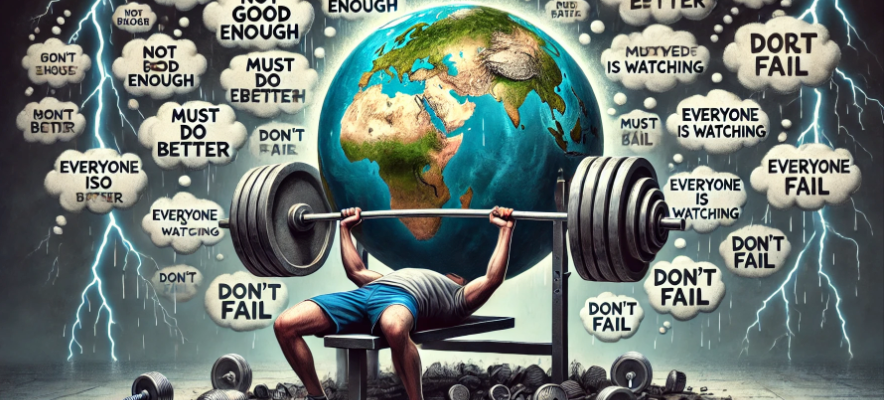
From a young age, we are conditioned to seek approval and validation. The voices of parents, teachers, and society at large can create an internal narrative that we must constantly improve and outdo ourselves. This can lead to a perpetual state of dissatisfaction, where nothing we do ever feels good enough. The pressure to meet an impossible standard can stifle our creativity and prevent us from taking risks.

When Is It Okay to “Launch”?

1. When You Have a Solid Foundation:

  • Preparation Is Key: Ensure that you have done your due diligence. Research your topic, refine your skills, and lay a solid foundation. This doesn’t mean everything has to be perfect, but you should feel confident in the basics.

2. When You Can Offer Value:

  • Focus on Impact: If what you are sharing can help others, provide value, or inspire someone, it’s worth putting out there. Your work doesn’t have to be flawless to make a positive impact.

3. When You’re Ready to Learn and Improve:

  • Embrace Feedback: Understand that launching is just the beginning. Be open to feedback and willing to make adjustments. Growth comes from learning and iterating.

Finding Your Voice

Your voice is unique, and it deserves to be heard. Waiting for the perfect moment or the perfect version of yourself to emerge will only keep you silent. Here are some steps to help you find and share your voice:

1. Accept Imperfection: Embrace the fact that imperfection is a part of the human experience. Authenticity is far more compelling than flawlessness.

2. Start Small: Begin by sharing your thoughts and ideas in smaller, more comfortable settings. This could be through a blog, social media, or within a supportive community.

3. Practice Self-Compassion: Be kind to yourself. Acknowledge your efforts and progress, no matter how small. Celebrate your wins and learn from your mistakes without harsh self-criticism.

Teach and Share with Confidence

1. Understand Your Value: Recognize that you have unique experiences and knowledge that others can benefit from. You don’t need to know everything to teach; you just need to be a few steps ahead of those you are guiding.

2. Engage with Your Audience: Create a dialogue with your audience. Their questions, comments, and feedback can provide valuable insights and help you grow as a teacher and creator.

3. Continuous Improvement: Remember that teaching and sharing are dynamic processes. Your methods and content will evolve over time, and that’s okay. Allow yourself the flexibility to grow and adapt.

Conclusion

In the journey of personal and professional growth, holding yourself to an impossible standard can be more of a hindrance than a help. Embrace the idea that “good enough” is often good enough to start. By allowing yourself to launch, teach, and share without the burden of perfectionism, you open the door to creativity, learning, and authentic connection. So, take that first step, share your voice, and let your unique light shine.

Getting Started is Simple Physics

I can’t tell you how many things I’ve read because I, probably like everyone, have trouble getting started on tasks. In fact, I was just reading yet another article that proposed the usual BS: breaking tasks into smaller parts and other hints we’ve all heard so often that if they actually worked, I wouldn’t be reading yet another article on the topic—nor would you. Maybe the solution is a lot simpler and staring us right in the face.

Not only that, but I would bet real money you’ve experienced this phenomenon—or should we call it a fact? It’s a fact, no different than gravity. But let’s not only use it but embrace it on every level. It’s simple physics.

What if it’s truly that simple? It’s true in the universe. Ask yourself: How many times have you said, “I’ll just put this one thing away,” and 15 minutes later, you’ve embarked on cleaning the whole room? How many times have you procrastinated doing your taxes, week after week, in February after you get your W-2? In March, you finally said you’d begin downloading some 1099s, and then realized you were all done and just needed to send them to the accountant? How many times have you said you’d just walk one block and found yourself walking a mile? How many times have you said you’d give up sugar, alcohol, or whatever for just one day, and it became a lifetime habit? ““A body in motion tends to stay in motion” 

In fact, that’s what AA is based on. Life is a lot simpler than we make it out to be. By the way, guess what all the books on habits are based on? It’s all the same: do it once or for a few moments, and you’re often off to the races.

But don’t forget another part of the first law: a body at rest will tend to stay at rest. Or closer to how it’s written: Newton’s First Law of Motion states that a body at rest will remain at rest unless acted upon by an unbalanced force. This law is also known as the law of inertia.

So, you have to apply a disproportionate amount of force to get back in motion.

Have you also noticed how many of your 5-minute breaks turned into an hour? Talking to the guys here (I know you’re the gamers)—you took a break after working for an hour or a few hours (probably because you’re working from home), then decided to play one video game, and it turned into three or four? Or what about turning on the TV to catch up on the news, only to hear something designed to trigger you, and you just had to share it with a friend? (Okay, that one applies to all the myriad sexes.)

But don’t take my word for it. I’m merely asking you to look back on your life, even the past few weeks, months, or years, and ask if Newton’s Law applies to you. How many times have you gotten started on something difficult simply because you started—aka got in motion? I think it’s that simple. It applies to cleaning, decluttering, working on difficult things, and even the creative process. I’m pretty sure creatives are told to just start throwing out random ideas, thoughts, or paintings to see what evolves. Let me know with a comment.

PS: My previous idea a few posts ago was to do something for just one minute. That worked for me. My posture is almost perfect—better than it was even going back to my twenties. All I do is, for a moment—not even a minute—apply what the physical therapist taught me: stick your chest out and up a bit to open up your chest and relieve your back. The chest is where we get tight, and that rounds our shoulders. I often look to the right and left, up to 90%. That range of motion has also improved. I often grab the door frame to open up my shoulders, and on and on.

The point is, as in that post, even adding up one minute a day here and there—or, God forbid, a few times every hour (assuming you’re awake 18 hours a day, that’s 54 minutes a day)—I’ve now exceeded the amount of time you work out. And I would bet getting your body in motion all day is probably more beneficial than going to the gym for an hour and being a slug the rest of the day.

Back to the point of this blog—it’s actually a corollary to the one-minute idea. If you want to get something big done that requires sustained action, simply start. Or maybe it doesn’t require sustained action. But be cognizant that all you need is the initial push. Newton’s law is obvious. Does it take more motion to continue watching TV or scrolling on your phone, or does it require a certain amount of push just to get up out of bed or off your chair? It’s almost comical that I’m even posing this question.

Perhaps I need to hook up a pulley with a device to measure how many pounds of force it requires to lift your hopefully not-too-heavy body. So be cognizant of how many pounds of real physical and mental strength it takes to get started. And while you’re at it, how about making a habit of stretching your neck too? Otherwise, X, Z, and the youngest ones are all going to be hunched over, looking like 90-year-olds by the time they’re 40.

Sorry if this is too much information. I still have a functioning brain that brings other good things to mind when I try to convey even the simplest idea. So to recap: just get in motion. Hmm, what would be a good saying for that? Maybe “just do it”? How about “just start doing it”?

I would bet that might catch on. Just start doing it. Just start doing anything. Sure, the new AI, website, or article is going to hit some bumps and require a bit more work, but just start doing it. And if it ends up only being a minute, but you try every hour, that’s 18 minutes a day. And if you weren’t using a stopwatch, I would bet it might turn into an hour.

But one more time: the point of this is just get in motion. Often it’s actually easier to stay in motion.

PS It actually takes energy to stop a body in motion. Chew on that one. What if you became a perpetual motion machine. We have had days like that. We all certainly have had hours like that where we were on what we call “a tear” ripping through and getting an enormous amount of things done.
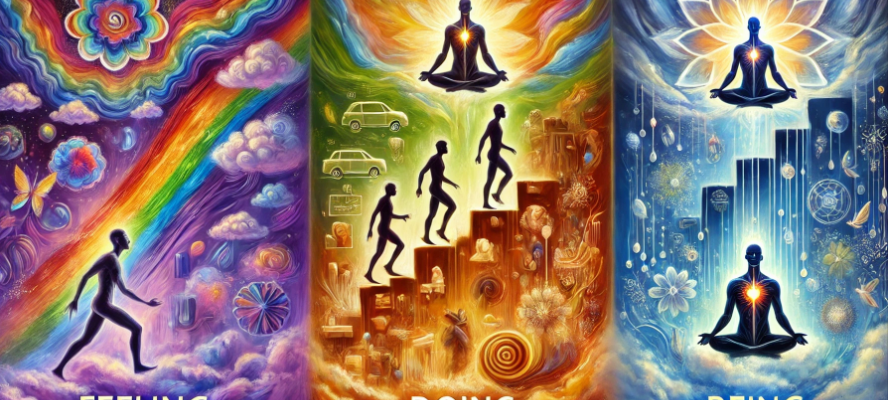
John’s Hierarchy, Not Maslow: Feel, Do, Be

It’s simply: Feel, Do, Be. Feeling being the lowest? Huh? Yes, if you operate solely by your feelings, you are no different than animals or a baby. Thats when you have those days when you feel like you are being bounced around in a pinball machine. Not good. Yet, this becomes a bit paradoxical because at our highest level of being, we are indeed feeling. So let’s break it down and see if we can integrate it all.

Feeling, Doing, Being: A Hierarchy of Living Life

In our journey through life, we often navigate different stages of existence, each with its own set of challenges and rewards. One way to conceptualize this journey is through the hierarchy of feeling, doing, and being. These stages represent a progression from basic emotional responses to purposeful actions, and ultimately, to a state of mindful existence.

Feeling: The Foundation of Experience

At the most fundamental level, our lives are driven by feelings. Emotions are the immediate, often instinctive responses to our surroundings and experiences. They form the foundation of our interactions with the world, influencing our decisions and actions. While living in the realm of feeling can be intense and overwhelming, it is an essential part of our humanity. Embracing and understanding our emotions is the first step towards personal growth. It becomes a challenge to respond vs react, and often purposeful action becomes elusive.

Doing: The Stage of Action

As we move beyond mere feelings, we enter the stage of doing. This is where our actions take shape, driven by goals, responsibilities, and ambitions. Emotional maturity kicks in, and we do regardless of how we feel. Doing involves applying our emotional insights to create tangible outcomes. It is in this stage that we build our careers, nurture relationships, and contribute to society. While doing is often associated with productivity and achievement, it is also about finding purpose and meaning in our daily activities.

Being: The Pinnacle of Existence

The final stage, being, is about achieving a state of mindfulness and authentic existence. It transcends the immediate reactions of feeling and the purposeful actions of doing. Being is characterized by self-awareness, inner peace, and a deep connection to the present moment. It is about living in harmony with oneself and the world, embracing both the highs and lows of life with equanimity. In the state of being, we find true fulfillment and contentment.

Integrating Feeling, Doing, and Being

While these stages can be seen as a hierarchy, they are not mutually exclusive. A balanced life involves integrating feeling, doing, and being in a way that allows us to navigate the complexities of existence with grace and wisdom. By acknowledging our emotions, taking purposeful actions, and cultivating mindfulness, we can lead richer, more meaningful lives.

This hierarchy is not about prioritizing one stage over the other but about recognizing their interdependence. Feeling is the foundation that informs our doing, and being is the state that allows us to reflect on and appreciate both.

By embracing this hierarchy, we can strive to live fully, acknowledging our emotions, taking action with intention, and cultivating a mindful presence. In fact at this point we should probably add a final step called Flow. That is when you are being and everything is just flowing. You have had those moments. Reflect back on some of them. It was when everything magically fell into place. It had a lot to do with where you were at and how you were acting and being. Being in the flow, where magic happens and everything falls into place can be cultivated and experienced more often. Life should be lived as much as possible in the flow where you enjoy the most joy every moment of your short time on this planet.

In Your Life or on Your Phone?

I don’t see anyone in their life these days. I challenge you to walk one block, whether you’re in the suburbs or the city. I’d bet that 90% of the people you pass are looking at a device, risking getting run over by a car, or they’re talking to someone on their device. Parents have to fight with their kids to get off their phones, even at mealtime. It’s actually rare to hear a parent say that devices are not allowed at the dinner table. That is crazy.

The whole “Be here now” concept no longer exists. Sure, you might be one of those who doesn’t allow devices at the dinner table—woo hoo! But what about the other 23 hours of the day when your kids or even your partner are glued to their devices?

I don’t know where this is going. I hope we don’t all get brain cancer. Cell phones have only been commercially available for around 40 years, compared to the millions of years humans have been on this planet. But even worse is that no one is present in their life anymore. The most important interaction in life is completely missing. How can you possibly listen to another human being while you’re looking at your device?

How often have you seen the person you are with distracted by a beep, buzz, or ding on their phone? How important does that make you feel? In fact, we all make allowances for that. “Sure, if you get an important call, no problem—just drop me, we are friends?” That’s a weird statement, but I make it all the time. So I guess that makes our device the most important person in our life, doesn’t it?

We all need to spend a lot more time trying to be present in our lives and turn our devices off. Or at least spend a lot less time on them. Being present is not just a quaint idea—it’s essential for meaningful connections and a fulfilling life. Let’s challenge ourselves to put down the phone and truly engage with the world and the people around us.

What is a Vacation? You Can Do It Right Here, Right Now

One of the biggest aspects or renewal factors of a vacation is that you are someplace different. Consider this: we all have 70,000 thoughts a day and 80% of them are the same as yesterday. We wake up in the same bed. We use the same coffee maker and make our coffee the exact same way. We have other countless routines. But these routines bring up routine thoughts. You pick up your phone, call the same friend or relative that you know might be up early. That person might suck you into a political conversation, or whatever. Are you starting to get the picture?

The Renewal Aspect of a Vacation

The renewal aspect of a vacation is not that you are in Paris or the Bahamas; it’s that you are someplace else, stimulating different thoughts. I remember one day when I was living on 59th and 1st in NYC. I walked out of my building and challenged myself to simply walk two blocks and notice things I never saw before. I remember it like it was yesterday, even though it might have been 30 years ago. I might as well have been walking down the Champs Elysee.

I looked up at buildings I had walked past for 20 years. I noticed they were all four- to five-story walk-ups with interesting cornices at the top. I never even noticed how many stores and restaurants were in that one block, as I usually went straight to the Chinese or sushi place. There were actually a few other nooks and crannies I had never seen before. I was so lost in the thought of noticing things I had never seen before, it was literally like a vacation. Normally, I would purposely walk down that street for 20 years, seeing nothing and planning or worrying about my day. It’s that simple. Think differently.

Ways to Take a Vacation Right Now

  • Meditate: Meditation can help clear your mind and bring fresh perspectives.
  • Reconnect: Call a friend you haven’t spoken to in years.
  • Play a Sport: Engage in a sport you haven’t played in years.
  • Take a Class: Enroll in a class on something of interest to you.
  • Learn a Language: Even try the first free module.
  • Get Involved: Engage in someone else’s life outside of your small circle.
  • Listen to Something New: Discover new music or podcasts.
  • Walk a Different Path: Walk down a street you’ve never walked down before.
  • Rediscover Your Routine: Walk down the same street but challenge yourself to see things you never saw before. Look only at the rooftops (PS: don’t trip).

The Uncomfortable but Renewing Experience

Creating the renewal of a vacation can be as simple as changing your routine. It might be uncomfortable, but that is the renewal aspect of a vacation. When you’re in Paris, you don’t know where you’re going to get a coffee, how to order it, how much it will cost, or what it will taste like. Your mind is 100% occupied with new and different things, and for most of us, that is a “break” or a vacation from the boredom and the unpleasant aspects of our daily routine.

Conclusion

You don’t need to travel far to experience the renewal of a vacation. By simply changing your routine and thinking differently, you can stimulate new thoughts and experiences that refresh your mind and spirit. So take a trip down a different path, engage in new activities, and see the world around you with fresh eyes. Your vacation can start right here, right now.

You Can Only See Clearly from a Higher Point

For those involved in self-development, growth, or even psychotherapy, have you ever noticed the endless “aha” moments? I used to lovingly curse out my friend David Ellzey, who coaches me using the Sedona Method and his own unique blend of skills. I would lovingly say, “WTF? Why didn’t you teach me this 10 years ago?” And to this day, we keep discovering more and more layers. Or is it that we are reaching higher and higher vantage points from which we can make even greater distinctions in every area of our lives for more meaningful and richer relationships, as well as not giving too much attention or personal energy inappropriately in business situations?

For example, you certainly don’t want to be seeking approval or wanting to be liked by your vendors, although you can have a healthy and sometimes friendly relationship. There is a border often crossed by those who seek to be liked by everyone. But the point of this blog is that there are countless things you simply cannot see while you’re blocked by so many childhood, adolescent, or in some cases even adult traumas.

Who doesn’t know an injured woman or man who is incapable of trusting and having a loving relationship? Or one who chooses the same type of person over and over again because it represents something missing from their childhood? These scenarios know no bounds. They exist for some of the obscenely wealthiest and successful among us and across the board. But while you are stuck in the mud or the valley, you can’t even see the next valley or the mountaintop. Maybe you need to learn more or climb higher to see what you couldn’t see before.

Key Points to Consider

  1. Endless Layers of Growth:
    • Personal development is an ongoing journey. Each “aha” moment reveals new layers of understanding and self-awareness.
    • As we grow, our perspective shifts, allowing us to see and understand things that were previously hidden.
  2. Importance of Vantage Points:
    • Just like climbing a mountain, personal growth gives us a higher vantage point. From these new heights, we can see further and make more informed decisions.
    • Higher vantage points help us distinguish between meaningful relationships and those that drain our energy.
  3. Impact of Childhood and Adolescent Traumas:
    • Unresolved traumas can block our vision, keeping us stuck in repetitive patterns.
    • Recognizing and addressing these traumas can free us to see new possibilities and healthier patterns.
  4. Navigating Business Relationships:
    • In business, it’s essential to maintain professional boundaries and not seek approval from everyone.
    • Healthy business relationships are built on mutual respect, not on the need to be liked.
  5. Healing and Growth for Trusting Relationships:
    • Many people struggle with trust and relationship issues due to past traumas.
    • Healing these wounds can open the door to healthier, more trusting relationships.

Conclusion

The journey of personal growth and development is like climbing a mountain. Each new height reached offers a clearer view and deeper understanding of ourselves and our relationships. By addressing unresolved traumas and continuously striving for higher vantage points, we can achieve greater clarity, more meaningful relationships, and a more fulfilled life.