Osho. The Best Wisdom you will ever read

How could I forget him? For those who have heard about him, he gets a bad rap. Some call him the sex guru. I heard his retreats are free-sex romps. I don’t know; I have never been. I disagree with his free-sex advice. But what he says is stunning, and he never wrote a book. All of the books are his speeches that people transcribed into books. They couldnt have been written more perfectly. It makes me wonder if his genius was channelled. I have never read words so perfectly put together with great effort, let alone in extemporaneous speech.


The reason he included sex in his retreats was because he believed Westerners had no idea what bliss is, with the only exception being orgasm. His goal was to teach us how to get to bliss. But reading what he said is so profound. He never wrote a book because he believed that if you are following anyone, you are already off the path. As you know, all religions are entirely narcissistic, and the leaders are often fraught with scandals. I am just suggesting that you read some of his extremely profound statements.

The fact that he never wrote a book speaks to the unique honesty in what he was teaching. No other spiritual or religious leader ever said, Don’t follow me, don’t praise me, follow yourself.

A tiny sampling.
“The greatest fear in the world is the opinion of others, and the moment you are unafraid of the crowd, you are no longer a sheep. You become a lion. A great roar arises in your heart, the roar of freedom.”

“Listen to your being. It is continuously giving you hints; it is a still, small voice. It does not shout at you, that is true. And if you are a little silent you will start feeling your way. Be the person you are. Never try to be another, and you will become mature. Maturity is accepting the responsibility of being oneself, whatsoever the cost.”

“Drop the idea of becoming someone, because you are already a masterpiece. You cannot be improved. You have only to come to it, to know it, to realize it.”

“Life begins where fear ends.”

“The moment you start seeing life as non-serious, a playfulness, all the burden on your heart disappears. All the fear of death, of life, of love – everything disappears.”

These quotes reflect Osho’s emphasis on individual freedom, self-awareness, and the exploration of one’s true nature beyond societal conditioning.
He represented a real danger to society and organized religion. I can easily see why he probably was eliminated. He was jailed just long enough for a specific poison to be undetected in his autopsy. Makes sense to me. Everything I read that he said makes sense to.I have to put more here. Each one is magical.


“Truth is not to be found outside. No teacher, no scripture can give it to you. It is inside you and if you wish to attain it, seek your own company. Be with yourself. ”


“The real question is not whether life exists after death. The real question is whether you are alive before death.”


“Be — don’t try to become”


“Life in itself has no meaning. Life is an opportunity to create meaning.”


“The great appeal of drugs in the West is only because the West has succeeded in destroying the right hemisphere completely because of compulsory education.” I agree 100%. Look at all of the geniuses who dropped out.


“Everybody is born creative, but very few people remain creative.”


“To be creative means to be in love with life. You can be creative only if you love life enough that you want to enhance its beauty, you want to bring a little more music to it, a little more poetry to it, a little more dance to it.”


“Be realistic: Plan for a miracle”


“Intelligence is dangerous. Intelligence means you will start thinking on your own; you will start looking around on your own. You will not believe in the scriptures; you will believe only in your own experience.” hmm do you think they killed him?


“The less people know, the more stubbornly they know it.” I know a few of those people


“Courage Is a Love Affair with the Unknown”. Exactly


“A certain darkness is needed to see the stars.” even better than it is always darkest before the dawn

Most of us see ourselves less than what we truly are?

The Imposter Syndrome

What if what we think of as our imposter is actually our real identity? And what we think of as our real identity is just miles below what we truly are—and how others see us?

I see this in myself and in many of my friends—really accomplished people in their respective fields. And yet, I don’t think I have a single friend who truly sees how great they are. Let’s face it—we’ve all accomplished great things. We are doing things that are on par with some of the most famous people in the world. The only difference between us and “them” is that they have no humility. Or maybe it is us that is too humble.

I see this same pattern in all my friends. They’ve done incredible things—helped people find homes, in NJ Miami, secure financing, build websites more beautiful than those of the most prestigious studios in Beverly Hills. And yet, they don’t see themselves as remarkable. The only difference between them and those with millions of followers? Their opinion of themselves.

I see many doing astonishing things—raising an autistic child completely drug-free against doctors’ orders and standard of care, creating awards shows for legends like Quentin Tarantino and Robert De Niro, building things, helping people, coaching people, creating new paradigms in real estate—residential, commercial, even wholesale. The list is endless.

We all grew up with parents or guardians who, even with the best intentions, warned us about dangers to protect us. But in today’s world, there are no lions, tigers, or bears roaming the streets of New York City. Instead, we fear humiliation, rejection, or failure. We hesitate to start businesses, share our opinions, or take bold chances. And yet, the ones who do—who see themselves as capable—often meet with obscene success.

Most of us, aside from a few creatively or scientifically gifted individuals, have roughly the same abilities. The only real differentiator is how we see ourselves—or more precisely, who we believe ourselves to be.

The billionaires brag all the time about ordinary things. Their only difference is that they shout to the world that they are the best at what they do. I’m not talking about physical achievements, which can be easily measured. I mean in real estate, financing, law and other every day industries and professions.

In mine the gap is extraordinary. I can’t tell you how many lectures I’ve attended where a doctor is promoting CoolSculpting. Now, CoolSculpting is finally being recognized for the dangers it poses. In fact, supermodel Linda Evangelista sued them for $50 million. I was horrified by this technology back in 2016 and created two websites—coolsculpting.nyc and fatfreezingnewyork—to warn people. Yet there are still over 5,000 doctors still offering it, when there are dozens of safe radiofrequency alternative that dont post the risk of disfigurement and actually have a side effect of smoother tighter skin. 

Every day, I talk to people who have gone through unnecessary procedures because they didn’t trust their own judgment. Today, I spoke with a young woman who got so much Botox that she now thinks she needs a brow lift. That’s insane. Too much Botox—shame on that doctor. The Botox will wear off in three to five months, and now he is recommending a surgery? A brow lift could permanently disfigure her. Instead, we’ll likely reinvigorate her muscles with Emface.

I’ve done many things that, by any objective measure, I could consider myself world-famous for. In my old career in Graphic Arts, I lectured at the Harvard Club in New York, helped create the standards for PDF, and transmitted the first digital ad to Time Magazine. But

The only difference between you and the ones with millions of followers is how you see yourself. PERIOD. No one can see you higher than you see yourself. And often, we see ourselves much lower than everyone else does.

It’s time to shift that perspective. PS kudos to Anthony Robbins, he alluded to attaching ourselves to our “imposter” version of ourselves.

The Grass Is Yellower on the Other Side of the Fence

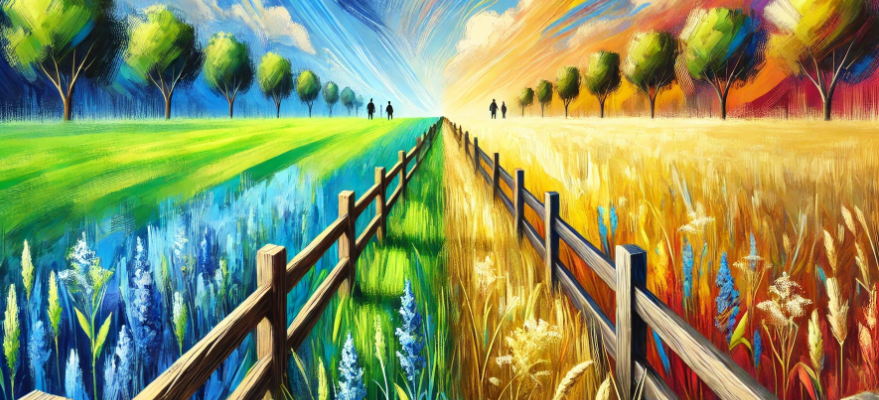
We’ve all heard the saying “the grass is greener on the other side of the fence.” But let’s flip that on its head for a moment. The grass isn’t just greener; it’s yellower, browner, bluer—it’s every color under the sun. And yes, there’s a fence.

First, let’s consider the numbers. There are 7.9 billion people in the world. That means there are probably millions of potential partners for you. But with 87,600 hours in a decade, it would take you around 120 years to spend just one hour with each of them—without a wink of sleep. Clearly, meeting everyone isn’t practical.

Then there’s the fence. The partner you’re with might lock that fence the moment you leave, never letting you back in. While you’re busy thinking the grass is greener on the other side, remember it’s also all other colors. People come in all shapes and sizes: better looking, richer, poorer, kinder, stronger, smarter, weaker, more or less successful. The variety is endless.

But why are you so focused on the other side of the fence? Are you the type who is always looking elsewhere, always outer-directed, never happy, never looking inward? Are you expecting to get your feelings from outside yourself? This opens a Pandora’s box of questions about you.

Of course, there will always be people on the other side of the fence with qualities that attract you. That’s as certain as the sky is blue. You can choose to live a life of serial dating, or you can care for one person deeply. You can care for multiple people, or you can cherish those you’ve taken as your family.

It’s your choice. Stop asking the wrong questions and start looking within. What do you really want? The grass might be all colors on the other side, but where you are now can be just as vibrant if you choose to see it.

The Serendipity Factor: How Luck, Proximity, and Hard Work Shape Our Lives

Have you ever wondered why some people seem to effortlessly stumble upon success while others toil away without seeing much progress? It’s a question that intertwines elements of chance, environment, and individual effort. Many decisions and life paths are influenced more by the circumstances and opportunities we encounter than we might realize.

Proximity and Serendipity

From the college we attend to the friends we make, proximity often dictates our choices. For instance, people frequently choose their college based on where their friends are going. It’s not uncommon for individuals to take up hobbies, experiment with substances, or even enter relationships simply because of the people and opportunities that happen to be nearby. Shows like 90 Day Fiancé fascinate us not just because they are a train wreck, but because they highlight the rare few who venture far beyond their local bar to find love.

Luck and Opportunity

Success stories often hinge on serendipitous moments. Take Bill Gates, for example. According to Malcolm Gladwell’s Outliers, Gates had access to a free public library with vast computer resources, an opportunity not available to most kids at the time. Similarly, many athletes born in January are literally a year older than their peers in youth sports, giving them a significant early advantage that often leads to professional careers.

Oprah Winfrey’s journey is another testament to the role of chance. She was reportedly fired as a news anchor and reassigned to daytime television just to fulfill her contract. This “failure” turned into an extraordinary success as she transformed daytime TV with her unique style.

Many people have also lost a fortune or a large amount of their savings investing in their best friends’ businesses. While early associates of Bill Gates and Mark Zuckerberg made fortunes, an equal amount of money has likely been lost by people investing with whoever was in their proximity, highlighting the risks of making decisions based solely on personal connections.

Hard Work and Preparedness

While luck and chance provide opportunities, it’s often hard work and preparedness that allow individuals to seize these moments. Consistent effort and skill development enable people to capitalize on the chances they encounter. The combination of being ready when luck strikes and having the tenacity to overcome setbacks is crucial.

The Dangers of Stumbling into Substances

A significant and often tragic example of serendipity is the exposure to substances. Many adolescents and young adults start using drugs or alcohol because their friends do. This proximity-based decision can lead to addiction, health problems, or even death. It’s a stark reminder of how critical it is to make informed, conscious choices rather than simply following the crowd.

  • Learn to Say No: It’s essential to develop the ability to say no to harmful influences. Just because friends or acquaintances are experimenting with substances doesn’t mean you should too. Making conscious decisions to avoid these pitfalls can significantly impact your health and future.

Expanding Horizons with Technology

Today, we have the internet, which offers unprecedented access to information and opportunities beyond our local environments. This connectivity allows individuals to make more informed decisions and connect with resources and people worldwide, mitigating some of the limitations of proximity. For example, instead of relying on the local bar to find a partner, people can use dating apps to expand their search globally.

The Balance of Factors

Success is often the result of a complex interplay of luck, environment, hard work, and informed decision-making. Understanding how these elements interact can help individuals navigate their paths more effectively. Acknowledging the role of luck and chance can lead to a more balanced view of success and reduce the tendency to attribute outcomes solely to individual merit or effort.

Practical Application

Using the Web for Opportunities: The internet is a powerful tool that can help you explore opportunities beyond your immediate environment. Whether it’s for business, education, or personal relationships, leveraging online resources can significantly broaden your horizons.

Mindful Decision-Making: Be present and intentional with your decisions. Use available tools and resources to expand your horizons and create more opportunities for success. By being proactive and leveraging technology, you can enhance your chances of success by seeking out opportunities that align with your goals and interests.

Saying No to Harmful Choices: Make a conscious effort to avoid negative influences, especially when it comes to substances. Understanding the long-term impact of these decisions and being strong enough to say no can save your life and improve your overall well-being.

Conclusion

In conclusion, while luck and proximity play significant roles in shaping our lives, hard work and informed decision-making are equally crucial. By understanding and leveraging the interplay of these factors, we can navigate our paths more effectively and create more opportunities for success. So, whether you find yourself inspired by the unusual love stories on 90 Day Fiancé or the serendipitous success of a tech mogul, remember that you have the power to influence your journey through a blend of preparation, opportunity, and intentional action.

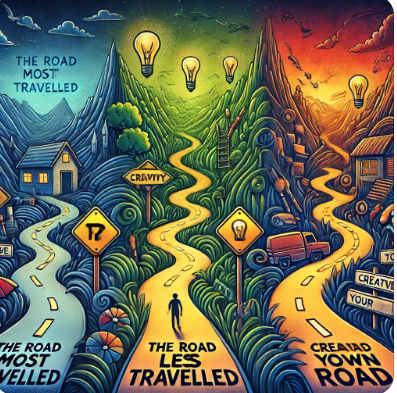
Are You on the Road Less Travelled, Most Travelled, or Not Travelled?

The book “The Road Less Travelled” sparked a movement towards meditation and self-reflection. It’s great to reflect on your life and your soul, but what about the actual path you’re on? The road we choose in life shapes our experiences, our happiness, and our fulfillment. So, let’s explore the roads most travelled, less travelled, and not travelled at all, along with their benefits and pitfalls.

The Road Most Travelled

This path is well-worn and widely accepted by society. It often includes marrying within one’s culture and religion, settling down, having a stable job, and following societal norms.

Benefits:

  • Predictability: Provides a stable, predictable life.
  • Support System: Surrounded by like-minded people and a strong community.
  • Less Risk: Fewer unknowns and generally fewer risks.

Pitfalls:

  • Lack of Exploration: May leave you wondering about life outside the bubble.
  • Conformity Pressure: Pressures to conform can stifle individual growth and creativity.
  • Potential for Regret: Following a set path without questioning may lead to mid-life crises or regrets.

I often think about what my life would have been like if I had taken this road. My parents wanted me to marry a nice girl within our culture and religion, which likely would have led to a peaceful life. But I always questioned everything and still do. Considering the high divorce rate, the road most travelled might not work for everyone.

The Road Less Travelled

This path involves questioning societal norms, exploring different lifestyles, and often pursuing passions that aren’t mainstream.

Benefits:

  • Self-Discovery: Provides opportunities for personal growth and self-discovery.
  • Fulfillment: Pursuing passions and interests can lead to deep fulfillment.
  • Innovation: Encourages creativity and original thinking.

Pitfalls:

  • Uncertainty: Constant unknowns and instability.
  • Isolation: Can be lonely and isolating, as fewer people understand or support your choices.
  • Risk: Higher risk of failure and facing numerous challenges.

I always wondered what life would be like on this path. Despite the unknowns and perils, this road is filled with excitement and exhilaration. However, life comes with no guarantees, and it’s like a puzzle with an unknown picture, regardless of the path you choose.

The Road Not Travelled

This is the path of constant adventure and discovery, where you forge your way through unknown territories and create your own rules.

Benefits:

  • Excitement: Constant novelty and adventure.
  • Independence: Complete freedom to chart your own course.
  • Unique Experiences: Rich, diverse experiences that few others have.

Pitfalls:

  • High Risk: Extreme uncertainty and potential for significant setbacks.
  • Loneliness: Often a solitary journey with limited support.
  • Stress: High levels of stress and the need for constant decision-making.

I’ve often said I wish my brain allowed me to join the union, get married to a “nice” girl, settle down in Staten Island or NJ, have kids and a dog, and watch my family multiply. But my brain craves adrenaline, endorphins, and dopamine. My life will continue on the road not travelled, filled with excitement, novelty, and adventure.

Reflection and Balance

Regardless of the path you’re on, it’s valuable to step onto the opposite road occasionally. If you’re on the road most travelled, try something new or different. If you’re on the road not travelled, take a break and spend some time on the comfortable, well-worn path. It’s okay to take a break from fighting dragons and navigating the unknown jungle every day.

A Proposal for Reflection

Reflect on the road you’re on and consider taking a few steps on the opposite path. Life is a journey with no guarantees, and exploring different roads can provide a richer, more fulfilling experience. Embrace the adventure, the stability, or the novelty that each path offers, and find your own unique way to navigate through life.

P.S. Whether you are aware of it or not, you are on the road not travelled. Every little thing that made you who you are is unique. No one had the exact same parents as you. Were they domineering, demanding, not around, divorced, loving, nasty, abusive? No one went to the same kindergarten, grade school, high school, and college as you. No one had all the same teachers and coaches you had. Even if you had an identical twin, your paths diverged here and there. So, enjoy your road.

And when is it time to create a road that literally doesnt exist but is of your making.

Exploiting Our Monkey Brains: The Social Media and TV Dilemma

We are all monkeys at heart, driven by primal instincts and the pursuit of immediate gratification. Social media and television have mastered the art of exploiting these tendencies, tapping into our monkey brains with precision. Whether it’s social media’s magical 30 or 60-second dopamine hits or cable television’s emotional roller coasters, these mediums know exactly how to hijack our brains and keep us hooked.

The Dopamine Traps of Social Media and TV

Social Media: Quick Fixes and Endless Scrolls

Social media platforms like Facebook, Instagram, Twitter, and TikTok are designed to keep you engaged for as long as possible. They serve up bite-sized content that provides quick dopamine hits, making it easy to consume one post after another without realizing how much time has passed. Each like, comment, or new post delivers a tiny burst of pleasure, encouraging you to keep scrolling. This design isn’t by accident; it’s a calculated effort to capture your attention and keep you coming back for more.

The personalization algorithms on these platforms ensure you see content tailored to your interests, reinforcing your habits and preferences. Every click is tracked and analyzed to deliver more of what you enjoy, making it increasingly difficult to break the cycle. You’re not just browsing; you’re feeding a well-crafted addiction designed to exploit your brain’s reward system.

Cable Television: Emotional Manipulation

Cable TV operates on a similar principle but plays more with your emotions. News channels, for instance, know exactly how to elicit strong emotional responses, whether it’s outrage, fear, or joy. By constantly triggering your emotions, they keep you glued to the screen. The more you watch, the more dopamine flows, reinforcing the habit.

Moreover, news channels polarize their content to align with your existing beliefs. Whether you lean towards CNN or FOX, these channels create echo chambers that validate your perspectives and keep your emotions running high. This emotional engagement ensures you return for more, making you a loyal viewer who contributes to their massive viewership numbers.

The Illusion of Choice

You might think you’re in control, especially if you get your news from social media instead of traditional TV. However, the reality is even more insidious. Social media platforms have a far deeper understanding of your behavior. Every action you take online—every click, like, and view—is tracked and analyzed. This data allows these platforms to serve up content that is precisely tailored to your preferences, reinforcing your habits and keeping you engaged.

Unlike TV, which only knows what channel you’re watching, social media platforms know exactly what you interact with and how long you engage with it. This level of detail creates an illusion of choice. You might feel you’re selecting what you see, but in reality, the platforms are curating your experience to maximize engagement.

Cable News Channels: The Perfect Emotional Trap

Cable news channels have mastered the art of emotional manipulation. They craft their content to elicit strong reactions—whether it’s anger, fear, or excitement. Channels like CNN and FOX are designed to polarize viewers, creating a sense of identity and loyalty to their chosen narrative. This polarization isn’t just about presenting the news; it’s about keeping you emotionally invested.

You might believe you’re choosing to watch a particular channel because it aligns with your views. In reality, these channels have chosen you. They know how to trigger your emotions and keep you engaged. The more you watch, the more your monkey brain is flooded with dopamine, adrenaline, or even nor-epinephrine, reinforcing the habit of tuning in.

The Internet: The Ultimate Monkey Brain Playground

Once you enter the realm of the internet, you step into the ultimate playground for your monkey brain. Every click, scroll, and interaction is meticulously tracked. This data allows platforms to predict and influence your behavior with astonishing accuracy.

On social media, for example, you’re not just passively consuming content. Platforms like Facebook, Instagram, and TikTok know what you like, share, and comment on, and they use this information to serve up more of the same. This creates a feedback loop that keeps you engaged and coming back for more. You’re essentially a monkey in chains, with the chains being the endless cycle of dopamine hits provided by these platforms.

A Modern Opium Den

Engaging with social media and cable news can be likened to frequenting an opium den. You trade your time and attention for moments of fleeting pleasure. The exchange is starkly one-sided: you get temporary satisfaction, while they reap significant financial rewards.

At least in an opium den, the transaction is honest. You know you’re there for the pleasure, and there’s no pretense of engagement or productivity. But with social media and television, the lines are blurred. You’re led to believe you’re staying informed or connected, but in reality, you’re just a monkey chained to a perpetual cycle of dopamine-driven distractions.

Breaking Free from the Chains

Recognizing the ways in which our monkey brains are exploited is the first step towards breaking free. Here are some strategies to reclaim control:

  1. Be Mindful of Your Consumption: Pay attention to how much time you spend on social media and watching TV. Set limits to ensure these activities don’t dominate your day.
  2. Curate Your Content: Choose to follow and engage with content that adds value to your life rather than merely providing quick dopamine hits. Be selective about the news sources and social media accounts you interact with.
  3. Take Regular Breaks: Step away from screens regularly to reset your mind and break the cycle of constant engagement. Engage in activities that are less reliant on instant gratification, such as reading a book, going for a walk, or practicing mindfulness.
  4. Focus on Real Connections: Spend time with friends and family in person. Face-to-face interactions are more fulfilling and less prone to the shallow, dopamine-driven exchanges found on social media.
  5. Reflect on Your Choices: Take time to reflect on how you spend your time and the motivations behind your actions. Are you choosing your activities, or are they being chosen for you by your monkey brain?

Conclusion

Social media platforms like Facebook, Instagram, Twitter, and TikTok, along with television, have mastered the art of exploiting our monkey brains, keeping us hooked with a constant stream of dopamine hits. Whether it’s the quick fixes provided by social media or the emotionally charged content from cable news, these platforms know how to keep you engaged and coming back for more.

By recognizing the tactics they use and making conscious choices about how we spend our time, we can break free from the chains of these distractions. It’s about reclaiming control and ensuring that our actions align with our true intentions rather than being driven by our monkey brains.

Study Your Successes: The Key to Navigating Life’s Challenges

Life is a journey full of ups and downs, moments of triumph, and periods of struggle. One crucial aspect of navigating this journey is understanding not only our mistakes but also our successes. Too often, we focus on what went wrong, driven by the pain of our failures. However, by studying our successes, we can better prepare ourselves for when life inevitably throws us off track.

The Lesson in Pain

We learn from our mistakes because of the pain they cause. Put your hand in fire once, and you’ll remember the lesson forever. Pain serves as a powerful teacher, ingraining the memory of our errors deeply within us. However, this focus on pain means we often overlook the equally valuable lessons our successes can teach us.

The Mystery of Sudden Failures

How many times have you felt like everything was going perfectly, only to have it all fall apart unexpectedly? The train falls off the tracks, and you’re left wondering why. Without understanding what contributed to your previous successes, it’s challenging to pinpoint what might have gone wrong. This lack of insight can leave you feeling lost and frustrated.

The Importance of Self-Reflection

To avoid these pitfalls, it’s essential to study your successes as diligently as you analyze your mistakes. One practical way to do this is by keeping a diary or an Excel sheet where you annotate moments when you “feel great” or note any significant achievements. Use keywords that resonate with you and that you will remember.

Creating a Success Log

When life does go off course, you can refer back to this log. Use the “find” function to search for those key moments of success and identify patterns. Perhaps you’ll discover that regular exercise, a morning walk, a particular supplement, or abstaining from TV were part of your routine during successful periods. The possibilities are endless, but without documentation, these insights remain hidden.

The Power of Positive Habits

By studying what you were doing right, you can recreate those conditions. Understanding the habits, routines, and activities that contributed to your success gives you a roadmap to follow. It’s about recognizing that success isn’t just about avoiding pain; it’s also about cultivating the positive habits that lead to thriving.

A Call to Action

Start today by creating your success log. Write down what you did, how you felt, and any small details that might seem insignificant now but could be crucial later. Study yourself when you are successful. This proactive approach will equip you with the knowledge and tools to get back on track faster when challenges arise.

Embrace a Balanced Perspective

Remember, life is a balance of learning from pain and celebrating triumphs. By giving equal weight to your successes, you ensure a more comprehensive understanding of yourself and your journey. This balanced perspective will empower you to navigate life’s inevitable ups and downs with greater confidence and resilience.

Conclusion

Study your successes or you will have no idea what to do when the train falls off the tracks. Pain teaches us what to avoid, but understanding our successes shows us what to embrace. Keep track of your positive moments, reflect on them, and use them as a guide to maintain and replicate those successes. Your future self will thank you.

The Infinite Universe and the Boundless Possibilities of Heaven

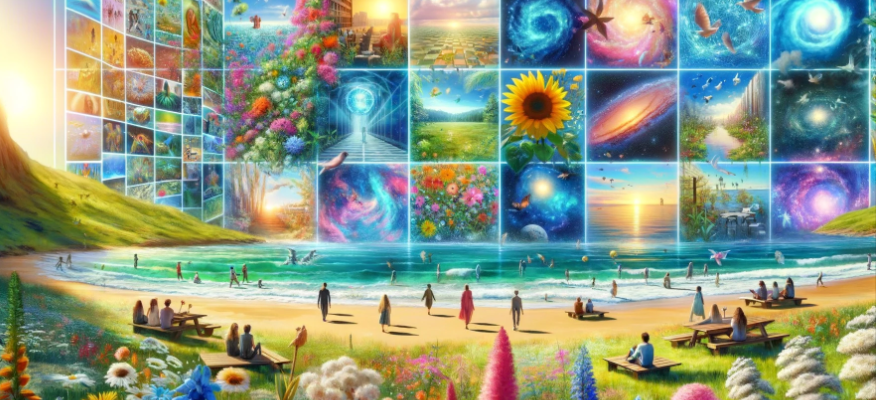
The universe is vast beyond our wildest imaginations. To put its enormity into perspective, consider this: there are more planets in the cosmos than there are grains of sand on every beach on Earth. This staggering fact opens the door to endless possibilities, including the existence of parallel universes and every conceivable version of heaven.

The Infinite Potential of the Universe

Imagine that every moment of your life could exist simultaneously in a parallel universe. Each decision you’ve made, each path you’ve taken, and even those you haven’t, might be playing out somewhere else in the cosmos. The sheer number of planets suggests that these alternate realities are not just a whimsical idea but a plausible scenario within the infinite expanse of space.

Every Vision of Heaven

Now, let’s extend this thought further. If there are enough planets to support every version of you, then why not every version of heaven? Heaven, a concept that has fascinated and comforted humanity for millennia, could exist in myriad forms. Each person’s vision of paradise is unique, shaped by their experiences, desires, and beliefs. In an infinite universe, there’s room for every version of this celestial dream.

A Universe of Endless Possibilities

The notion that every possible version of heaven exists somewhere among the stars is both comforting and exhilarating. It means that for every hope, every dream, and every prayer, there is a place where it becomes reality. This idea encourages us to expand our minds and embrace the vast potential that the universe holds.

Finding Peace in the Infinite

Understanding the boundless nature of the universe can bring a profound sense of peace. It reassures us that our existence is part of something much larger and more wondrous than we can comprehend. Each moment of our lives, each version of our reality, and every vision of heaven contributes to the grand tapestry of the cosmos.

Embrace the Cosmic Perspective

Next time you stand on a beach and let the sand sift through your fingers, remember that each grain represents countless planets, each with its own story to tell. Embrace the infinite possibilities that the universe offers and take comfort in the idea that every version of you, and every vision of heaven, exists somewhere out there.

This cosmic perspective can inspire us to live our lives more fully, with a deeper appreciation for the beauty and mystery that surrounds us. It invites us to dream without limits, knowing that in the vastness of the universe, anything is possible.

The Humbling Reality of Infinity

In the face of the infinite, it’s almost absurd to think we truly know anything. The boundless cosmos starkly reminds us how minuscule our knowledge and understanding are in the grand scheme of existence. Embrace this humility and let it fuel your curiosity and wonder.

The Perspective of Nature

Next time you find yourself certain of some negativity, go watch a nature program that talks about the trillions of planets in the universe. Scientists estimate there could be 60 billion planets in our Milky Way alone within habitable zones capable of supporting life. Reflect on this vastness and see if you can even begin to comprehend it, let alone the possibilities it holds. The immense scale of the universe can help put our worries into perspective and foster a sense of awe and positivity.

Life is the Opposite of Puzzles

This will bring you more peace, happiness, and hope for the future than anything.

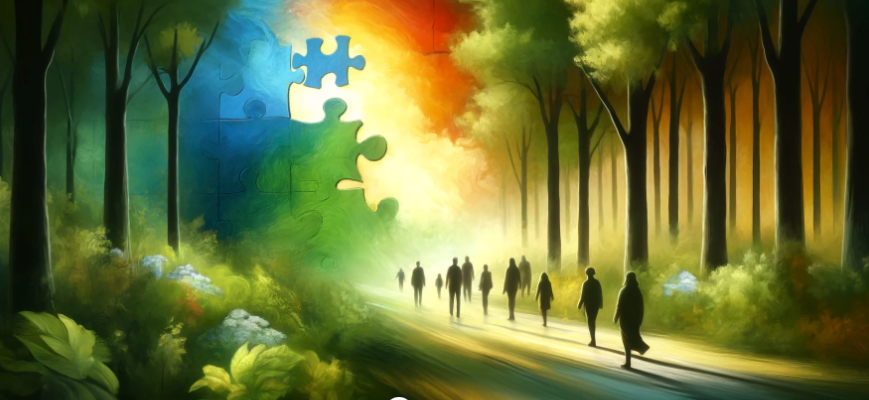
Remember those puzzles we used to do as children? The joy of carefully placing each piece, knowing that eventually, a complete and beautiful picture would emerge. Life, however, doesn’t come with such clear edges or a defined image on the box. It’s a journey full of surprises, where the final picture remains a mystery.

Embrace the Uncertainty

Unlike a puzzle where every piece has a predetermined place, life invites us to embrace the unknown. Each moment, each experience, adds to the mosaic of our existence, often in ways we can’t foresee. This unpredictability can be daunting, but it also holds the promise of endless possibilities.

Finding Peace in the Present

To navigate this journey with peace, it’s essential to find contentment in the present. Focus on the pieces you have right now, and appreciate how they fit together. Even if the bigger picture is unclear, the beauty lies in the process of discovery. Trust that each step forward, each decision made, contributes to the unfolding masterpiece of your life.

Cultivating Happiness

Happiness comes from cherishing the present and finding joy in the little things. The path through life, much like the one through a lush forest, is filled with moments of beauty if we take the time to notice. Spend time with loved ones, pursue passions, and allow yourself to dream without the constraints of knowing exactly where those dreams will lead.

Hope for the Future

Hope springs from the understanding that life’s unpredictability is not something to fear but something to embrace. Each twist and turn offers new opportunities and lessons. By letting go of the need to control every aspect and instead flowing with life’s rhythm, you open yourself up to a future filled with potential.

The Journey is the Reward

Life may not offer the certainty of a completed puzzle, but it provides something far more enriching – a journey of continuous growth, discovery, and connection. Embrace the mystery, find peace in the present, cultivate happiness, and maintain hope for the future. This approach will bring you a deeper sense of fulfillment and joy than any completed puzzle ever could.

PS * credit to Fernando Valencia who first brought the analogy of the puzzle concept to me and to ChatGPT for fleshing it out and writing it better than I could. And credit to ME for recognizing how powerful and useful the concept is FOR EVERYONE who might not be exactly where they want to be right now ( like everyone) and for prompting Chatgpt correctly and realizing it is worth sharing. Here was my prompt “blog post please write and make photo. this will bring you more peace happiness and hope for the future than anything. Life is the opposite of puzzles we used to do,, you dont know what the final picture is going to be. also make photo’

I am going to also make a ten best rules for life according to my 70 years many thousands of books countless seminars thousands of cassettes