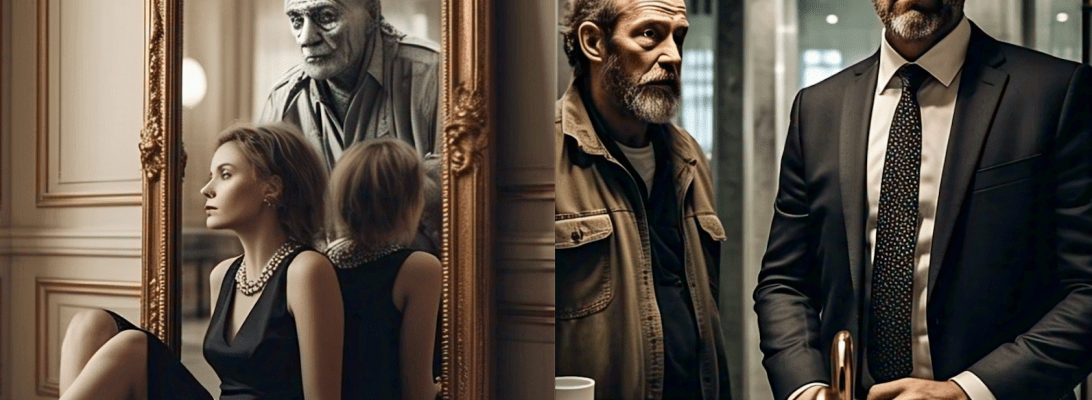
What if what we think of as our imposter is actually our real identity? And what we think of as our real identity is just miles below what we truly are—and how others see us?
I see this in myself and in many of my friends—really accomplished people in their respective fields. And yet, I don’t think I have a single friend who truly sees how great they are. Let’s face it—we’ve all accomplished great things. We are doing things that are on par with some of the most famous people in the world. The only difference between us and “them” is that they have no humility. Or maybe it is us that is too humble.
I see this same pattern in all my friends. They’ve done incredible things—helped people find homes, in NJ Miami, secure financing, build websites more beautiful than those of the most prestigious studios in Beverly Hills. And yet, they don’t see themselves as remarkable. The only difference between them and those with millions of followers? Their opinion of themselves.
I see many doing astonishing things—raising an autistic child completely drug-free against doctors’ orders and standard of care, creating awards shows for legends like Quentin Tarantino and Robert De Niro, building things, helping people, coaching people, creating new paradigms in real estate—residential, commercial, even wholesale. The list is endless.
We all grew up with parents or guardians who, even with the best intentions, warned us about dangers to protect us. But in today’s world, there are no lions, tigers, or bears roaming the streets of New York City. Instead, we fear humiliation, rejection, or failure. We hesitate to start businesses, share our opinions, or take bold chances. And yet, the ones who do—who see themselves as capable—often meet with obscene success.
Most of us, aside from a few creatively or scientifically gifted individuals, have roughly the same abilities. The only real differentiator is how we see ourselves—or more precisely, who we believe ourselves to be.
The billionaires brag all the time about ordinary things. Their only difference is that they shout to the world that they are the best at what they do. I’m not talking about physical achievements, which can be easily measured. I mean in real estate, financing, law and other every day industries and professions.
In mine the gap is extraordinary. I can’t tell you how many lectures I’ve attended where a doctor is promoting CoolSculpting. Now, CoolSculpting is finally being recognized for the dangers it poses. In fact, supermodel Linda Evangelista sued them for $50 million. I was horrified by this technology back in 2016 and created two websites—coolsculpting.nyc and fatfreezingnewyork—to warn people. Yet there are still over 5,000 doctors still offering it, when there are dozens of safe radiofrequency alternative that dont post the risk of disfigurement and actually have a side effect of smoother tighter skin.
Every day, I talk to people who have gone through unnecessary procedures because they didn’t trust their own judgment. Today, I spoke with a young woman who got so much Botox that she now thinks she needs a brow lift. That’s insane. Too much Botox—shame on that doctor. The Botox will wear off in three to five months, and now he is recommending a surgery? A brow lift could permanently disfigure her. Instead, we’ll likely reinvigorate her muscles with Emface.
I’ve done many things that, by any objective measure, I could consider myself world-famous for. In my old career in Graphic Arts, I lectured at the Harvard Club in New York, helped create the standards for PDF, and transmitted the first digital ad to Time Magazine. But
The only difference between you and the ones with millions of followers is how you see yourself. PERIOD. No one can see you higher than you see yourself. And often, we see ourselves much lower than everyone else does.
It’s time to shift that perspective. PS kudos to Anthony Robbins, he alluded to attaching ourselves to our “imposter” version of ourselves.
 Happiness Health and Beauty Secrets