Your Nuclear Family is Constantly Changing

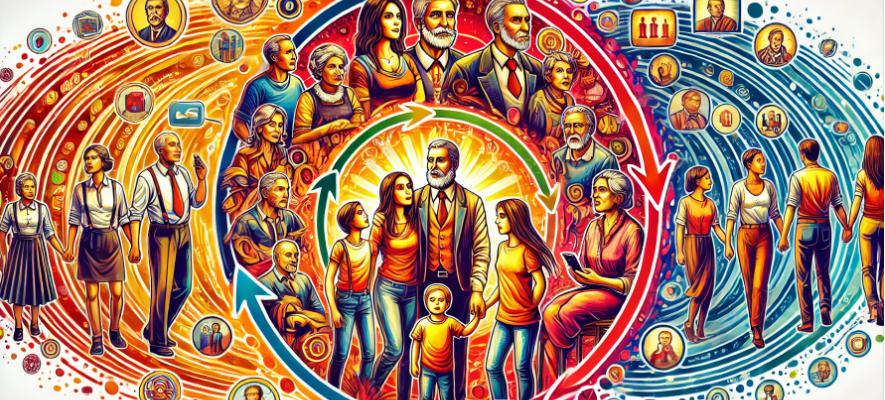
Family. It’s a word that holds so much weight and emotion. Yet, the concept of a nuclear family is not static. It evolves, shifts, and sometimes, it can be a painful transition.

I remember a time when it was always myself and my two sisters. We were inseparable, and I believed that nothing could come between us. I thought it would always be just us, standing together above everyone else, forever. But then life threw us a curveball. My father passed away, and suddenly, we were thrust into discussions about his estate. I was shocked, stunned, and incredulous. I lost it completely because their partners had different opinions, and I just couldn’t understand why. But then it hit me—they had their own nuclear families now. And naturally, loyalty to your nuclear family comes first.

That phase passed, and now we are back to being as close as possible, even though we live in different places.

Recently, I spoke with someone who had grandchildren and great-grandchildren. Unsurprisingly, he doesn’t speak or see his children much, as they have their own families and even grandchildren. Generational nuclear families are a reality. The dynamic changes with each generation, creating new families within families.

There are those Kodak moments—remember those? I guess Kodak moments have been replaced by Facebook moments. That’s a topic for another post. Yes, you will see that picture when everyone is together, spanning three generations. It might happen once a year. When I was little, we all gathered at grandmother’s house for most of the holidays. Sadly, most families today don’t spend much time with three generations present very often. As much as I loved seeing all my cousins, it really didn’t happen that often, maybe at Christmas and Thanksgiving.

As the family grew, each side started having their own gatherings. The nuclear family is constantly expanding, breaking off, and even contracting. The elders are not necessarily always revered, especially in this country. I admire cultures where families remain closer, where the elders are respected and cherished.

Sadly, the true essence of family life seems to be getting lost and replaced with, well, I don’t even know what—iPhones?

It’s natural for your nuclear family to change. It’s part of life. Embrace the transitions, cherish the moments, and remember that family, in whatever form it takes, is a constant evolution.

Politics

Why Do Some People Get Extremely Agitated About Politics?

Have you ever noticed how conversations about politics can quickly become heated, turning friends into adversaries and calm discussions into fervent debates? Why is it that politics seems to ignite such strong emotions in people? Let’s delve into the underlying reasons and explore if there’s more to this agitation than just differing opinions.

At the heart of political agitation, there might be a profound desire to be right—a need to assert one’s beliefs and validate one’s worldview. But is it just about being right? Or is it more about being heard, feeling seen, and striving for a sense of unity and belonging?

The Sedona Method suggests that we all have four basic needs: the need for approval, control, security, and oneness. Politics, in its intricate web, touches on all these needs. It provides a stage for us to seek approval from like-minded individuals and to gain a sense of control over the direction of society. It promises security through policies and governance and offers a sense of oneness with a larger group that shares our views. At the same time, it creates separation from those who don’t.

Think about it: engaging in political discourse allows us to feel involved and significant. It ties together our quest for security—ensuring our values are protected and our futures are secure—and our need for approval and belonging within our chosen ideological tribe. It’s no wonder that politics can captivate and consume us, sometimes to the point of obsession.

However, there’s a flip side. This intense engagement with politics can also enrage large portions of the population, particularly the extremes—the hard left and the hard right. These groups often find themselves in a relentless battle, each side convinced of their righteousness and deeply invested in their causes. This dichotomy is fueled not just by genuine concern for societal issues but also by the media personalities who amplify these voices.

Figures like Joe Rogan, Rachel Maddow, Tucker Carlson, Jake Tapper, and Dana Bash are just a few among many who have built their careers—and substantial fortunes—by fanning the flames of political discourse. Their annual earnings can soar into the tens of millions, profiting from the very agitation they help to stoke. While they thrive, many of us find ourselves stressed, sleepless, and sometimes even estranged from friends and family over political disagreements.

In the end, as we navigate this charged political landscape, it’s worth considering: Are we contributing to the wealth and success of these media giants while sacrificing our peace of mind and personal relationships? Is the ulcer, headache, or potential heart attack worth the cost of our engagement in these never-ending debates?

Finding Peace Within

Perhaps the solution lies not in avoiding politics altogether but in finding peace within ourselves. Could it be that when we cultivate inner peace, we no longer feel the need to obsess over political issues? When we are at peace with who we are, we might feel less compelled to seek external validation or to control the external world through political means.

Inner peace can provide a buffer against the relentless tide of political turmoil. It allows us to engage with political issues thoughtfully and constructively, rather than reactively. When we are grounded in our own sense of security and oneness, the need to assert dominance in political discussions diminishes. We can listen more deeply, understand more fully, and respond with greater compassion.

My Journey to Peace

This insight comes from a profound personal journey. In a recent conversation with my coach, David Ellzey—a brilliant coach and genius who has guided everyone from corporate titans to the United Nations—I reflected on how far I’ve come. Over the past thirty years, working with David has brought me a profound sense of peace and happiness. His use of a variety of skills and resources has profoundly shaped my perspective.

I used to be one of those people who would get incredibly agitated over politics. I was a screaming lunatic, deeply entrenched in the debates, and ready to argue passionately at the drop of a hat. The mere mention of a political opinion I disagreed with was enough to trigger a strong emotional reaction. Phrases like “I’m going to leave the country if this guy gets elected” would set me off.

But something shifted. Through my work with David, I experienced a profound transformation. I went from being reactive and easily triggered to not even responding or feeling agitated when faced with politically charged statements. I didn’t fully understand the depth of this shift until I realized how peaceful I had become in the face of political discourse.

I am not trying to be anything; I literally am at peace. This deep inner tranquility has changed how I interact with politics and the world.

Finding peace within has allowed me to disengage from the frenzy of political turmoil and live a more serene and balanced life. As we reflect on our relationship with politics, let’s also consider our relationship with ourselves. By nurturing inner peace, we might find that we can navigate the political landscape with a sense of balance and tranquility, enriching our lives and those around us.

The Deeper Layers

The journey towards this peace is multifaceted and deeply personal. It’s complex, layered with experiences, and often rooted in our past. For many, the agitation we feel about politics may be intricately linked to our relationships with our parents. We might have sought their approval or felt we weren’t enough, yearning to be heard, felt, and seen by them—even if they were loving parents from a bygone era.

Take the sixties, for instance—a time when loving parents, especially fathers, often struggled to express affection openly. They could hardly say “I love you” even under the direst circumstances. This cultural backdrop left many with unresolved feelings of seeking approval and feeling unseen, which can carry over into adulthood and manifest in our political engagements. The realm of politics can hijack or co-opt these deep-seated desires and unresolved emotions, often without our conscious awareness.

What we think is political frustration might actually be an incomplete relationship with one of our parents. It’s complicated, and untangling these threads takes time and introspection. For me, the journey to peace didn’t involve actively trying to let go of my feelings about politics or forcing myself to be at peace. Instead, I focused on working on myself—on my relationship with myself and others. The side effect was remarkable: I found that I truly don’t give a rat’s ass about politics or which side anyone wants to get agitated about.

There’s so much more to this journey; it would take a book to begin to scratch the surface. But the essence is clear: by nurturing our inner selves and resolving our deeper emotional needs, we can transform our relationship with the external world, including the tumultuous realm of politics.

Finding peace within has allowed me to disengage from the frenzy of political turmoil and live a more serene and balanced life. As we reflect on our relationship with politics, let’s also consider our relationship with ourselves. By nurturing inner peace, we might find that we can navigate the political landscape with a sense of balance and tranquility, enriching our lives and those around us.

The Quality of Your Life is the Quality of Your Conversation with Grog

Have you ever considered who you spend the most time talking to? It’s not your family, friends, or colleagues. It’s someone much closer—an integral part of you. Let’s call this constant companion “Grog.” Grog represents the primitive part of your brain, the one that’s been with you since the dawn of human evolution. Understanding Grog’s motivations can provide profound insights into our behaviors and the quality of our lives.

Meet Grog: The Primitive Brain

Grog is the embodiment of our ancient brain, wired for survival. His main goals are straightforward and have remained unchanged for millions of years: gather food, avoid predators, procreate, and rest. Let’s break down these primal drives:

  1. Gathering Food:
    • Grog’s survival instinct pushes us to seek sweets and avoid bitter foods, which historically could indicate poison. This wiring ensured our ancestors consumed energy-dense foods necessary for survival.
    • In modern times, this manifests as cravings for sugary and high-calorie foods. While these were crucial for survival in our past, today they can lead to unhealthy eating habits because our environment has changed drastically.
  2. Procreation:
    • Grog’s drive for procreation leads to sexual stimulation and reproduction. This drive ensures the continuation of our species.
    • Contemporary behaviors, like trends in enhancing sexual attractiveness, can be traced back to Grog’s influence. For instance, why are women increasingly getting butt injections? Grog might be whispering that a more voluptuous figure signifies greater sex appeal and a higher chance of attracting a strong mate, increasing reproductive success.
  3. Avoiding Predators and Rest:
    • Grog is always on alert, scanning for threats. This constant vigilance was crucial for our ancestors, who were often prey.
    • Today, this manifests as chronic worry and anxiety. Even though we no longer face the same physical dangers, our brain still operates in survival mode, leading to stress about potential threats, both real and perceived.
    • Grog also tells us to conserve energy. Since agriculture is relatively new, only about 10,000 years old, our bodies are wired to store fat and be lazy to survive during periods of scarcity.

Modern Hijacking of Grog’s Instincts

In the modern world, Grog’s instincts are often hijacked by industries that seek to capitalize on our primal drives:

  • Food Industry: Processes and markets sugary, high-fat foods that appeal to our ancient cravings but can be detrimental in a sedentary lifestyle.
  • Pornography: Exploits our natural sexual desires by providing instant gratification without the complexities of human relationships.
  • Entertainment and Technology: Video games and social media feed our need for stimulation and dopamine, offering endless cycles of engagement that can be as addictive as any substance.

These industries understand Grog’s primal language and use it to keep us hooked, often to the detriment of our overall well-being.

Living with Grog: Understanding and Evolving

If you’re reading this and nodding along, congratulations! It means you’re engaging the evolved part of your brain, the part that can reflect on and understand Grog’s influence. Here’s how you can start improving the quality of your life by managing your conversation with Grog:

  1. Recognize Grog’s Voice: Be aware of when your primal instincts are driving your behavior. This awareness is the first step to making conscious choices.
  2. Question Modern Triggers: Understand how industries exploit Grog’s instincts and develop strategies to counteract them. This might mean setting limits on junk food, digital consumption, or any other areas where you feel pulled by Grog’s primitive urges.
  3. Cultivate Mindfulness and Balance: Engage in activities that satisfy Grog’s needs in healthy ways. Enjoy nutritious foods, pursue meaningful relationships, stay active, and ensure adequate rest.

Reflect and Engage

Consider this: every moment you’re not actively engaging the evolved part of your brain, Grog is in control. And while Grog’s instincts are invaluable, they’re not always aligned with thriving in today’s world. The quality of your life truly is the quality of your conversation with Grog. Are you listening to him too much? Or have you found a balance where you acknowledge his role but steer the ship with conscious awareness?

Your Thoughts: How does Grog influence your daily life? Do you find yourself falling prey to his instincts more often than you’d like? Reflect on your conversation with Grog and share your thoughts. Stay tuned for more insights and an off-the-cuff video exploring these ideas further.


John’s Perspective: As someone deeply invested in health, wellness, and understanding human behavior, I find the concept of Grog enlightening. Managing an aesthetic doctor’s office, I see firsthand how Grog’s instincts play out in people’s choices and behaviors. Recognizing and evolving beyond our primitive drives can lead to a more fulfilling and balanced life. What are your experiences with Grog? How do you navigate the balance between primitive instincts and modern-day challenges? Let’s continue this conversation and explore more ways to elevate our daily lives.