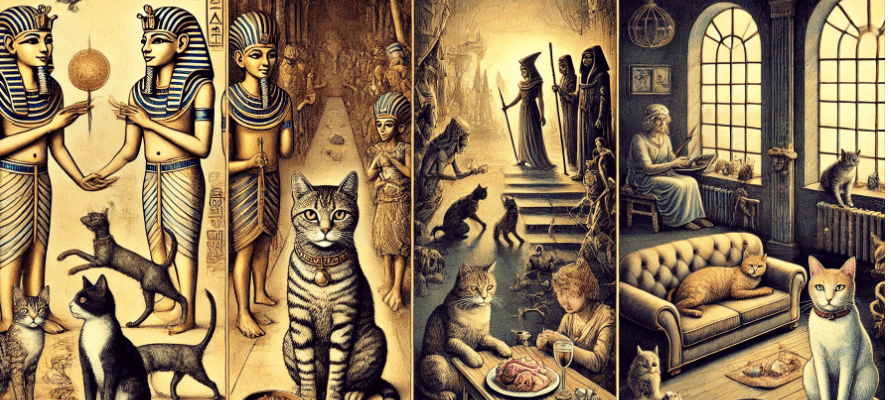
Cats. These mysterious, graceful creatures have been part of human history for millennia. But who really holds the leash in this relationship? It’s becoming increasingly clear that it’s the cats who have domesticated us. This journey spans from the reverence of ancient Egypt to the feline overlords of today.
Ancient Egypt: The Dawn of Feline Worship
Our story begins in ancient Egypt, around 3,000 years ago, where cats were revered as gods. Bastet, the cat-headed goddess, symbolized home, fertility, and protection. Egyptians admired cats for their grace and hunting skills, which kept grain stores free of vermin. They believed cats had protective qualities, and harming a cat was punishable by death. Clearly, the ancient Egyptians were the first to fall under the spell of the feline mystique, setting a precedent for generations to come.
Medieval Europe: The Dark Ages for Cats
Fast forward to medieval Europe, and the status of cats took a drastic turn. During the Middle Ages, cats were associated with witchcraft and evil. In the 13th century, Pope Gregory IX declared cats to be instruments of Satan, leading to widespread persecution and killing of cats. This unfortunate superstition culminated in a significant decline in the cat population, which inadvertently contributed to the Black Plague. With fewer cats to control the rat population, the fleas on these rats spread the deadly disease more easily. It took a few centuries, but humanity began to see the folly in their ways, and the value of cats was rediscovered.
The Renaissance to the 19th Century: A Gradual Redemption
As the Renaissance blossomed, cats began to recover their place in human society. They were appreciated once again for their pest control abilities and slowly regained a more positive status. By the 19th century, cats were becoming popular as pets in Europe and America, with their charming aloofness and independent nature winning over many hearts.
Modern Times: The Age of the Feline Overlord
Today, cats have completed their long game of domestication. They have gone from gods to devils to demanding dictators of our homes. Modern cats have perfected the art of making humans cater to their every whim. Here’s how they’ve done it:
- Food Picky and Proud: Forget the days of catching their own meals; today’s cats have humans serving gourmet meals tailored to their discerning tastes. If the food isn’t up to their standards, you’ll know from the disdainful look they give you.
- Time Management: Cats have an impeccable sense of time, especially when it comes to meal times. They will ensure you know if you are late, with persistent meowing and even a gentle (or not-so-gentle) paw to the face.
- Personal Space: While cats can be affectionate, they are also masters of controlling the terms of engagement. Petting and cuddle time happen strictly on their schedule, not yours.
- Freedom to Roam: Cats today have free reign of their homes. They claim the coziest spots, from sunlit windowsills to your favorite chair, and woe betide the human who tries to move them.
- Subtle Manipulation: Cats have honed their manipulation skills to an art form. A purr here, a headbutt there, and you’re putty in their paws. They’ve trained us to provide treats, toys, and the best spots in the house without us even realizing it.
Conclusion: The Feline Triumph
Over the course of 3,000 years, cats have subtly and effectively domesticated humans. From divine beings in ancient Egypt to misunderstood creatures in medieval Europe, to the pampered pets of today, cats have mastered the art of making us their devoted servants. As we cater to their every whim, one can only marvel at the quiet genius of these feline overlords. In the end, it’s clear who the real masters are in our homes. We might have provided the shelter, but they provided the strategy, turning the tables and making us the ones who are truly domesticated.
4o
 Happiness Health and Beauty Secrets