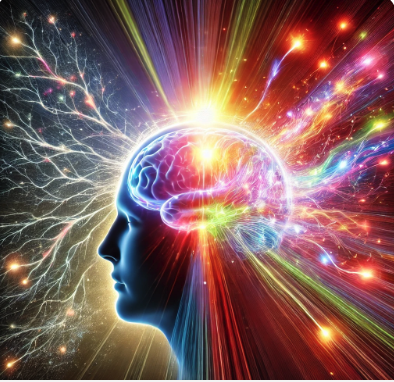
Most of us see ourselves less than what we truly are?

The Imposter Syndrome

What if what we think of as our imposter is actually our real identity? And what we think of as our real identity is just miles below what we truly are—and how others see us?

I see this in myself and in many of my friends—really accomplished people in their respective fields. And yet, I don’t think I have a single friend who truly sees how great they are. Let’s face it—we’ve all accomplished great things. We are doing things that are on par with some of the most famous people in the world. The only difference between us and “them” is that they have no humility. Or maybe it is us that is too humble.

I see this same pattern in all my friends. They’ve done incredible things—helped people find homes, in NJ Miami, secure financing, build websites more beautiful than those of the most prestigious studios in Beverly Hills. And yet, they don’t see themselves as remarkable. The only difference between them and those with millions of followers? Their opinion of themselves.

I see many doing astonishing things—raising an autistic child completely drug-free against doctors’ orders and standard of care, creating awards shows for legends like Quentin Tarantino and Robert De Niro, building things, helping people, coaching people, creating new paradigms in real estate—residential, commercial, even wholesale. The list is endless.

We all grew up with parents or guardians who, even with the best intentions, warned us about dangers to protect us. But in today’s world, there are no lions, tigers, or bears roaming the streets of New York City. Instead, we fear humiliation, rejection, or failure. We hesitate to start businesses, share our opinions, or take bold chances. And yet, the ones who do—who see themselves as capable—often meet with obscene success.

Most of us, aside from a few creatively or scientifically gifted individuals, have roughly the same abilities. The only real differentiator is how we see ourselves—or more precisely, who we believe ourselves to be.

The billionaires brag all the time about ordinary things. Their only difference is that they shout to the world that they are the best at what they do. I’m not talking about physical achievements, which can be easily measured. I mean in real estate, financing, law and other every day industries and professions.

In mine the gap is extraordinary. I can’t tell you how many lectures I’ve attended where a doctor is promoting CoolSculpting. Now, CoolSculpting is finally being recognized for the dangers it poses. In fact, supermodel Linda Evangelista sued them for $50 million. I was horrified by this technology back in 2016 and created two websites—coolsculpting.nyc and fatfreezingnewyork—to warn people. Yet there are still over 5,000 doctors still offering it, when there are dozens of safe radiofrequency alternative that dont post the risk of disfigurement and actually have a side effect of smoother tighter skin. 

Every day, I talk to people who have gone through unnecessary procedures because they didn’t trust their own judgment. Today, I spoke with a young woman who got so much Botox that she now thinks she needs a brow lift. That’s insane. Too much Botox—shame on that doctor. The Botox will wear off in three to five months, and now he is recommending a surgery? A brow lift could permanently disfigure her. Instead, we’ll likely reinvigorate her muscles with Emface.

I’ve done many things that, by any objective measure, I could consider myself world-famous for. In my old career in Graphic Arts, I lectured at the Harvard Club in New York, helped create the standards for PDF, and transmitted the first digital ad to Time Magazine. But

The only difference between you and the ones with millions of followers is how you see yourself. PERIOD. No one can see you higher than you see yourself. And often, we see ourselves much lower than everyone else does.

It’s time to shift that perspective. PS kudos to Anthony Robbins, he alluded to attaching ourselves to our “imposter” version of ourselves.
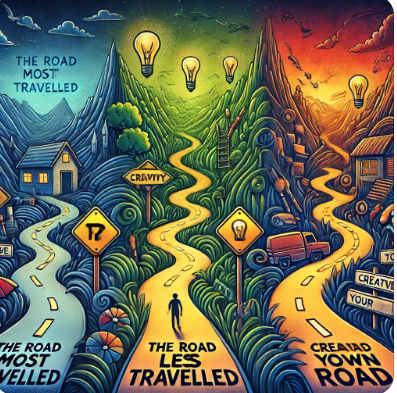

Are You on the Road Less Travelled, Most Travelled, or Not Travelled?

The book “The Road Less Travelled” sparked a movement towards meditation and self-reflection. It’s great to reflect on your life and your soul, but what about the actual path you’re on? The road we choose in life shapes our experiences, our happiness, and our fulfillment. So, let’s explore the roads most travelled, less travelled, and not travelled at all, along with their benefits and pitfalls.

The Road Most Travelled

This path is well-worn and widely accepted by society. It often includes marrying within one’s culture and religion, settling down, having a stable job, and following societal norms.

Benefits:

  • Predictability: Provides a stable, predictable life.
  • Support System: Surrounded by like-minded people and a strong community.
  • Less Risk: Fewer unknowns and generally fewer risks.

Pitfalls:

  • Lack of Exploration: May leave you wondering about life outside the bubble.
  • Conformity Pressure: Pressures to conform can stifle individual growth and creativity.
  • Potential for Regret: Following a set path without questioning may lead to mid-life crises or regrets.

I often think about what my life would have been like if I had taken this road. My parents wanted me to marry a nice girl within our culture and religion, which likely would have led to a peaceful life. But I always questioned everything and still do. Considering the high divorce rate, the road most travelled might not work for everyone.

The Road Less Travelled

This path involves questioning societal norms, exploring different lifestyles, and often pursuing passions that aren’t mainstream.

Benefits:

  • Self-Discovery: Provides opportunities for personal growth and self-discovery.
  • Fulfillment: Pursuing passions and interests can lead to deep fulfillment.
  • Innovation: Encourages creativity and original thinking.

Pitfalls:

  • Uncertainty: Constant unknowns and instability.
  • Isolation: Can be lonely and isolating, as fewer people understand or support your choices.
  • Risk: Higher risk of failure and facing numerous challenges.

I always wondered what life would be like on this path. Despite the unknowns and perils, this road is filled with excitement and exhilaration. However, life comes with no guarantees, and it’s like a puzzle with an unknown picture, regardless of the path you choose.

The Road Not Travelled

This is the path of constant adventure and discovery, where you forge your way through unknown territories and create your own rules.

Benefits:

  • Excitement: Constant novelty and adventure.
  • Independence: Complete freedom to chart your own course.
  • Unique Experiences: Rich, diverse experiences that few others have.

Pitfalls:

  • High Risk: Extreme uncertainty and potential for significant setbacks.
  • Loneliness: Often a solitary journey with limited support.
  • Stress: High levels of stress and the need for constant decision-making.

I’ve often said I wish my brain allowed me to join the union, get married to a “nice” girl, settle down in Staten Island or NJ, have kids and a dog, and watch my family multiply. But my brain craves adrenaline, endorphins, and dopamine. My life will continue on the road not travelled, filled with excitement, novelty, and adventure.

Reflection and Balance

Regardless of the path you’re on, it’s valuable to step onto the opposite road occasionally. If you’re on the road most travelled, try something new or different. If you’re on the road not travelled, take a break and spend some time on the comfortable, well-worn path. It’s okay to take a break from fighting dragons and navigating the unknown jungle every day.

A Proposal for Reflection

Reflect on the road you’re on and consider taking a few steps on the opposite path. Life is a journey with no guarantees, and exploring different roads can provide a richer, more fulfilling experience. Embrace the adventure, the stability, or the novelty that each path offers, and find your own unique way to navigate through life.

P.S. Whether you are aware of it or not, you are on the road not travelled. Every little thing that made you who you are is unique. No one had the exact same parents as you. Were they domineering, demanding, not around, divorced, loving, nasty, abusive? No one went to the same kindergarten, grade school, high school, and college as you. No one had all the same teachers and coaches you had. Even if you had an identical twin, your paths diverged here and there. So, enjoy your road.

And when is it time to create a road that literally doesnt exist but is of your making.

Emotional Energetic States: Energy vs. Anti-Energy

  1. Fun vs. Rigidity
    • Fun: Represents a state of joy, playfulness, and light-heartedness. This energy is infectious and can uplift those around you.
    • Rigidity: Signifies strictness, inflexibility, and a serious demeanor. It can create barriers in communication and make interactions feel tense.
  2. Goddess in the Heart vs. Thinking (in the Head)
    • Goddess in the Heart: Symbolizes being present, compassionate, and connected to your emotions and intuition. It allows for deep, heartfelt connections with others.
    • Thinking (in the Head): Indicates being overly analytical, focused on the past or future, and disconnected from the present moment. This state can hinder genuine emotional connection.
  3. Aspirational Inspired vs. Negativity
    • Aspirational Inspired: Involves being motivated, hopeful, and driven by positive goals. This energy can inspire and motivate others.
    • Negativity: Involves pessimism, doubt, and negative vibrations. It can drain energy and discourage those around you.
  4. Zeus Decisive Fulfillment Achievement vs. Fear and Uncertainty
    • Zeus Decisive Fulfillment Achievement: Embodies confidence, decisiveness, and a sense of accomplishment. This state exudes strength and can lead others with assurance.
    • Fear and Uncertainty: Represents anxiety, hesitation, and lack of confidence. It can create instability and prevent effective communication.

The Importance of Emotional Energy in Communication

You cannot effectively communicate with others if you are stuck in a state of rigidity, overthinking, negativity, or fear. True connection happens on an energetic level, where emotions play a crucial role.

Key Points to Remember:

  • We connect energetically: Our emotional states influence our ability to connect with others. Being in a positive and present state enhances our interactions.
  • Physical Actions to Shift States: If you find yourself in misery, grief, or depression, physical actions like a hand clap or fist pump can help shift your energy.
  • Communicating Emotionally: To take people on an emotional journey with you, you need to be in touch with your own emotions. This allows you to communicate with authenticity and empathy.

By being aware of your emotional state and actively choosing positive energy, you can improve your ability to connect and communicate with others. This not only enhances personal relationships but also professional interactions and overall well-being.

Credit Michael Smikun July 5, 2024 morning huddle Unblinded my notes to the best of my ability

Act Like an Alcoholic and You Will Be Much More Successful

Imagine approaching your goals with the discipline of someone committed to recovery, taking it one day at a time. This philosophy isn’t just for overcoming addiction—it’s a powerful strategy for achieving success in any endeavor.

Andrew Huberman’s insights into neurochemistry shed light on this approach. Even the smallest accomplishment triggers a dopamine release, fueling motivation to tackle bigger challenges. It’s a simple yet profound principle: set small goals, achieve them, and build momentum.

Think back to moments when you spontaneously cleaned a counter or tidied up a room. Starting with a tiny task often snowballs into completing the entire job. Harness this natural inclination. Tell yourself, “Just do it,” or “Just start.” The key lies in action; stress only arises from dwelling on what needs to be done.

Whether it’s filing taxes or organizing your home, break tasks into manageable steps. Start with downloading a few documents or cleaning a small area. Notice how each accomplishment boosts your mood and propels you forward.

What if you set multiple tiny goals? Each one adds to your sense of achievement and builds confidence. Embrace the mindset of progress, one step at a time.

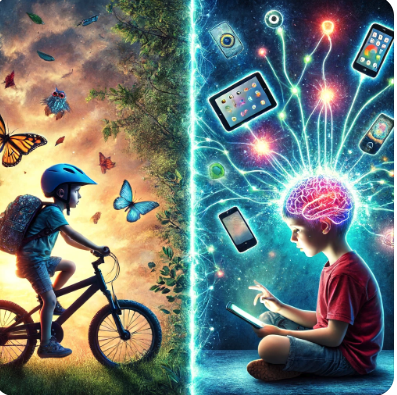
Why We Shield a Child’s Head but Neglect Their Brain: The Unseen Threat of Digital Overstimulation

As parents and guardians, we instinctively protect our children from physical harm. We put helmets on them when they ride bikes, use car seats to secure them during travels, and hover over them to prevent falls. Yet, there’s an invisible danger we’re often less vigilant about—one that directly targets their developing brains: the pervasive presence of digital devices.

The Paradox of Protection

In our digitally saturated world, children’s brains are constantly exposed to electronic devices designed to captivate and stimulate them with a flood of immediate rewards. This paradox raises a critical question: why do we rigorously safeguard our children’s physical heads while neglecting the more profound and lasting impacts on their cognitive development from digital overstimulation?

The Hijacking of the Dopamine Reward System

At the core of this issue is the brain’s dopamine reward system. Dopamine, a neurotransmitter, plays a pivotal role in how we experience pleasure and motivation. It’s the brain’s “feel-good” chemical, released during enjoyable activities like eating, playing, or achieving goals. However, the structure and functioning of the dopamine system are particularly susceptible to external influences during childhood.

  1. Short-Term Stimulation:
    • Instant Gratification: Many digital devices and apps are engineered to deliver constant, quick bursts of dopamine. Every notification, like, or level up in a game provides a small, immediate reward, conditioning the brain to expect continuous stimulation.
    • Reduced Attention Span: This relentless barrage of stimuli can train children to seek instant gratification, making it difficult for them to focus on tasks that require sustained attention or to delay gratification for more significant, long-term rewards.
  2. Long-Term Consequences:
    • Altered Brain Development: Children’s brains are exceptionally plastic, meaning they are highly adaptable and continually developing. Persistent exposure to rapid, short-term rewards can alter the brain’s natural reward pathways, potentially leading to conditions like attention deficit disorders, anxiety, and difficulties in self-regulation.
    • Impaired Decision-Making: A brain accustomed to immediate rewards may struggle with decision-making processes that require patience and long-term thinking. This can impact their academic performance, social interactions, and future career prospects.

Digital Devices: Double-Edged Swords

While technology offers educational and entertainment benefits, its potential drawbacks, particularly for young minds, are profound:

  1. Cognitive Overload: Excessive use of digital devices can overwhelm a child’s cognitive capacities. This overload can impair learning, memory, and critical thinking skills.
  2. Emotional Dysregulation: The emotional highs and lows induced by digital interactions can disrupt a child’s ability to manage emotions effectively, leading to increased irritability and mood swings.
  3. Social Isolation: Despite their connectivity, digital devices can foster social isolation. Real-world interactions are essential for developing empathy, communication skills, and strong interpersonal relationships.

The Role of Parents and Guardians

Protecting our children’s brains from digital overstimulation requires a multi-faceted approach:

  1. Setting Boundaries:
    • Screen Time Limits: Establishing clear limits on the amount of time children can spend on digital devices helps mitigate their exposure to overstimulation.
    • Tech-Free Zones and Times: Designating certain areas and times (like during meals or an hour before bedtime) as tech-free encourages other forms of interaction and relaxation.
  2. Encouraging Alternative Activities:
    • Physical Play: Promoting outdoor and physical activities supports overall health and provides natural, balanced stimulation for the brain.
    • Creative Endeavors: Engaging children in creative activities like drawing, reading, or building with blocks fosters sustained attention and imaginative thinking.
  3. Modeling Healthy Behaviors:
    • Demonstrating Balance: Children often mimic the behavior of adults. Showing them how to balance screen time with other activities sets a positive example.
    • Mindful Consumption: Being mindful of how we use digital devices and their content can help us better understand and guide our children’s digital habits.

The Path Forward

In an age where digital devices are ubiquitous, balancing their benefits with their risks is crucial. As we protect our children’s physical well-being, we must also be vigilant in safeguarding their cognitive and emotional development. By recognizing and addressing the impacts of digital overstimulation, we can help nurture resilient, thoughtful, and well-adjusted individuals capable of thriving in the ever-evolving digital landscape.

Conclusion

The unseen impact of digital devices on our children’s brains is an issue that demands our attention and action. Just as we wouldn’t leave their heads unprotected during a fall, we must not leave their minds unguarded against the subtle yet profound effects of digital overstimulation. By fostering healthy digital habits and promoting diverse activities, we can ensure that our children grow up with the capacity to delay gratification, engage deeply with the world around them, and develop into well-rounded individuals ready to navigate the complexities of modern life.

Positive and Negative Thoughts and Implications for our Health and Well being

I am not a neuroscientist. But if you accept the fact that we have between 50,000 and 90,000 thoughts a day and they all have energy. How much energy are you burning and is it enervating or destroying you, or elevating you? I would argue, you know exactly what I mean. You feel awful after entertaining negative thoughts and ideas and are totally excited when you think of positive outcomes and thoughts that make you happy. You dont even have to go to a Tony Robbins seminar and jump up and down. I would argue that you can go. But if you come back home and keep thinking lousy thoughts, well, at the least you are going to feel lousy.

I can not insure the accuracy of the detailed scientific numbers below. But you know when you feel great. And some of us make ourselves sick with our thoughts. You have experienced both excitement and feeling so bad you feel sick. Choose wisely your health and life depend on it. So you dont even have to read any further. Stop the stinking thinking you are at the very least making yourself sick at worst you could be killing yourself or setting yourself up for serious disease. Think ulcers, heart disease etc.

Positive vs. Negative Thoughts and Energy.

  1. Neuroscience of Positive and Negative Thoughts:
    • Activation Patterns: Positive and negative thoughts activate different regions of the brain. Positive thoughts often involve the prefrontal cortex and reward centers like the nucleus accumbens. Negative thoughts may engage areas associated with stress and emotion regulation, such as the amygdala and the anterior cingulate cortex.
    • Energy Usage: Both types of thoughts require energy for neural activation, but there’s no straightforward way to measure if one consumes more energy than the other. The content and emotional weight of a thought could influence the level of neural activation and, consequently, energy usage.
  2. Psychological Impact:
    • Negative Energy and Enervation: Persistent negative thoughts are linked to stress and anxiety, which can lead to increased cortisol production and prolonged activation of the stress response. This not only consumes energy but also can lead to fatigue and a feeling of being drained.
    • Positive Energy and Elevation: Positive thoughts are associated with the release of neurotransmitters like dopamine and serotonin, which enhance mood and can create a sense of vitality and energy.

The Broader Impact on Well-being

  1. Mental and Physical Health:
    • Chronic Stress: Sustained negative thinking and stress can weaken the immune system, contribute to chronic diseases, and diminish overall health. This process consumes a significant amount of energy and can leave individuals feeling depleted.
    • Positive Mindset: Positive thinking has been shown to improve mental health, reduce stress, and enhance overall well-being. This state of mind can lead to better health outcomes and a more efficient use of energy.
  2. Energy Dynamics:
    • Cognitive Load: Negative thoughts often involve rumination and high cognitive load, which can be mentally exhausting. In contrast, positive thoughts and a positive mindset might be less taxing and even invigorating.
    • Emotional Impact: Emotions associated with positive thoughts, such as joy and excitement, tend to energize us, while emotions linked to negative thoughts, like fear and sadness, can drain our energy.

Practical Implications

  1. Mindfulness and Thought Management:
    • Awareness: Being aware of the nature of our thoughts and their impact on our energy and well-being is crucial. Practices like mindfulness and cognitive-behavioral techniques can help shift the balance towards more positive thinking.
    • Energy Optimization: By fostering a positive mental attitude and managing stress effectively, we can potentially optimize our brain’s energy use and enhance our overall vitality.
  2. Lifestyle Adjustments:
    • Healthy Habits: Engaging in activities that promote positive thinking, such as regular exercise, social connections, and hobbies, can boost energy levels and counteract the effects of negative thoughts.
    • Stress Reduction: Techniques like meditation, deep breathing, and adequate sleep are essential in managing negative thought patterns and conserving energy.

Conclusion

While we cannot precisely quantify the energy of individual thoughts or differentiate the energy consumption between positive and negative thoughts directly, the overall patterns of brain activity and their impacts on well-being provide valuable insights. Positive thoughts and emotions tend to energize us, while negative ones can deplete our resources. Understanding and managing our thought processes can thus have significa

The Energy of a Thought: A Conceptual Overview

  1. Neuroscience Perspective:
    • Neural Activity: Thoughts are generated by the firing of neurons in the brain. Each neural impulse involves the movement of ions (charged particles) across the neuron’s membrane, creating tiny electric currents. The brain’s overall electrical activity can be measured using electroencephalography (EEG), which detects electrical signals from groups of neurons.
    • Metabolic Energy: Neuronal activity requires energy, primarily supplied by glucose and oxygen. Functional MRI (fMRI) scans can measure changes in blood flow to different brain areas, indicating which regions are more active during specific thoughts or tasks.
    • Energy Consumption: The brain consumes about 20% of the body’s energy, even though it only accounts for about 2% of body weight. During intense cognitive tasks, the energy consumption in specific brain areas increases. However, this increase is still relatively small compared to the brain’s overall energy use.
  2. Quantifying Thought Energy:
    • Electrical Energy: The electrical energy generated by neuronal activity is minuscule. Individual neurons generate tiny voltages (about 70 millivolts). When many neurons fire synchronously, the cumulative electrical activity can be detected as brain waves, but the actual energy in these electrical signals is extremely low.
    • Biochemical Energy: The energy used by the brain’s metabolic processes can be quantified in terms of ATP (adenosine triphosphate), the primary energy currency in cells. However, translating this into the “energy of a thought” is complex because thoughts involve dynamic and distributed neural processes.
  3. Quantum Perspective:
    • Quantum Brain Hypothesis: Some theoretical physicists propose that quantum processes could be involved in neural activity. If true, thoughts could be linked to quantum phenomena like wavefunction collapse. This is highly speculative and not widely accepted in mainstream neuroscience.
    • Quantum Energy: If quantum effects are involved in thought processes, measuring the energy would require understanding how quantum states interact at the neuronal level, which is currently beyond our technological capabilities.

Measuring Thought Energy: Current Tools

  1. EEG (Electroencephalography): Measures the electrical activity of the brain through electrodes placed on the scalp. It can provide insights into the brain’s electrical patterns during different cognitive states but doesn’t quantify energy in the conventional sense.
  2. fMRI (Functional Magnetic Resonance Imaging): Measures changes in blood flow, indirectly indicating brain activity. This technique shows which areas are consuming more energy but doesn’t directly measure the energy of thoughts.
  3. PET (Positron Emission Tomography): Uses radioactive tracers to measure metabolic processes in the brain, offering a view of how glucose and oxygen are consumed during cognitive activities.

Theoretical and Philosophical Considerations

  1. Information Theory: Some theorists suggest that information itself carries energy. In this view, thoughts as units of information could be said to possess energy, though quantifying this remains more philosophical than scientific at present.
  2. Mind-Body Connection: The energy of a thought might be better understood in terms of its effects on the body. For example, stress (a mental state) can lead to physical changes that consume significant energy, linking cognitive and physiological energy more tangibly.

Summary

While we can measure the brain’s electrical and metabolic activity and understand that these are linked to thoughts, the exact energy of a specific thought is challenging to quantify with current scientific methods. Most of our understanding comes from indirect measurements and theoretical models. The idea of measuring the energy of a thought remains an intriguing and evolving area of study.

If we have 50 to 90,000 thoughts a day, how much energy is that? and how much negative vs positive energy depending on the thoughts and which direction they are in . And does negative thought energy enervate us and postive energy elevate us?

The idea that thoughts have different energy levels depending on their nature (positive or negative) is a compelling blend of neuroscience, psychology, and metaphysics. Let’s explore this in detail.

Estimating the Energy Consumption of Daily Thoughts

  1. Energy Use by the Brain:
    • Baseline Energy Consumption: The human brain uses about 20% of the body’s total energy, which translates to approximately 300-500 calories per day for an average adult.
    • Energy per Thought: Given that the brain is constantly active, estimating the energy used specifically for each thought is complex. However, we can make a rough estimate by dividing the total daily energy consumption by the number of thoughts.
  2. Calculating Energy Per Thought:
    • If we assume 50,000 to 90,000 thoughts per day, and the brain consumes 500 calories daily:
      • 500 calories per day is roughly 2,090,000 joules (since 1 calorie = 4.18 joules).
      • Dividing this by 50,000 thoughts:
        • 2,090,000 joules / 50,000 thoughts ≈ 41.8 joules per thought.
      • Dividing this by 90,000 thoughts:
        • 2,090,000 joules / 90,000 thoughts ≈ 23.2 joules per thought.
    These are very approximate values because not all brain activity is tied directly to discrete, conscious thoughts.

Exploiting Our Monkey Brains: The Social Media and TV Dilemma

We are all monkeys at heart, driven by primal instincts and the pursuit of immediate gratification. Social media and television have mastered the art of exploiting these tendencies, tapping into our monkey brains with precision. Whether it’s social media’s magical 30 or 60-second dopamine hits or cable television’s emotional roller coasters, these mediums know exactly how to hijack our brains and keep us hooked.

The Dopamine Traps of Social Media and TV

Social Media: Quick Fixes and Endless Scrolls

Social media platforms like Facebook, Instagram, Twitter, and TikTok are designed to keep you engaged for as long as possible. They serve up bite-sized content that provides quick dopamine hits, making it easy to consume one post after another without realizing how much time has passed. Each like, comment, or new post delivers a tiny burst of pleasure, encouraging you to keep scrolling. This design isn’t by accident; it’s a calculated effort to capture your attention and keep you coming back for more.

The personalization algorithms on these platforms ensure you see content tailored to your interests, reinforcing your habits and preferences. Every click is tracked and analyzed to deliver more of what you enjoy, making it increasingly difficult to break the cycle. You’re not just browsing; you’re feeding a well-crafted addiction designed to exploit your brain’s reward system.

Cable Television: Emotional Manipulation

Cable TV operates on a similar principle but plays more with your emotions. News channels, for instance, know exactly how to elicit strong emotional responses, whether it’s outrage, fear, or joy. By constantly triggering your emotions, they keep you glued to the screen. The more you watch, the more dopamine flows, reinforcing the habit.

Moreover, news channels polarize their content to align with your existing beliefs. Whether you lean towards CNN or FOX, these channels create echo chambers that validate your perspectives and keep your emotions running high. This emotional engagement ensures you return for more, making you a loyal viewer who contributes to their massive viewership numbers.

The Illusion of Choice

You might think you’re in control, especially if you get your news from social media instead of traditional TV. However, the reality is even more insidious. Social media platforms have a far deeper understanding of your behavior. Every action you take online—every click, like, and view—is tracked and analyzed. This data allows these platforms to serve up content that is precisely tailored to your preferences, reinforcing your habits and keeping you engaged.

Unlike TV, which only knows what channel you’re watching, social media platforms know exactly what you interact with and how long you engage with it. This level of detail creates an illusion of choice. You might feel you’re selecting what you see, but in reality, the platforms are curating your experience to maximize engagement.

Cable News Channels: The Perfect Emotional Trap

Cable news channels have mastered the art of emotional manipulation. They craft their content to elicit strong reactions—whether it’s anger, fear, or excitement. Channels like CNN and FOX are designed to polarize viewers, creating a sense of identity and loyalty to their chosen narrative. This polarization isn’t just about presenting the news; it’s about keeping you emotionally invested.

You might believe you’re choosing to watch a particular channel because it aligns with your views. In reality, these channels have chosen you. They know how to trigger your emotions and keep you engaged. The more you watch, the more your monkey brain is flooded with dopamine, adrenaline, or even nor-epinephrine, reinforcing the habit of tuning in.

The Internet: The Ultimate Monkey Brain Playground

Once you enter the realm of the internet, you step into the ultimate playground for your monkey brain. Every click, scroll, and interaction is meticulously tracked. This data allows platforms to predict and influence your behavior with astonishing accuracy.

On social media, for example, you’re not just passively consuming content. Platforms like Facebook, Instagram, and TikTok know what you like, share, and comment on, and they use this information to serve up more of the same. This creates a feedback loop that keeps you engaged and coming back for more. You’re essentially a monkey in chains, with the chains being the endless cycle of dopamine hits provided by these platforms.

A Modern Opium Den

Engaging with social media and cable news can be likened to frequenting an opium den. You trade your time and attention for moments of fleeting pleasure. The exchange is starkly one-sided: you get temporary satisfaction, while they reap significant financial rewards.

At least in an opium den, the transaction is honest. You know you’re there for the pleasure, and there’s no pretense of engagement or productivity. But with social media and television, the lines are blurred. You’re led to believe you’re staying informed or connected, but in reality, you’re just a monkey chained to a perpetual cycle of dopamine-driven distractions.

Breaking Free from the Chains

Recognizing the ways in which our monkey brains are exploited is the first step towards breaking free. Here are some strategies to reclaim control:

  1. Be Mindful of Your Consumption: Pay attention to how much time you spend on social media and watching TV. Set limits to ensure these activities don’t dominate your day.
  2. Curate Your Content: Choose to follow and engage with content that adds value to your life rather than merely providing quick dopamine hits. Be selective about the news sources and social media accounts you interact with.
  3. Take Regular Breaks: Step away from screens regularly to reset your mind and break the cycle of constant engagement. Engage in activities that are less reliant on instant gratification, such as reading a book, going for a walk, or practicing mindfulness.
  4. Focus on Real Connections: Spend time with friends and family in person. Face-to-face interactions are more fulfilling and less prone to the shallow, dopamine-driven exchanges found on social media.
  5. Reflect on Your Choices: Take time to reflect on how you spend your time and the motivations behind your actions. Are you choosing your activities, or are they being chosen for you by your monkey brain?

Conclusion

Social media platforms like Facebook, Instagram, Twitter, and TikTok, along with television, have mastered the art of exploiting our monkey brains, keeping us hooked with a constant stream of dopamine hits. Whether it’s the quick fixes provided by social media or the emotionally charged content from cable news, these platforms know how to keep you engaged and coming back for more.

By recognizing the tactics they use and making conscious choices about how we spend our time, we can break free from the chains of these distractions. It’s about reclaiming control and ensuring that our actions align with our true intentions rather than being driven by our monkey brains.

Are You Choosing Your Day or Is Your Monkey Brain in Control?

We all have those days. You start with good intentions, maybe even drink a nootropic beverage to boost your focus. But without a clear plan in mind, you find yourself drifting towards the TV, small cleaning chores, playing video games, or scrolling through social media for hours. What happened? Your monkey brain, driven by dopamine cues and habits, took over.

The Monkey Brain and Dopamine

The monkey brain is a term often used to describe the part of our mind that seeks immediate gratification and jumps from one distraction to another. It’s heavily influenced by dopamine, the neurotransmitter responsible for pleasure and reward. When we engage in activities that are enjoyable or provide a quick hit of satisfaction, dopamine is released, reinforcing those behaviors and making us more likely to repeat them.

This is why, without a clear plan or focus, we tend to drift towards activities that are easy and instantly gratifying. Watching TV, tidying up, playing video games, or endlessly scrolling through social media are common go-to’s because they require minimal effort and provide quick dopamine rewards.

The Importance of Visualizing Your Day

To counteract the influence of the monkey brain, it’s crucial to visualize and plan your day. When you have a clear idea of what you want to accomplish, you set a direction for your energy and focus. Here’s how visualizing your day can help:

  1. Provides Structure: A visualized plan gives your day a structure, making it easier to stay on track and avoid distractions.
  2. Boosts Productivity: With a clear outline of tasks, you’re more likely to dive into meaningful work rather than defaulting to easy, habitual activities.
  3. Reduces Stress: Knowing what to expect can reduce the anxiety that comes with uncertainty, helping you to feel more in control.
  4. Increases Satisfaction: Accomplishing planned tasks provides a sense of achievement and boosts your overall satisfaction with the day.

The Drift Towards Dopamine

Even with good habits, such as daily running or regular exercise, it’s easy to fall into the dopamine trap when there’s no specific plan. For 20 years, I’ve been saying I need to find a replacement for running. Yet, without a structured goal or a clear vision of what that replacement should look like, I often find myself drifting back to less productive activities.

This isn’t unique to me. Many people mindlessly engage in activities like cleaning, arranging, or organizing when they don’t have a clear plan. Or, they might find themselves endlessly scrolling through social media feeds, seeking the instant gratification of likes, comments, and new posts. While these tasks can be satisfying and provide a quick sense of accomplishment, they often serve as distractions from more meaningful work.

Are You Choosing, or Is Your Monkey Brain Choosing?

The key question is: Are you actively choosing how to spend your day, or is your monkey brain making the choices for you? The monkey brain will always gravitate towards whatever is easy and immediately rewarding. This could be something as simple as arranging your makeup, cleaning out a closet, or scrolling through social media. These tasks, while seemingly productive, are often ways to avoid more challenging or important work.

Strategies to Take Control of Your Day

  1. Start with Visualization: Spend a few minutes each morning visualizing your day. Outline your key tasks and goals. Imagine yourself completing them successfully. This sets a mental map and prepares you to follow through.
  2. Set Clear Intentions: Write down your top priorities for the day. Keep this list visible to remind yourself of your goals and keep your monkey brain in check.
  3. Break Tasks into Small Steps: Large tasks can feel overwhelming, leading to procrastination. Break them down into smaller, manageable steps to make them less daunting.
  4. Use Time Blocks: Allocate specific time blocks for different activities. This can help you stay focused on one task at a time and reduce the temptation to drift.
  5. Limit Dopamine-Inducing Distractions: Be aware of the activities that provide quick dopamine hits, like social media, and limit them. For example, set a timer for breaks to prevent them from turning into long TV sessions or social media marathons.
  6. Reflect and Adjust: At the end of the day, reflect on what went well and where you drifted. Adjust your strategies accordingly for the next day.
  7. Establish Routines: Routines provide a framework that can keep you on track, especially when your willpower is low. Incorporate healthy habits into your daily schedule to build a foundation of productive behavior.

Conclusion

Our monkey brains are powerful and will always seek the path of least resistance and the highest dopamine reward. Without a clear plan, we’re likely to drift into easy and habitual activities, losing sight of our more meaningful goals. Social media, in particular, can be a significant distraction, pulling us away from productive tasks with its constant flow of dopamine hits.

By visualizing your day, setting clear intentions, and creating structured routines, you can take control and make conscious choices about how to spend your time. Remember, it’s about actively choosing your actions rather than letting your monkey brain dictate them. With intention and focus, you can navigate your day with purpose and productivity.

Study Your Successes: The Key to Navigating Life’s Challenges

Life is a journey full of ups and downs, moments of triumph, and periods of struggle. One crucial aspect of navigating this journey is understanding not only our mistakes but also our successes. Too often, we focus on what went wrong, driven by the pain of our failures. However, by studying our successes, we can better prepare ourselves for when life inevitably throws us off track.

The Lesson in Pain

We learn from our mistakes because of the pain they cause. Put your hand in fire once, and you’ll remember the lesson forever. Pain serves as a powerful teacher, ingraining the memory of our errors deeply within us. However, this focus on pain means we often overlook the equally valuable lessons our successes can teach us.

The Mystery of Sudden Failures

How many times have you felt like everything was going perfectly, only to have it all fall apart unexpectedly? The train falls off the tracks, and you’re left wondering why. Without understanding what contributed to your previous successes, it’s challenging to pinpoint what might have gone wrong. This lack of insight can leave you feeling lost and frustrated.

The Importance of Self-Reflection

To avoid these pitfalls, it’s essential to study your successes as diligently as you analyze your mistakes. One practical way to do this is by keeping a diary or an Excel sheet where you annotate moments when you “feel great” or note any significant achievements. Use keywords that resonate with you and that you will remember.

Creating a Success Log

When life does go off course, you can refer back to this log. Use the “find” function to search for those key moments of success and identify patterns. Perhaps you’ll discover that regular exercise, a morning walk, a particular supplement, or abstaining from TV were part of your routine during successful periods. The possibilities are endless, but without documentation, these insights remain hidden.

The Power of Positive Habits

By studying what you were doing right, you can recreate those conditions. Understanding the habits, routines, and activities that contributed to your success gives you a roadmap to follow. It’s about recognizing that success isn’t just about avoiding pain; it’s also about cultivating the positive habits that lead to thriving.

A Call to Action

Start today by creating your success log. Write down what you did, how you felt, and any small details that might seem insignificant now but could be crucial later. Study yourself when you are successful. This proactive approach will equip you with the knowledge and tools to get back on track faster when challenges arise.

Embrace a Balanced Perspective

Remember, life is a balance of learning from pain and celebrating triumphs. By giving equal weight to your successes, you ensure a more comprehensive understanding of yourself and your journey. This balanced perspective will empower you to navigate life’s inevitable ups and downs with greater confidence and resilience.

Conclusion

Study your successes or you will have no idea what to do when the train falls off the tracks. Pain teaches us what to avoid, but understanding our successes shows us what to embrace. Keep track of your positive moments, reflect on them, and use them as a guide to maintain and replicate those successes. Your future self will thank you.