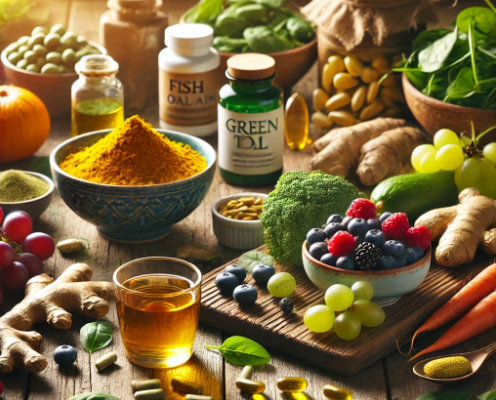
Inflammation is the body’s natural response to injury or illness, but chronic inflammation can lead to a host of health problems, including arthritis and other inflammatory conditions. Fortunately, there are several natural anti-inflammatories backed by evidence-based research that can help manage and reduce inflammation. Below is a list of some of the top anti-inflammatories that may support your journey toward better health.
Note from John:
For those who don’t like to read or just want the quick version (hey, we’re all a bit lazy sometimes), here’s my cliff notes or “quickie for dummies”:
When I worked with Oz Garcia, I had the job of writing vitamin labels. This wasn’t just a matter of slapping on some buzzwords—I had to back every claim with solid studies, which then went through a rigorous review by the nutritionist and legal team at the vitamin manufacturer. One of our big projects was creating the Longevity Pak, which even Hillary Swank raved about. I also wrote individual labels, and let me tell you, the easiest one to write was for fish oils. The benefits are practically endless: they start with the brain, move down to the heart, and cover the whole body’s inflammation issues. When it comes to fish oils, focus on Omega-3s—trust me, we already get more than enough Omega-6s in our diet. Funny enough, they used to sell products boasting Omega-3, 6, and 9, but really, just stick with Omega-3s.
If you’re going to pick one supplement, Omega-3s would be it. My second favorite? Turmeric or curcumin. Over 25 years ago, I used to buy organic turmeric powder (the kind sold for seasoning) and mix half a teaspoon with water. I don’t recommend it—it tasted awful! But do be careful about the source.
As for resveratrol and SAMe, they’re way too pricey. One of my favorite go-to doctors, who was on Steve Jobs’ medical team and has a PhD in nutrition and biochemistry, told me resveratrol isn’t worth it. I don’t have two PhDs, so I take his word for it.
Everyone is vitamin D deficient—even my friends in Florida. That says a lot because vitamin D is crucial for so many things. Magnesium is another essential; it’s involved in everything from energy production to relaxing your muscles. Most of us need it. Start there, and remember, we are all biologically unique—or as Joshua Rosenthal coined it, we have “bio-individuality.” So, pay attention to what works for you.
PS: If you want to see Oz Garcia in person, be prepared to shell out $25,000 just to walk through the door. The first thing he’ll ask you to do? Write down everything you eat for a week. Duh. Not only are we biologically different, but we also all have different diets. You can’t hire someone to follow you around for a week to track your meals. Well, actually, you can—Oz does one-week retreats with his billionaire clients. But assuming most reading this aren’t in that category, you’ll need to track what you eat and how you feel. Personally, I use an Excel sheet to track my supplements and medications (I take testosterone and growth hormone). It’s essential for reference.
1. Turmeric (Curcumin)
Curcumin, the active compound in turmeric, has been extensively studied for its anti-inflammatory properties. It works by inhibiting several molecules involved in inflammation, such as NF-kB, COX-2, and TNF-alpha. Curcumin has shown effectiveness in managing inflammatory conditions like arthritis.
- How to Use: Turmeric can be taken as a supplement in doses ranging from 500-2,000 mg per day, often divided into smaller doses. It’s best absorbed when combined with piperine (black pepper).
- Learn More: NIH – National Center for Complementary and Integrative Health
2. Omega-3 Fatty Acids (Fish Oil)
Omega-3 fatty acids, particularly EPA and DHA found in fish oil, are powerful anti-inflammatories. They reduce the production of inflammatory cytokines and eicosanoids, providing relief from joint stiffness and pain, particularly in rheumatoid arthritis.
- How to Use: A typical dose is 1,000 to 3,000 mg of EPA and DHA combined daily.
- Learn More: Harvard T.H. Chan School of Public Health
3. Ginger
Ginger contains bioactive compounds such as gingerol and shogaol, which are known for their anti-inflammatory effects. Research shows that ginger can significantly reduce inflammation and pain in conditions like osteoarthritis.
- How to Use: Ginger can be consumed fresh, dried, or in supplement form. A common dose is 1-2 grams of ginger extract daily.
- Learn More: Journal of Medicinal Food
4. Green Tea (EGCG)
Green tea, rich in epigallocatechin gallate (EGCG), is a potent anti-inflammatory and antioxidant. It has been shown to reduce inflammation and cartilage degradation in arthritis.
- How to Use: Enjoy 3-4 cups of green tea daily or take 400-800 mg of EGCG as a supplement.
- Learn More: Journal of Nutrition
5. Resveratrol
Resveratrol, found in red grapes, berries, and red wine, has anti-inflammatory properties. It works by inhibiting NF-kB and other inflammatory pathways and is studied for its potential to reduce inflammation in arthritis and cardiovascular disease.
- How to Use: Resveratrol supplements typically range from 150-500 mg per day.
- Learn More: Frontiers in Immunology
6. Boswellia Serrata (Indian Frankincense)
Boswellia Serrata is known for its anti-inflammatory effects, particularly in osteoarthritis. The active compounds, boswellic acids, inhibit the 5-lipoxygenase enzyme, reducing inflammation and pain.
- How to Use: Common doses are 300-500 mg of boswellic acids, taken 2-3 times daily.
- Learn More: Arthritis Research & Therapy
7. Bromelain
Bromelain, an enzyme found in pineapples, has anti-inflammatory properties and is particularly effective in reducing inflammation from soft tissue injuries and osteoarthritis.
- How to Use: Bromelain is typically taken in doses of 500-2,000 mg daily.
- Learn More: Planta Medica
8. Capsaicin
Capsaicin, the compound that gives chili peppers their heat, reduces inflammation and pain by depleting substance P, a neuropeptide involved in pain transmission. It is commonly used for osteoarthritis pain relief.
- How to Use: Capsaicin is available in topical creams, with concentrations ranging from 0.025% to 0.1%.
- Learn More: Pain Journal
9. Vitamin D
Vitamin D is essential for immune function and inflammation regulation. Low levels of vitamin D are associated with higher inflammation and an increased risk of autoimmune diseases like rheumatoid arthritis.
- How to Use: A daily intake of 1,000-2,000 IU is commonly recommended, particularly for those with low levels.
- Learn More: Journal of Investigative Medicine
10. Quercetin
Quercetin is a flavonoid that has powerful anti-inflammatory effects. It works by inhibiting inflammatory cytokines like IL-6 and TNF-alpha, making it a beneficial supplement for reducing chronic inflammation.
- How to Use: Common dosages range from 500-1,000 mg daily.
- Learn More: Journal of Immunology Research
11. Alpha-Lipoic Acid (ALA)
Alpha-lipoic acid is an antioxidant that helps reduce inflammation by neutralizing free radicals. It is particularly effective in reducing inflammation in people with metabolic syndrome and diabetes.
- How to Use: Typical doses range from 300-600 mg daily.
- Learn More: Free Radical Biology and Medicine
12. S-adenosylmethionine (SAMe)
SAMe is a compound naturally produced in the body that plays a role in reducing pain and inflammation in osteoarthritis. It also supports joint health by promoting cartilage production.
- How to Use: Doses typically range from 400-1,200 mg per day in divided doses.
- Learn More: BMC Musculoskeletal Disorders
13. Magnesium
Magnesium is involved in many bodily processes, including the regulation of inflammation. It helps lower levels of CRP (C-reactive protein), a marker of inflammation, which can reduce the risk of chronic inflammatory diseases.
- How to Use: The recommended daily allowance (RDA) for magnesium is about 400-420 mg for men and 310-320 mg for women.
- Learn More: Journal of Human Nutrition and Food Science
14. Vitamin C
Vitamin C is a powerful antioxidant that neutralizes free radicals, reducing inflammation. It also supports immune function and is essential for collagen production, which is vital for joint health.
- How to Use: While the RDA for vitamin C is 90 mg for men and 75 mg for women, higher doses (500-1,000 mg) are often recommended for their anti-inflammatory benefits.
- Learn More: Nutrients Journal
15. Zinc
Zinc is crucial for immune health and has anti-inflammatory properties. It helps modulate the immune response and reduce inflammatory cytokines, which can be beneficial in managing chronic inflammatory conditions.
- How to Use: The RDA for zinc is 11 mg for men and 8 mg for women, though supplements typically provide higher doses (15-30 mg).
- Learn More: Biological Trace Element Research
Conclusion
Incorporating these natural anti-inflammatories into your daily routine can support your body’s ability to manage inflammation, potentially preventing or reducing the severity of conditions like arthritis. Always remember, before starting any new supplement, it’s important to consult with a healthcare provider, especially if you are managing a chronic condition or are on medication.
Disclaimer: The information provided in this blog post is for educational purposes only and should not be considered as medical advice. Always consult with a qualified healthcare professional before starting any new treatment or supplement regimen. Individual results may vary, and what works for one person may not work for another. The statements in this post have not been evaluated by the Food and Drug Administration (FDA). These products are not intended to diagnose, treat, cure, or prevent any disease.
 Happiness Health and Beauty Secrets