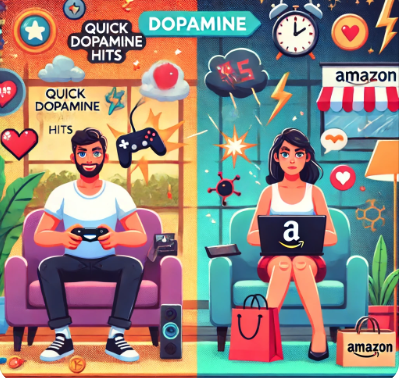
Amazon or Video Games? Depends are you a Man or a Woman

Men and women do have differences in how their brains respond to dopamine, which can influence behavior and the prevalence of certain disorders.

Dopamine Receptors and Gender Differences

  1. Dopamine Receptor Density: Studies have shown that men and women have differences in dopamine receptor density. Men generally have higher levels of dopamine D2 receptors in certain brain areas compared to women. These receptors are involved in the modulation of reward, motivation, and pleasure.
  2. Dopamine Transporter Density: The dopamine transporter (DAT) is responsible for the reuptake of dopamine from the synaptic cleft. Research indicates that women tend to have higher levels of dopamine transporters, especially in the striatum, which is a part of the brain involved in movement and reward processing. This higher DAT density could mean that dopamine is cleared from the synaptic cleft more quickly in women than in men, possibly affecting the duration and intensity of dopamine signaling.
  3. Hormonal Influence: Estrogen and testosterone can influence dopamine pathways. Estrogen has been shown to increase dopamine receptor density and dopamine release in some areas of the brain. This hormonal modulation might explain some of the sex differences in response to dopaminergic drugs and susceptibility to certain psychiatric conditions, like depression, which is more prevalent in women, and attention deficit hyperactivity disorder (ADHD), which is more common in men.
  4. Functional Brain Differences: Functional MRI studies have revealed that men and women might activate different brain regions in response to dopaminergic stimulation. For example, women may show more activity in the limbic regions (associated with emotional processing) while men might show more activity in cortical areas (associated with cognitive processing) in response to dopamine.

Behavioral Implications

  • Addiction: Differences in dopamine receptor and transporter densities may contribute to gender variations in addiction. Men are more likely to engage in riskier behaviors and substance abuse, potentially due to a higher baseline of dopamine receptor density which might modulate reward sensitivity differently compared to women.
  • Mental Health: The distinct dopaminergic responses between genders might also explain why women are more prone to mood disorders like depression and anxiety, while men are more susceptible to disorders such as ADHD and schizophrenia.

Summary

While men and women do not have entirely different types of dopamine receptors, the density, distribution, and regulation of these receptors vary between genders. These differences, influenced by genetic and hormonal factors, play a role in the distinct ways men and women experience reward, motivation, and susceptibility to certain psychiatric conditions.

Sources:

These differences underscore the importance of considering gender when studying brain function and developing treatments for neurological and psychiatric disorders.

Gender Differences and Shopping Preferences

  1. Men and Video Games:
    • Immediate Rewards: Video games are designed to provide continuous and rapid feedback. Each win, level-up, or achievement triggers a release of dopamine, catering to a desire for immediate gratification. Men, often having higher baseline dopamine receptor density, may find these immediate rewards particularly satisfying.
    • Competitive Element: Many games involve competition and quick decision-making, which might align more closely with traditionally masculine roles of hunting and competition, providing a dopamine rush that reinforces these behaviors.
  2. Women and Shopping:
    • Anticipation and Choice: While traditional shopping can involve social interactions and extended gratification, platforms like Amazon still appeal to the anticipation aspect. The delayed gratification of waiting for a product can be stimulating and rewarding, extending the dopamine response over a longer period.
    • Variety Seeking: Women might enjoy the process of browsing through a vast array of products, which can be stimulating and engaging as they explore different options and anticipate future satisfaction from their choices.

Modern Technology and Dopamine Triggers

Modern technology, including platforms like Amazon, leverages our brain’s dopamine pathways to keep us engaged. Here’s how:

  1. Frequent and Varied Rewards:
    • Algorithms and Suggestions: Personalized recommendations keep shoppers engaged by constantly presenting new items that might trigger interest and a dopamine response. This endless variety can lead to prolonged engagement as users seek the next rewarding find.
  2. Ease of Repetition:
    • One-Click Purchases: The simplicity of making purchases with a single click can encourage more frequent buying, each instance providing a quick dopamine hit. This ease of action supports the habit-forming potential of online shopping.

Conclusion

While shopping on Amazon may not be a social activity, it leverages the same dopamine pathways that make other behaviors rewarding. The mix of immediate purchase gratification and the anticipation of delivery combines to create a powerful engagement loop. This understanding helps explain why activities like online shopping and video gaming can be so compelling, despite differences in social and immediate reward structures.

Sources

  1. Psychology of Shopping
  2. How Dopamine Drives Our Addiction to Technology
  3. Gender Differences in Dopamine Functioning
  4. The Science Behind Why We Love Amazon

PS I am going to make a video game where women get to shoot their husbands. Perhaps that is a video game women will embrace.

Exploiting Our Monkey Brains: The Social Media and TV Dilemma

We are all monkeys at heart, driven by primal instincts and the pursuit of immediate gratification. Social media and television have mastered the art of exploiting these tendencies, tapping into our monkey brains with precision. Whether it’s social media’s magical 30 or 60-second dopamine hits or cable television’s emotional roller coasters, these mediums know exactly how to hijack our brains and keep us hooked.

The Dopamine Traps of Social Media and TV

Social Media: Quick Fixes and Endless Scrolls

Social media platforms like Facebook, Instagram, Twitter, and TikTok are designed to keep you engaged for as long as possible. They serve up bite-sized content that provides quick dopamine hits, making it easy to consume one post after another without realizing how much time has passed. Each like, comment, or new post delivers a tiny burst of pleasure, encouraging you to keep scrolling. This design isn’t by accident; it’s a calculated effort to capture your attention and keep you coming back for more.

The personalization algorithms on these platforms ensure you see content tailored to your interests, reinforcing your habits and preferences. Every click is tracked and analyzed to deliver more of what you enjoy, making it increasingly difficult to break the cycle. You’re not just browsing; you’re feeding a well-crafted addiction designed to exploit your brain’s reward system.

Cable Television: Emotional Manipulation

Cable TV operates on a similar principle but plays more with your emotions. News channels, for instance, know exactly how to elicit strong emotional responses, whether it’s outrage, fear, or joy. By constantly triggering your emotions, they keep you glued to the screen. The more you watch, the more dopamine flows, reinforcing the habit.

Moreover, news channels polarize their content to align with your existing beliefs. Whether you lean towards CNN or FOX, these channels create echo chambers that validate your perspectives and keep your emotions running high. This emotional engagement ensures you return for more, making you a loyal viewer who contributes to their massive viewership numbers.

The Illusion of Choice

You might think you’re in control, especially if you get your news from social media instead of traditional TV. However, the reality is even more insidious. Social media platforms have a far deeper understanding of your behavior. Every action you take online—every click, like, and view—is tracked and analyzed. This data allows these platforms to serve up content that is precisely tailored to your preferences, reinforcing your habits and keeping you engaged.

Unlike TV, which only knows what channel you’re watching, social media platforms know exactly what you interact with and how long you engage with it. This level of detail creates an illusion of choice. You might feel you’re selecting what you see, but in reality, the platforms are curating your experience to maximize engagement.

Cable News Channels: The Perfect Emotional Trap

Cable news channels have mastered the art of emotional manipulation. They craft their content to elicit strong reactions—whether it’s anger, fear, or excitement. Channels like CNN and FOX are designed to polarize viewers, creating a sense of identity and loyalty to their chosen narrative. This polarization isn’t just about presenting the news; it’s about keeping you emotionally invested.

You might believe you’re choosing to watch a particular channel because it aligns with your views. In reality, these channels have chosen you. They know how to trigger your emotions and keep you engaged. The more you watch, the more your monkey brain is flooded with dopamine, adrenaline, or even nor-epinephrine, reinforcing the habit of tuning in.

The Internet: The Ultimate Monkey Brain Playground

Once you enter the realm of the internet, you step into the ultimate playground for your monkey brain. Every click, scroll, and interaction is meticulously tracked. This data allows platforms to predict and influence your behavior with astonishing accuracy.

On social media, for example, you’re not just passively consuming content. Platforms like Facebook, Instagram, and TikTok know what you like, share, and comment on, and they use this information to serve up more of the same. This creates a feedback loop that keeps you engaged and coming back for more. You’re essentially a monkey in chains, with the chains being the endless cycle of dopamine hits provided by these platforms.

A Modern Opium Den

Engaging with social media and cable news can be likened to frequenting an opium den. You trade your time and attention for moments of fleeting pleasure. The exchange is starkly one-sided: you get temporary satisfaction, while they reap significant financial rewards.

At least in an opium den, the transaction is honest. You know you’re there for the pleasure, and there’s no pretense of engagement or productivity. But with social media and television, the lines are blurred. You’re led to believe you’re staying informed or connected, but in reality, you’re just a monkey chained to a perpetual cycle of dopamine-driven distractions.

Breaking Free from the Chains

Recognizing the ways in which our monkey brains are exploited is the first step towards breaking free. Here are some strategies to reclaim control:

  1. Be Mindful of Your Consumption: Pay attention to how much time you spend on social media and watching TV. Set limits to ensure these activities don’t dominate your day.
  2. Curate Your Content: Choose to follow and engage with content that adds value to your life rather than merely providing quick dopamine hits. Be selective about the news sources and social media accounts you interact with.
  3. Take Regular Breaks: Step away from screens regularly to reset your mind and break the cycle of constant engagement. Engage in activities that are less reliant on instant gratification, such as reading a book, going for a walk, or practicing mindfulness.
  4. Focus on Real Connections: Spend time with friends and family in person. Face-to-face interactions are more fulfilling and less prone to the shallow, dopamine-driven exchanges found on social media.
  5. Reflect on Your Choices: Take time to reflect on how you spend your time and the motivations behind your actions. Are you choosing your activities, or are they being chosen for you by your monkey brain?

Conclusion

Social media platforms like Facebook, Instagram, Twitter, and TikTok, along with television, have mastered the art of exploiting our monkey brains, keeping us hooked with a constant stream of dopamine hits. Whether it’s the quick fixes provided by social media or the emotionally charged content from cable news, these platforms know how to keep you engaged and coming back for more.

By recognizing the tactics they use and making conscious choices about how we spend our time, we can break free from the chains of these distractions. It’s about reclaiming control and ensuring that our actions align with our true intentions rather than being driven by our monkey brains.