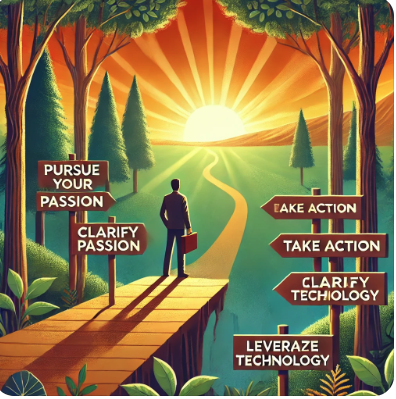
Imperfect Is My New Mantra for 2026

Imperfect is my new mantra.

What if everything was imperfect?
Because it is.

There is no such thing as perfection. It doesn’t exist in writing, in business, in relationships, or in life. Once you accept that—really accept it—you can get an amazing amount of work done. That email you spent 30 minutes going back and forth with ChatGPT? Done in five. Just yesterday I fired one off to a doctor’s office and got my answer. Total time: five minutes versus a half hour.

Perfection is seductive. It sounds responsible. It sounds thoughtful. It sounds professional. But most of the time, it’s just procrastination dressed up as virtue. You could spend 365 days preparing your next email, refining a post, or “thinking through” a decision—and no matter how long you wait, it still won’t be perfect.

That realization is freeing and allows you to move at lightning speed.

Two great lines say it better than I ever could:
Voltaire: Perfect is the enemy of good.
George S. Patton: A good plan violently executed now is better than a perfect plan executed next week.

When I look back honestly at my own life, I can count on one hand the times I truly went off half-cocked and regretted acting too quickly. Those moments exist—but they’re rare. What I can’t count are the times I put things off for days, weeks, or longer, convincing myself I was perfecting them. Tweaking. Refining. Waiting for the right moment.

Winner move fast, imperfectly, to win the game of life.

Most of those things either didn’t matter as much as I thought, or would have benefited from being done sooner and imperfectly. Motion creates clarity far more reliably than contemplation ever does.

This is an argument against paralysis. Against confusing preparation with progress.

So for 2026, the rule is simple: less perfect, more done. Imperfect is not a flaw—it’s a virtue.

PS: Some will see your first draft as more perfect than your last—and definitely more you and more real than the one with 100 paragraph breaks and emojis.
Sorry, ChatGPT.

“We All Have the Same Amount of Hours in a Day” – FALSE

That old cliché? It’s not only outdated—it’s misleading.

What if…
By learning shortcuts, working with coaches, surrounding yourself with those who’ve already found the roadmaps through your challenge…
By learning the secrets, the multipliers
By upgrading your systems for self-discipline and accountability…

What if you could double, triple, or even 10X your effectiveness?

Wouldn’t that, for all practical purposes, mean you now have twice—or ten times—the time?

Because it’s not just about hours. It’s about effectiveness per hour.

This morning, I was having a conversation with my beautiful partner, Marjah Simons—author of Fire Focus and a powerhouse who also runs a mastermind group. I shared my observation from my two industries—printing and aesthetics—how both rely on consumables. And then it hit me…

Isn’t time the ultimate consumable?

Once spent, you don’t get it back. But unlike paper or syringes or medical supplies, you can actually multiply time… by using it better, smarter, more intentionally. (Honestly, the “time is a consumable” idea might deserve its own post.)

But this post is about something else: speed.

You can turtle your way through life, or you can strap into the rocket powered by your influence group.

And here’s the beautiful part:
You don’t have to settle for the five people closest to you by geography.
Your tribe, your rocket ship, your growth crew? They can live across the country or the globe.

For the past year, I’ve been literally “masterminding” with some of the most extraordinary people—many of whom I’ve never even met in person. And yet, we meet every day. We share insights, challenge each other, hold each other accountable, and fine-tune our lives, health, and businesses by finding those tiny distinctions that create massive shifts.

You don’t have to walk anymore.

And if you’re still walking—truthfully—you’ll probably never get there.

Instead, find your rocket ship. Or better yet, find many.

Break the time barrier by choosing who you travel with.
Physical proximity is irrelevant. The people you surround yourself with—intellectually, emotionally, energetically—will either anchor you or accelerate you.

My personal velocity?
It’s rising exponentially. Every single day.
Because every single day, I learn something new that saves me hours, days, even years.

It’s like driving with GPS versus wandering around, walking in circles, spending your entire day lost—while rocket ships fly overhead, available to all.

And here’s a wild thought:
Even science has proven it’s possible to bend time.
If you travel fast enough—like in a spaceship—relativity kicks in.
Spend 10 years traveling near the speed of light… and when you return, you haven’t aged
But Earth has. Your friends have. Your children have.

Let that sink in.

It’s not just science fiction. It’s physics.
And it’s a metaphor for what’s possible right here, right now.

You can either walk through life on foot—or board your rocket and break the time barrier.

P.S. Thank you, Marjah. These past two weeks of being your accountability partner have been some of the most productive, joy-filled, and inspired of my life. I can’t wait to join your mastermind group. This isn’t a paid plug. It’s just where I’m at. And I share because if one person finds their way to a rocket ship through this post—my mission to help others live a more beautiful, healthy, happy life is already fulfilled.

That’s why I write.

What’s Your Value? 9 Billion or Zero?

What’s your value? Are you worth 9 billion, or are you worth nothing? Our perception is our reality. Some of us run businesses that create immense, life-changing value. Take, for example, those who dedicate themselves to helping autistic children—a gift so priceless it transcends any monetary measure. Yet, it’s amazing how often we overlook the true worth of what’s offered.

Then there are figures like Tony Robbins. He streamlined processes like NLP and even began his journey by pioneering ideas such as the “Fit for Life” concept from Harvey and Marie Diamond. He charges a premium—sometimes, simply attending his virtual sessions costs as much as $10,000. This is a stark reminder that value isn’t solely about tangible products; it’s also about the perception of success and expertise. Today, that perception is often shaped by a well-produced YouTube video or a glitzy website.

I’d venture to say that we all fall somewhere on that sliding scale. In my own business, I see it every day. Many of the doctors I admire, who rank highly on Google, offer procedures that come with real risks. Their glowing five-star averages often hide one-star reviews detailing everything from injuries caused by ultrasound on the face to freezing fat on the body that leads to paradoxical hyperplasia—not to mention RF microneedling, which carries the risk of scars. It begs the question: What do we truly offer, and more importantly, what is it really worth?

I’ve noticed that most people tend to undervalue what they bring to the table, while others overinflate their worth. Whether it’s a true con artist like Elizabeth Holmes, who swindled billions by claiming Theranos could run 100 blood tests on a single drop of blood, or someone like Bernie Madoff, there’s nothing inherently wrong with charging a high price for what you’re offering—if you’re delivering real value. It’s all about speaking loudly and confidently about what you bring to the world.

At the end of the day, our value is defined not by someone else’s perception but by our own belief in what we offer. So ask yourself: What do you offer? And more importantly, what is it truly worth? Embrace your worth, speak up for it, and never shy away from claiming the unique value that only you can bring.

PS: The movie The Dropout about Theranos really drove that point home and opened my eyes. It’s astounding to think that household names like Larry Ellison of Oracle, George Schultz, Walgreens, and so many others were taken in by the deception. Perception is reality.

Stop with the Insane Humility: If You Don’t, Someone Else Will

Have you ever held back from promoting your services, thinking it was more “humble” or “charitable” to stay quiet and let people come to their own conclusions? If so, let’s get real: if you truly have something valuable to offer, then it’s not just a disservice to yourself but to your potential clients to let “humility” keep you silent. Being present to the fact that your services could genuinely help people means understanding that holding back might just lead them straight to someone else who isn’t as skilled, honest, or fair.

For those of us who consider ourselves good, ethical professionals, we need to recognize that humility, when taken to an extreme, can actually harm the very people we hope to help. Think about it—how many verses in the Bible or other spiritual texts talk about humility? But in the name of humility, is it charitable to let someone get ripped off or harmed by a competitor offering subpar services? I’m not talking to the crooks here—they’re already out there, using every tactic imaginable to lure clients. I’m speaking to the good, honest providers.

Here’s a case in point from my own industry. Many don’t realize that repeated use of fillers over several years can cause scars and lumpy textures, as some filler remains in the face indefinitely. Even a skilled injector may struggle with the lasting effects of these fillers, leading to puffiness or unnatural looks over time. It’s our responsibility to advocate for more natural, longer-lasting options, like collagen restoration or muscle rejuvenation, especially if these options lead to a more natural, sustainable look. In my quest to be humble, I wasn’t vocal enough about encouraging clients to choose these alternatives—and I’ve seen clients suffer the consequences.

And this applies to other fields, too. A veterinarian friend of mine shared a story that underscores the same point. He charges $3,000 for surgeries that some “surgical centers” charge $10,000 for. Here’s the twist: he has over 30,000 surgeries under his belt, while the high-priced “center” might hand the job to someone with just a week’s worth of experience. Imagine the heartbreak of a pet owner paying top dollar, only to lose their beloved animal because they were led to believe they’d receive superior care at a higher price. All because my friend, out of humility, didn’t promote his skill and fair pricing enough.

So if you’re someone who provides an exceptional service at a fair price, don’t hide it. If you don’t believe it, raise your service level, lower your costs if you can, and shout it from the rooftops. You’re not just helping yourself by getting more clients—you’re helping people avoid overpaying or getting subpar services elsewhere. Humility has its place, but when it stands in the way of helping people make informed, beneficial choices, it’s time to let go of it and let your voice be heard.

It’s your obligation to stand out.

PS t can feel counterintuitive, especially if humility has been woven into you from a young age, reinforced by family, church, or cultural beliefs. But remember, by holding back, you may unintentionally let others fall into less capable hands or even into predatory ones.

It’s worth affirming every day: “I know I’m offering the best service, so I need to convey that clearly to my prospective clients. It’s the right thing to do.” This self-reminder helps reframe the idea of self-promotion from something “obnoxious” to a responsibility you hold out of genuine care. Sharing the true value of what you offer isn’t about bragging—it’s about ensuring those who need you find the best path forward. You’re doing them a favor.

The Cage, the Guard, and the Key in Your Pocket

We all live in cages that we’ve built for ourselves—cages of old beliefs, fears, or shame that hold us back from who we truly are or could become. These cages may not always be obvious, but they exist within the stories we tell ourselves: “I’m not good enough,” “I can’t do that,” or “I don’t deserve better.” We may even come to accept these limitations as a part of our identity. But here’s the thing: we are both the prisoner and the guard.

A friend of mine, Fernando Valencia, shared a profound metaphor that resonated with me deeply. We are the guards of our own cages, holding the keys in our pockets. Think about that for a second. We have the power to unlock these cages at any time, but so often, we continue to stand guard over them, protecting the very limitations that trap us. Why? Because stepping out of that cage means confronting what’s beyond—sometimes it’s unknown, other times it’s old wounds, guilt, or shame we haven’t faced.

I’ve carried my own shame around certain moments in my life, and this metaphor hit me hard. It made me realize that I’ve been standing at the cage door, key in hand, but too focused on guarding the past to set myself free. And the truth is, we can’t move forward until we stop holding ourselves hostage to those old feelings or beliefs.

What’s inside your cage? Maybe it’s a belief from childhood, something someone told you that stuck, or an experience you feel you can’t move beyond. Maybe it’s fear—fear of failure, fear of being seen, or fear of not being enough. Whatever it is, it’s likely you’ve been standing guard, believing it’s protecting you. But the irony is that the cage limits you, and the protection is just an illusion.

The key has been in your pocket all along.

This idea isn’t new. Philosophers like Jean-Paul Sartre have touched on it with the concept of “bad faith,” where we limit ourselves by deceiving ourselves into thinking we don’t have the freedom to choose. Spiritual teachings like Buddhism talk about attachments that create cycles of suffering, a form of self-made prison. Even more recently, thinkers like Orlando DeFranco have explored the concept of self-imposed limitations. But here’s the distinction: No one has gone as far as to say that we not only hold the key, but we are also the guard standing at the door. That’s the twist, and it’s what I want to emphasize here.

This distinction—that we guard our own cages while holding the key in our pocket—strikes at the heart of what keeps so many of us stuck. We’re not waiting for someone else to free us. The power has been in our hands the whole time.

So how do we start unlocking these cages? It begins with awareness—recognizing when we are both the prisoner and the guard. Once you see that, you can decide to reach for the key. Sometimes that means facing what’s uncomfortable or confronting old feelings of shame, guilt, or fear. But that’s where freedom lies—on the other side of acknowledging that you hold the power to change.

Here’s what I’m reminding myself, and maybe it will resonate with you too: The cage isn’t real, and I can walk out anytime. The key is in my pocket.

So, what’s holding you back?

The Resistance takes longer than the Doing

The Real Time-Waster: Resistance or Action?

Have you ever noticed how the time spent resisting a task often far exceeds the time it would take to actually do it? Call it what you will—stress, friction, apprehension, or even “preparation.” But let’s be honest: more often than not, it’s procrastination in disguise.

Yes, good preparation is important, but I’d bet any amount of money that what most of us are doing is not true preparation. It’s procrastination. We’ve all been there—whether it’s making a cold call for a real estate listing, reaching out to a doctor’s office to sell equipment, or contacting a bar to pitch a product. The actual task takes mere seconds. And yet, many of us spend hours—sometimes even days—dragging our feet before we finally do it.

Nike had it right with their slogan, “Just do it.” But here’s the twist: this mindset applies even more to business than it does to sports. Think about it. How many times have you hesitated on making that first move in a business venture, like buying a piece of real estate? I’m certain that every single person reading this can reflect back on a property or a home they didn’t buy 20 years ago, which has since quadrupled in value.

Here’s an example we can all relate to: taxes. Everyone talks for months about “doing their taxes.” When it finally happens, it’s usually just five minutes of downloading 1099s and a W-2. Yet, we manage to procrastinate so much that some of us end up filing for an extension or even paying a late penalty.

The point of this post is simple: Just do it. Be present to the absolute fact that you waste more time in resistance than you do in the actual doing. Recognize when you’re caught up in the cycle of procrastination, and remind yourself that the task at hand is likely much easier and quicker than you’ve built it up to be.

So, the next time you find yourself hesitating, stop. Take a breath, acknowledge the resistance, and then take that first step. You’ll find that the doing is often far less painful—and far more rewarding—than the resisting.


Exploring Your “Woulds”: Bringing Clarity to Your Dreams

What about your “woulds”? We often find ourselves saying, “I would do this if…” But what if we truly considered these “woulds”? What would you do if it were easy, if you had the money, if the steps were clear, if you had part-time help, or if you had the time? Isn’t it worth considering your “woulds”? Perhaps bringing your “woulds” out of the woods might truly bring you clarity.

The Power of “Would”

How many people have found themselves saying, “This is what I would do if I had the money”? Some of those people were lucky. They lost their jobs and were forced to follow their dreams and their passions, ultimately becoming successful in pursuing their dreams. It’s time to stop and examine your “woulds.” Great clarity, greater success, fulfillment, and purpose will be found when you get out of the darkness of the woods and bring out your true “woulds”—the ones that are in your heart and soul.

Identifying Your True “Woulds”

Your true “woulds” are often apparent. How many times have you spoken to a friend, and they are blown away by your passion when you speak about your art, music, love of healthy foods, cooking, exercise, teaching, or any other interests? There are as many vocations and avocations as there are people. In today’s connected society, you could be teaching a course to people anywhere in the world. With today’s AI technology, it could be simulcast in many languages in real time, and even questions and answers can be handled in real time.

Steps to Bringing Your “Woulds” to Life

  1. Identify Your Passion:
    • What is it that you would do if all obstacles were removed? Consider your hobbies, interests, and the things that make you feel alive.
  2. Clarify the Steps:
    • Break down the process into clear, manageable steps. What do you need to do first, and what comes next?
  3. Seek Resources:
    • What resources do you need? Consider financial resources, time, help from others, and any tools or equipment.
  4. Create a Plan:
    • Develop a step-by-step plan to turn your “woulds” into actionable goals. Set deadlines and milestones to track your progress.
  5. Leverage Technology:
    • Use technology to your advantage. Teach online courses, create digital content, or start a virtual business. The world is your potential customer base.
  6. Take Action:
    • Start small if necessary, but take the first step. As you progress, adjust your plan as needed and keep moving forward.

Real-Life Inspiration

Consider the stories of people who turned their “woulds” into reality:

  • Entrepreneurs who started businesses with little money but a lot of passion.
  • Artists and musicians who pursued their crafts despite financial uncertainty.
  • Teachers and coaches who reached global audiences through online platforms.

These individuals found great success by following their passions and bringing their “woulds” out of the woods.

Conclusion

There is no excuse to not pursue your passion in today’s world. The whole world is your potential audience, and with the right steps and mindset, you can bring your “woulds” to life. It’s time to stop shoulding on yourself and others and start exploring the possibilities of your “woulds.” Embrace your passions, clarify your steps, and take action to create the fulfilling life you envision.

Emotional Energetic States: Energy vs. Anti-Energy

  1. Fun vs. Rigidity
    • Fun: Represents a state of joy, playfulness, and light-heartedness. This energy is infectious and can uplift those around you.
    • Rigidity: Signifies strictness, inflexibility, and a serious demeanor. It can create barriers in communication and make interactions feel tense.
  2. Goddess in the Heart vs. Thinking (in the Head)
    • Goddess in the Heart: Symbolizes being present, compassionate, and connected to your emotions and intuition. It allows for deep, heartfelt connections with others.
    • Thinking (in the Head): Indicates being overly analytical, focused on the past or future, and disconnected from the present moment. This state can hinder genuine emotional connection.
  3. Aspirational Inspired vs. Negativity
    • Aspirational Inspired: Involves being motivated, hopeful, and driven by positive goals. This energy can inspire and motivate others.
    • Negativity: Involves pessimism, doubt, and negative vibrations. It can drain energy and discourage those around you.
  4. Zeus Decisive Fulfillment Achievement vs. Fear and Uncertainty
    • Zeus Decisive Fulfillment Achievement: Embodies confidence, decisiveness, and a sense of accomplishment. This state exudes strength and can lead others with assurance.
    • Fear and Uncertainty: Represents anxiety, hesitation, and lack of confidence. It can create instability and prevent effective communication.

The Importance of Emotional Energy in Communication

You cannot effectively communicate with others if you are stuck in a state of rigidity, overthinking, negativity, or fear. True connection happens on an energetic level, where emotions play a crucial role.

Key Points to Remember:

  • We connect energetically: Our emotional states influence our ability to connect with others. Being in a positive and present state enhances our interactions.
  • Physical Actions to Shift States: If you find yourself in misery, grief, or depression, physical actions like a hand clap or fist pump can help shift your energy.
  • Communicating Emotionally: To take people on an emotional journey with you, you need to be in touch with your own emotions. This allows you to communicate with authenticity and empathy.

By being aware of your emotional state and actively choosing positive energy, you can improve your ability to connect and communicate with others. This not only enhances personal relationships but also professional interactions and overall well-being.

Credit Michael Smikun July 5, 2024 morning huddle Unblinded my notes to the best of my ability

Are You Taking the Shots?

In both sports and life, taking the shot is a metaphor for seizing opportunities. Whether it’s shooting a basketball, kicking a soccer ball, or swinging a baseball bat, the willingness to take the shot is what ultimately leads to success. But what are the actual percentages of these shots resulting in success in professional sports? Let’s dive into some statistics to understand the reality of taking the shot.

Basketball: Field Goal Percentage

In professional basketball, the percentage of shots that result in baskets, known as the field goal percentage, varies by player and position. However, as of recent NBA seasons:

  • Average Field Goal Percentage: Approximately 45-46%
  • Top Players: Often exceed 50%, with centers and forwards typically having higher percentages due to taking shots closer to the basket.

Soccer: Shots on Goal to Goals

In soccer, the conversion rate of shots on goal to actual goals can be quite low:

  • Average Conversion Rate: Around 10-12%
  • Top Strikers: The best forwards might have a conversion rate of 20% or higher, showcasing their ability to capitalize on scoring opportunities.

Baseball: Batting Average

In baseball, the batting average represents the percentage of at-bats that result in hits:

  • Average Batting Average: Approximately .250 to .260 (25-26%)
  • Top Hitters: Averages above .300 (30%) are considered excellent, with the very best reaching .350 or higher.

Hockey: Shots on Goal to Goals

In hockey, the percentage of shots on goal that result in goals, known as the shooting percentage, is typically:

  • Average Shooting Percentage: Around 9-10%
  • Top Players: Can achieve shooting percentages of 15% or higher, reflecting their precision and skill.

Additional Sports:

  • American Football: Completion percentage for quarterbacks, which measures the percentage of passes completed:
    • Average: Around 63-65%
    • Top Quarterbacks: Often exceed 70%
  • Tennis: First serve percentage, which measures the percentage of first serves that are in:
    • Average: Around 60-65%
    • Top Players: Often exceed 70%, with the best reaching 75-80%
  • Golf: Greens in Regulation (GIR), which measures the percentage of holes where the ball reaches the green in the expected number of strokes:
    • Average: Around 65-70%
    • Top Players: Often exceed 75%

Cold Calls: Success Rates Across Industries

In the business world, taking shots often means making cold calls. The success rate of cold calls—calls to potential customers who have had no prior contact with the salesperson—varies by industry:

  • Overall Average: Approximately 2% (meaning 2 out of every 100 cold calls result in a sale).
  • Technology Industry: Success rates can be higher, around 5-10%, due to targeted approaches and higher-value sales.
  • Insurance: Typically lower, around 1-2%, given the competitive nature and high customer skepticism.
  • Real Estate: Approximately 1-3%, depending on market conditions and lead quality.
  • B2B Sales: Can range from 2-5%, with higher rates for well-qualified leads.

Are You Taking the Shots in Your Life?

Let’s reflect on how these statistics translate to personal and professional growth. Are you the player who passes the ball to someone else, thinking they’re a better shooter? Do you find yourself primarily blocking, getting rebounds, or setting picks rather than taking the shot yourself?

If you took as many shots as the next guy, wouldn’t you score more?

In life, just like in sports, success often requires stepping out of your comfort zone and taking the shot. Whether it’s pursuing a new career opportunity, starting a business, or simply voicing an idea in a meeting, the willingness to take risks is crucial.

Key Takeaways:

  • Take the Shot: Embrace the opportunity to act, even if it means facing failure.
  • Learn from Misses: Each missed shot is a learning opportunity, bringing you closer to success.
  • Celebrate Hits: Acknowledge and celebrate your successes, no matter how small they may seem.

Conclusion

The statistics from professional sports remind us that even the best athletes do not succeed every time. In fact, success often means converting less than half of their attempts. The key takeaway here is that taking the shot, despite the risk of failure, is essential.

In life, just like in sports, the willingness to take the shot, to seize opportunities, and to embrace the possibility of failure is what leads to growth and success. Whether you’re pursuing a career goal, starting a new project, or striving for personal improvement, remember that the act of taking the shot is a victory in itself.

So, are you taking the shots in your life? Are you stepping up and giving yourself the chance to succeed? Embrace the mindset of a professional athlete: take the shot, learn from the misses, and celebrate the hits. Over time, your persistence and willingness to try will lead to your own version of success.

One Last Kick in the Butt. What 80% misses gets you paid

The highest-paid athlete in the world for 2024 is Cristiano Ronaldo, with earnings totaling $260 million. His income includes $200 million from his salary with Al Nassr and $60 million from endorsements​ (Forbes Australia)​​ (Wikipedia)​.

Cristiano Ronaldo’s Performance:

In soccer, Ronaldo’s shots on goal conversion rate varies, but on average, a top striker like him has a goal conversion rate of around 20-25%. This means that for every 100 shots on goal, approximately 20-25 result in goals, illustrating the high standard expected in professional soccer.