Your Nuclear Family is Constantly Changing

Family. It’s a word that holds so much weight and emotion. Yet, the concept of a nuclear family is not static. It evolves, shifts, and sometimes, it can be a painful transition.

I remember a time when it was always myself and my two sisters. We were inseparable, and I believed that nothing could come between us. I thought it would always be just us, standing together above everyone else, forever. But then life threw us a curveball. My father passed away, and suddenly, we were thrust into discussions about his estate. I was shocked, stunned, and incredulous. I lost it completely because their partners had different opinions, and I just couldn’t understand why. But then it hit me—they had their own nuclear families now. And naturally, loyalty to your nuclear family comes first.

That phase passed, and now we are back to being as close as possible, even though we live in different places.

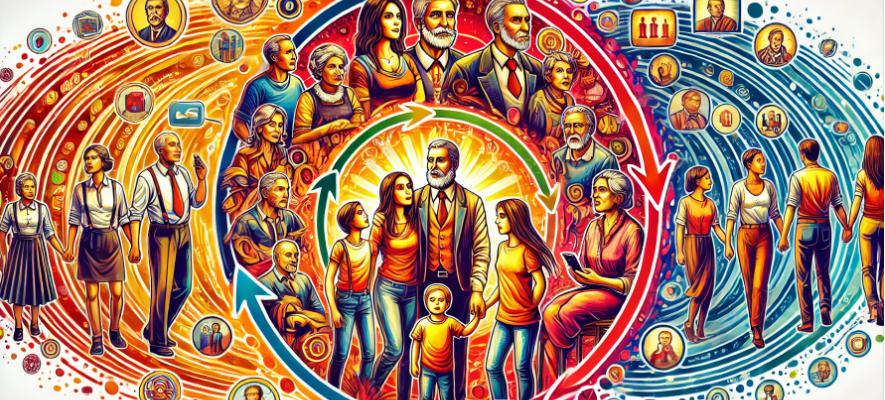
Recently, I spoke with someone who had grandchildren and great-grandchildren. Unsurprisingly, he doesn’t speak or see his children much, as they have their own families and even grandchildren. Generational nuclear families are a reality. The dynamic changes with each generation, creating new families within families.

There are those Kodak moments—remember those? I guess Kodak moments have been replaced by Facebook moments. That’s a topic for another post. Yes, you will see that picture when everyone is together, spanning three generations. It might happen once a year. When I was little, we all gathered at grandmother’s house for most of the holidays. Sadly, most families today don’t spend much time with three generations present very often. As much as I loved seeing all my cousins, it really didn’t happen that often, maybe at Christmas and Thanksgiving.

As the family grew, each side started having their own gatherings. The nuclear family is constantly expanding, breaking off, and even contracting. The elders are not necessarily always revered, especially in this country. I admire cultures where families remain closer, where the elders are respected and cherished.

Sadly, the true essence of family life seems to be getting lost and replaced with, well, I don’t even know what—iPhones?

It’s natural for your nuclear family to change. It’s part of life. Embrace the transitions, cherish the moments, and remember that family, in whatever form it takes, is a constant evolution.

The Grass Is Yellower on the Other Side of the Fence

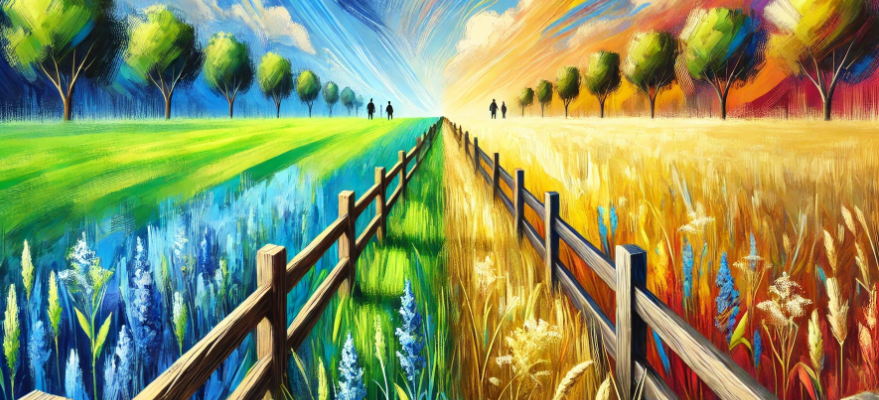
We’ve all heard the saying “the grass is greener on the other side of the fence.” But let’s flip that on its head for a moment. The grass isn’t just greener; it’s yellower, browner, bluer—it’s every color under the sun. And yes, there’s a fence.

First, let’s consider the numbers. There are 7.9 billion people in the world. That means there are probably millions of potential partners for you. But with 87,600 hours in a decade, it would take you around 120 years to spend just one hour with each of them—without a wink of sleep. Clearly, meeting everyone isn’t practical.

Then there’s the fence. The partner you’re with might lock that fence the moment you leave, never letting you back in. While you’re busy thinking the grass is greener on the other side, remember it’s also all other colors. People come in all shapes and sizes: better looking, richer, poorer, kinder, stronger, smarter, weaker, more or less successful. The variety is endless.

But why are you so focused on the other side of the fence? Are you the type who is always looking elsewhere, always outer-directed, never happy, never looking inward? Are you expecting to get your feelings from outside yourself? This opens a Pandora’s box of questions about you.

Of course, there will always be people on the other side of the fence with qualities that attract you. That’s as certain as the sky is blue. You can choose to live a life of serial dating, or you can care for one person deeply. You can care for multiple people, or you can cherish those you’ve taken as your family.

It’s your choice. Stop asking the wrong questions and start looking within. What do you really want? The grass might be all colors on the other side, but where you are now can be just as vibrant if you choose to see it.

The 3,000-Year Journey: How Cats Domesticated Humans

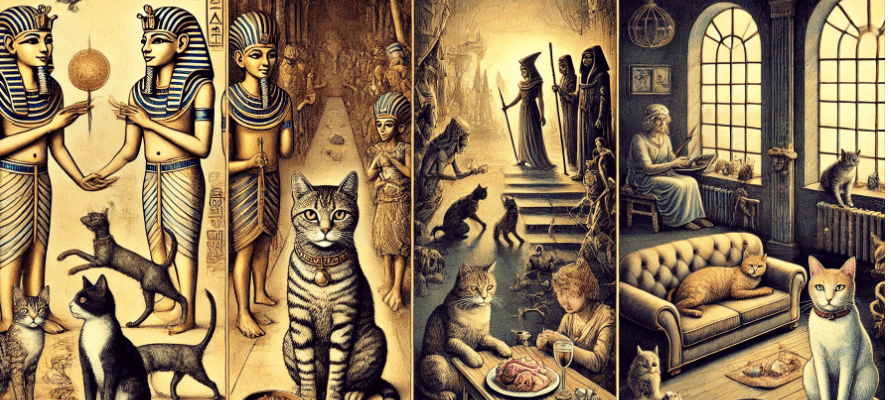
Cats. These mysterious, graceful creatures have been part of human history for millennia. But who really holds the leash in this relationship? It’s becoming increasingly clear that it’s the cats who have domesticated us. This journey spans from the reverence of ancient Egypt to the feline overlords of today.

Ancient Egypt: The Dawn of Feline Worship

Our story begins in ancient Egypt, around 3,000 years ago, where cats were revered as gods. Bastet, the cat-headed goddess, symbolized home, fertility, and protection. Egyptians admired cats for their grace and hunting skills, which kept grain stores free of vermin. They believed cats had protective qualities, and harming a cat was punishable by death. Clearly, the ancient Egyptians were the first to fall under the spell of the feline mystique, setting a precedent for generations to come.

Medieval Europe: The Dark Ages for Cats

Fast forward to medieval Europe, and the status of cats took a drastic turn. During the Middle Ages, cats were associated with witchcraft and evil. In the 13th century, Pope Gregory IX declared cats to be instruments of Satan, leading to widespread persecution and killing of cats. This unfortunate superstition culminated in a significant decline in the cat population, which inadvertently contributed to the Black Plague. With fewer cats to control the rat population, the fleas on these rats spread the deadly disease more easily. It took a few centuries, but humanity began to see the folly in their ways, and the value of cats was rediscovered.

The Renaissance to the 19th Century: A Gradual Redemption

As the Renaissance blossomed, cats began to recover their place in human society. They were appreciated once again for their pest control abilities and slowly regained a more positive status. By the 19th century, cats were becoming popular as pets in Europe and America, with their charming aloofness and independent nature winning over many hearts.

Modern Times: The Age of the Feline Overlord

Today, cats have completed their long game of domestication. They have gone from gods to devils to demanding dictators of our homes. Modern cats have perfected the art of making humans cater to their every whim. Here’s how they’ve done it:

  1. Food Picky and Proud: Forget the days of catching their own meals; today’s cats have humans serving gourmet meals tailored to their discerning tastes. If the food isn’t up to their standards, you’ll know from the disdainful look they give you.
  2. Time Management: Cats have an impeccable sense of time, especially when it comes to meal times. They will ensure you know if you are late, with persistent meowing and even a gentle (or not-so-gentle) paw to the face.
  3. Personal Space: While cats can be affectionate, they are also masters of controlling the terms of engagement. Petting and cuddle time happen strictly on their schedule, not yours.
  4. Freedom to Roam: Cats today have free reign of their homes. They claim the coziest spots, from sunlit windowsills to your favorite chair, and woe betide the human who tries to move them.
  5. Subtle Manipulation: Cats have honed their manipulation skills to an art form. A purr here, a headbutt there, and you’re putty in their paws. They’ve trained us to provide treats, toys, and the best spots in the house without us even realizing it.

Conclusion: The Feline Triumph

Over the course of 3,000 years, cats have subtly and effectively domesticated humans. From divine beings in ancient Egypt to misunderstood creatures in medieval Europe, to the pampered pets of today, cats have mastered the art of making us their devoted servants. As we cater to their every whim, one can only marvel at the quiet genius of these feline overlords. In the end, it’s clear who the real masters are in our homes. We might have provided the shelter, but they provided the strategy, turning the tables and making us the ones who are truly domesticated.

4o

What is a Vacation? You Can Do It Right Here, Right Now

One of the biggest aspects or renewal factors of a vacation is that you are someplace different. Consider this: we all have 70,000 thoughts a day and 80% of them are the same as yesterday. We wake up in the same bed. We use the same coffee maker and make our coffee the exact same way. We have other countless routines. But these routines bring up routine thoughts. You pick up your phone, call the same friend or relative that you know might be up early. That person might suck you into a political conversation, or whatever. Are you starting to get the picture?

The Renewal Aspect of a Vacation

The renewal aspect of a vacation is not that you are in Paris or the Bahamas; it’s that you are someplace else, stimulating different thoughts. I remember one day when I was living on 59th and 1st in NYC. I walked out of my building and challenged myself to simply walk two blocks and notice things I never saw before. I remember it like it was yesterday, even though it might have been 30 years ago. I might as well have been walking down the Champs Elysee.

I looked up at buildings I had walked past for 20 years. I noticed they were all four- to five-story walk-ups with interesting cornices at the top. I never even noticed how many stores and restaurants were in that one block, as I usually went straight to the Chinese or sushi place. There were actually a few other nooks and crannies I had never seen before. I was so lost in the thought of noticing things I had never seen before, it was literally like a vacation. Normally, I would purposely walk down that street for 20 years, seeing nothing and planning or worrying about my day. It’s that simple. Think differently.

Ways to Take a Vacation Right Now

  • Meditate: Meditation can help clear your mind and bring fresh perspectives.
  • Reconnect: Call a friend you haven’t spoken to in years.
  • Play a Sport: Engage in a sport you haven’t played in years.
  • Take a Class: Enroll in a class on something of interest to you.
  • Learn a Language: Even try the first free module.
  • Get Involved: Engage in someone else’s life outside of your small circle.
  • Listen to Something New: Discover new music or podcasts.
  • Walk a Different Path: Walk down a street you’ve never walked down before.
  • Rediscover Your Routine: Walk down the same street but challenge yourself to see things you never saw before. Look only at the rooftops (PS: don’t trip).

The Uncomfortable but Renewing Experience

Creating the renewal of a vacation can be as simple as changing your routine. It might be uncomfortable, but that is the renewal aspect of a vacation. When you’re in Paris, you don’t know where you’re going to get a coffee, how to order it, how much it will cost, or what it will taste like. Your mind is 100% occupied with new and different things, and for most of us, that is a “break” or a vacation from the boredom and the unpleasant aspects of our daily routine.

Conclusion

You don’t need to travel far to experience the renewal of a vacation. By simply changing your routine and thinking differently, you can stimulate new thoughts and experiences that refresh your mind and spirit. So take a trip down a different path, engage in new activities, and see the world around you with fresh eyes. Your vacation can start right here, right now.

ROI for Your Life?

Everyone has heard of ROI, or return on investment. But what is the ROI for the biggest investment of your life? What is that, you ask? It’s your life itself.

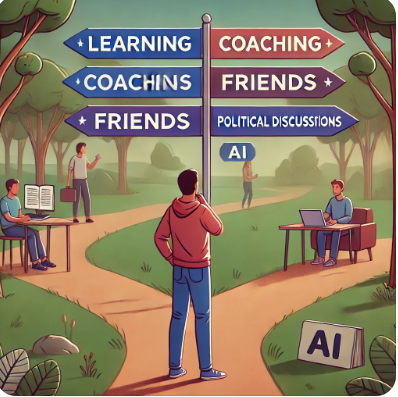
I love learning. In fact, I am part of four groups and have three coaches. Seriously? Yes. Granted, some are once a month. But just like we clear the clutter in our house, what’s more important than the ROI on your money is the ROI on your time. Your time is literally the currency of your life.

Evaluating Your Time Investment

I am constantly rearranging various things, spending more time here than there. It’s essential to periodically review how we spend our time and assess the returns we are getting. Are you spending three hours a week on political discussions? If so, that might be a clear waste of your life—unless, of course, that is your profession.

You get to decide where to spend the currency of your life and what return you are getting. This definitely requires occasional review, just like we do with our friends.

Leveraging AI for Astonishing ROI

PS: AI is insane. What I learn every few seconds on an AI call can save me weeks of work. That is something that will have an astonishing ROI for you. I didn’t even count my AI group when I said I am part of three groups. The point is, what is your ROI for YOUR LIFE?

Quality Time with Loved Ones

Just yesterday, I walked around NYC with my dearest friend for two hours while he was doing errands. I hadn’t spent time with him in years. I can’t think of anything better I could have done with my time, which is literally my life.

Reflect and Adjust

What are you doing? Reflect on how you’re spending your time. Are your activities bringing you joy, growth, and fulfillment? Or are they draining your energy and offering little in return?

Reevaluate and adjust your commitments and activities to ensure you’re getting the best ROI for your life. Spend time on what truly matters to you, be it personal development, relationships, or exploring new interests.


Take a moment to assess your life’s ROI. Make conscious choices about how you spend your time, and prioritize activities that bring you the highest return in terms of happiness, growth, and fulfillment. Your time is precious—spend it wisely.

Free Advice to Not Get Robbed by AI: This Could Save You a Fortune

In the age of advanced artificial intelligence, we face new and unprecedented risks. One of the most alarming is AI’s ability to clone voices. Imagine receiving a frantic call from your child’s voice claiming they are stranded, broken down, or arrested and urgently need $5,000 or $10,000. It sounds exactly like them, and they can answer personal questions convincingly. What do you do?

The Solution: A Family Password

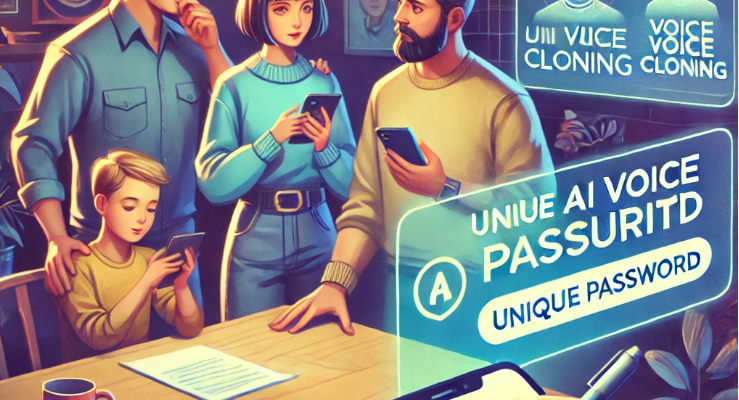
To protect yourself and your loved ones from this sophisticated scam, establish a family password. Here’s how it works:

  1. Create a Unique Password: Choose a phrase that only your family knows. It can be something quirky or memorable, like “mommy wears army boots.”
  2. Communicate the Password: Make sure every member of your family knows and remembers the password. This includes kids, parents, and grandparents.
  3. Practice Using It: Regularly remind your family to use the password in any emergency situation where verification is needed.

When you receive a call from someone claiming to be a loved one in distress, simply ask for the family password. If they can’t provide it, you’ll know it’s a scam.

The Growing Threat

AI voice cloning technology is rapidly improving. Scammers can now create a convincing clone of your voice with just a few samples. They can use this cloned voice to impersonate you or your loved ones, potentially leading to significant financial losses.

Real-Life Example

Let me demonstrate. Here is a $5 version of my voice created by an AI tool called Eleven Labs compared to my real voice. The resemblance is uncanny, and it’s easy to see how someone could be fooled. This is why having a family password is crucial.

The Ease of Fraud

With AI, fraud has never been easier. Scammers can gather vast amounts of personal information from your online profiles and photos. They can scrape contact details of financial advisors from major firms in seconds and use LinkedIn to compile pages of personal data. Combining this information with AI voice cloning, they can orchestrate highly convincing scams.

Take Action Now

Don’t wait until it’s too late. Take five minutes today to set up a family password. Share this advice with your family and friends to help them protect themselves from AI-driven fraud.

My Experiment

To show how easy and quick this is, I used AI to send a voice message to my sisters, brother-in-law, and niece suggesting we establish a family password. It only took a few minutes and provides an additional layer of security for our family.

Conclusion

We are on the brink of an unimaginable flood of fraud facilitated by AI. The billions lost to scams today will pale in comparison to what’s coming. By implementing simple measures like a family password, you can safeguard your loved ones against these sophisticated threats.

So, go make a family password now. It’s a small step that can save you a fortune and provide peace of mind in this rapidly evolving digital landscape.

The Serendipity Factor: How Luck, Proximity, and Hard Work Shape Our Lives

Have you ever wondered why some people seem to effortlessly stumble upon success while others toil away without seeing much progress? It’s a question that intertwines elements of chance, environment, and individual effort. Many decisions and life paths are influenced more by the circumstances and opportunities we encounter than we might realize.

Proximity and Serendipity

From the college we attend to the friends we make, proximity often dictates our choices. For instance, people frequently choose their college based on where their friends are going. It’s not uncommon for individuals to take up hobbies, experiment with substances, or even enter relationships simply because of the people and opportunities that happen to be nearby. Shows like 90 Day Fiancé fascinate us not just because they are a train wreck, but because they highlight the rare few who venture far beyond their local bar to find love.

Luck and Opportunity

Success stories often hinge on serendipitous moments. Take Bill Gates, for example. According to Malcolm Gladwell’s Outliers, Gates had access to a free public library with vast computer resources, an opportunity not available to most kids at the time. Similarly, many athletes born in January are literally a year older than their peers in youth sports, giving them a significant early advantage that often leads to professional careers.

Oprah Winfrey’s journey is another testament to the role of chance. She was reportedly fired as a news anchor and reassigned to daytime television just to fulfill her contract. This “failure” turned into an extraordinary success as she transformed daytime TV with her unique style.

Many people have also lost a fortune or a large amount of their savings investing in their best friends’ businesses. While early associates of Bill Gates and Mark Zuckerberg made fortunes, an equal amount of money has likely been lost by people investing with whoever was in their proximity, highlighting the risks of making decisions based solely on personal connections.

Hard Work and Preparedness

While luck and chance provide opportunities, it’s often hard work and preparedness that allow individuals to seize these moments. Consistent effort and skill development enable people to capitalize on the chances they encounter. The combination of being ready when luck strikes and having the tenacity to overcome setbacks is crucial.

The Dangers of Stumbling into Substances

A significant and often tragic example of serendipity is the exposure to substances. Many adolescents and young adults start using drugs or alcohol because their friends do. This proximity-based decision can lead to addiction, health problems, or even death. It’s a stark reminder of how critical it is to make informed, conscious choices rather than simply following the crowd.

  • Learn to Say No: It’s essential to develop the ability to say no to harmful influences. Just because friends or acquaintances are experimenting with substances doesn’t mean you should too. Making conscious decisions to avoid these pitfalls can significantly impact your health and future.

Expanding Horizons with Technology

Today, we have the internet, which offers unprecedented access to information and opportunities beyond our local environments. This connectivity allows individuals to make more informed decisions and connect with resources and people worldwide, mitigating some of the limitations of proximity. For example, instead of relying on the local bar to find a partner, people can use dating apps to expand their search globally.

The Balance of Factors

Success is often the result of a complex interplay of luck, environment, hard work, and informed decision-making. Understanding how these elements interact can help individuals navigate their paths more effectively. Acknowledging the role of luck and chance can lead to a more balanced view of success and reduce the tendency to attribute outcomes solely to individual merit or effort.

Practical Application

Using the Web for Opportunities: The internet is a powerful tool that can help you explore opportunities beyond your immediate environment. Whether it’s for business, education, or personal relationships, leveraging online resources can significantly broaden your horizons.

Mindful Decision-Making: Be present and intentional with your decisions. Use available tools and resources to expand your horizons and create more opportunities for success. By being proactive and leveraging technology, you can enhance your chances of success by seeking out opportunities that align with your goals and interests.

Saying No to Harmful Choices: Make a conscious effort to avoid negative influences, especially when it comes to substances. Understanding the long-term impact of these decisions and being strong enough to say no can save your life and improve your overall well-being.

Conclusion

In conclusion, while luck and proximity play significant roles in shaping our lives, hard work and informed decision-making are equally crucial. By understanding and leveraging the interplay of these factors, we can navigate our paths more effectively and create more opportunities for success. So, whether you find yourself inspired by the unusual love stories on 90 Day Fiancé or the serendipitous success of a tech mogul, remember that you have the power to influence your journey through a blend of preparation, opportunity, and intentional action.
You Can Only See Clearly from a Higher Point

For those involved in self-development, growth, or even psychotherapy, have you ever noticed the endless “aha” moments? I used to lovingly curse out my friend David Ellzey, who coaches me using the Sedona Method and his own unique blend of skills. I would lovingly say, “WTF? Why didn’t you teach me this 10 years ago?” And to this day, we keep discovering more and more layers. Or is it that we are reaching higher and higher vantage points from which we can make even greater distinctions in every area of our lives for more meaningful and richer relationships, as well as not giving too much attention or personal energy inappropriately in business situations?

For example, you certainly don’t want to be seeking approval or wanting to be liked by your vendors, although you can have a healthy and sometimes friendly relationship. There is a border often crossed by those who seek to be liked by everyone. But the point of this blog is that there are countless things you simply cannot see while you’re blocked by so many childhood, adolescent, or in some cases even adult traumas.

Who doesn’t know an injured woman or man who is incapable of trusting and having a loving relationship? Or one who chooses the same type of person over and over again because it represents something missing from their childhood? These scenarios know no bounds. They exist for some of the obscenely wealthiest and successful among us and across the board. But while you are stuck in the mud or the valley, you can’t even see the next valley or the mountaintop. Maybe you need to learn more or climb higher to see what you couldn’t see before.

Key Points to Consider

  1. Endless Layers of Growth:
    • Personal development is an ongoing journey. Each “aha” moment reveals new layers of understanding and self-awareness.
    • As we grow, our perspective shifts, allowing us to see and understand things that were previously hidden.
  2. Importance of Vantage Points:
    • Just like climbing a mountain, personal growth gives us a higher vantage point. From these new heights, we can see further and make more informed decisions.
    • Higher vantage points help us distinguish between meaningful relationships and those that drain our energy.
  3. Impact of Childhood and Adolescent Traumas:
    • Unresolved traumas can block our vision, keeping us stuck in repetitive patterns.
    • Recognizing and addressing these traumas can free us to see new possibilities and healthier patterns.
  4. Navigating Business Relationships:
    • In business, it’s essential to maintain professional boundaries and not seek approval from everyone.
    • Healthy business relationships are built on mutual respect, not on the need to be liked.
  5. Healing and Growth for Trusting Relationships:
    • Many people struggle with trust and relationship issues due to past traumas.
    • Healing these wounds can open the door to healthier, more trusting relationships.

Conclusion

The journey of personal growth and development is like climbing a mountain. Each new height reached offers a clearer view and deeper understanding of ourselves and our relationships. By addressing unresolved traumas and continuously striving for higher vantage points, we can achieve greater clarity, more meaningful relationships, and a more fulfilled life.


Exploring Your “Woulds”: Bringing Clarity to Your Dreams

What about your “woulds”? We often find ourselves saying, “I would do this if…” But what if we truly considered these “woulds”? What would you do if it were easy, if you had the money, if the steps were clear, if you had part-time help, or if you had the time? Isn’t it worth considering your “woulds”? Perhaps bringing your “woulds” out of the woods might truly bring you clarity.

The Power of “Would”

How many people have found themselves saying, “This is what I would do if I had the money”? Some of those people were lucky. They lost their jobs and were forced to follow their dreams and their passions, ultimately becoming successful in pursuing their dreams. It’s time to stop and examine your “woulds.” Great clarity, greater success, fulfillment, and purpose will be found when you get out of the darkness of the woods and bring out your true “woulds”—the ones that are in your heart and soul.

Identifying Your True “Woulds”

Your true “woulds” are often apparent. How many times have you spoken to a friend, and they are blown away by your passion when you speak about your art, music, love of healthy foods, cooking, exercise, teaching, or any other interests? There are as many vocations and avocations as there are people. In today’s connected society, you could be teaching a course to people anywhere in the world. With today’s AI technology, it could be simulcast in many languages in real time, and even questions and answers can be handled in real time.

Steps to Bringing Your “Woulds” to Life

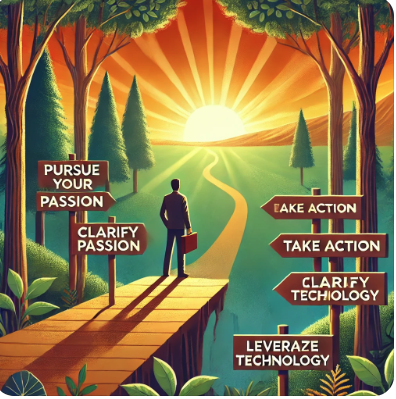
  1. Identify Your Passion:
    • What is it that you would do if all obstacles were removed? Consider your hobbies, interests, and the things that make you feel alive.
  2. Clarify the Steps:
    • Break down the process into clear, manageable steps. What do you need to do first, and what comes next?
  3. Seek Resources:
    • What resources do you need? Consider financial resources, time, help from others, and any tools or equipment.
  4. Create a Plan:
    • Develop a step-by-step plan to turn your “woulds” into actionable goals. Set deadlines and milestones to track your progress.
  5. Leverage Technology:
    • Use technology to your advantage. Teach online courses, create digital content, or start a virtual business. The world is your potential customer base.
  6. Take Action:
    • Start small if necessary, but take the first step. As you progress, adjust your plan as needed and keep moving forward.

Real-Life Inspiration

Consider the stories of people who turned their “woulds” into reality:

  • Entrepreneurs who started businesses with little money but a lot of passion.
  • Artists and musicians who pursued their crafts despite financial uncertainty.
  • Teachers and coaches who reached global audiences through online platforms.

These individuals found great success by following their passions and bringing their “woulds” out of the woods.

Conclusion

There is no excuse to not pursue your passion in today’s world. The whole world is your potential audience, and with the right steps and mindset, you can bring your “woulds” to life. It’s time to stop shoulding on yourself and others and start exploring the possibilities of your “woulds.” Embrace your passions, clarify your steps, and take action to create the fulfilling life you envision.