Getting Started is Simple Physics

I can’t tell you how many things I’ve read because I, probably like everyone, have trouble getting started on tasks. In fact, I was just reading yet another article that proposed the usual BS: breaking tasks into smaller parts and other hints we’ve all heard so often that if they actually worked, I wouldn’t be reading yet another article on the topic—nor would you. Maybe the solution is a lot simpler and staring us right in the face.

Not only that, but I would bet real money you’ve experienced this phenomenon—or should we call it a fact? It’s a fact, no different than gravity. But let’s not only use it but embrace it on every level. It’s simple physics.

What if it’s truly that simple? It’s true in the universe. Ask yourself: How many times have you said, “I’ll just put this one thing away,” and 15 minutes later, you’ve embarked on cleaning the whole room? How many times have you procrastinated doing your taxes, week after week, in February after you get your W-2? In March, you finally said you’d begin downloading some 1099s, and then realized you were all done and just needed to send them to the accountant? How many times have you said you’d just walk one block and found yourself walking a mile? How many times have you said you’d give up sugar, alcohol, or whatever for just one day, and it became a lifetime habit? ““A body in motion tends to stay in motion” 

In fact, that’s what AA is based on. Life is a lot simpler than we make it out to be. By the way, guess what all the books on habits are based on? It’s all the same: do it once or for a few moments, and you’re often off to the races.

But don’t forget another part of the first law: a body at rest will tend to stay at rest. Or closer to how it’s written: Newton’s First Law of Motion states that a body at rest will remain at rest unless acted upon by an unbalanced force. This law is also known as the law of inertia.

So, you have to apply a disproportionate amount of force to get back in motion.

Have you also noticed how many of your 5-minute breaks turned into an hour? Talking to the guys here (I know you’re the gamers)—you took a break after working for an hour or a few hours (probably because you’re working from home), then decided to play one video game, and it turned into three or four? Or what about turning on the TV to catch up on the news, only to hear something designed to trigger you, and you just had to share it with a friend? (Okay, that one applies to all the myriad sexes.)

But don’t take my word for it. I’m merely asking you to look back on your life, even the past few weeks, months, or years, and ask if Newton’s Law applies to you. How many times have you gotten started on something difficult simply because you started—aka got in motion? I think it’s that simple. It applies to cleaning, decluttering, working on difficult things, and even the creative process. I’m pretty sure creatives are told to just start throwing out random ideas, thoughts, or paintings to see what evolves. Let me know with a comment.

PS: My previous idea a few posts ago was to do something for just one minute. That worked for me. My posture is almost perfect—better than it was even going back to my twenties. All I do is, for a moment—not even a minute—apply what the physical therapist taught me: stick your chest out and up a bit to open up your chest and relieve your back. The chest is where we get tight, and that rounds our shoulders. I often look to the right and left, up to 90%. That range of motion has also improved. I often grab the door frame to open up my shoulders, and on and on.

The point is, as in that post, even adding up one minute a day here and there—or, God forbid, a few times every hour (assuming you’re awake 18 hours a day, that’s 54 minutes a day)—I’ve now exceeded the amount of time you work out. And I would bet getting your body in motion all day is probably more beneficial than going to the gym for an hour and being a slug the rest of the day.

Back to the point of this blog—it’s actually a corollary to the one-minute idea. If you want to get something big done that requires sustained action, simply start. Or maybe it doesn’t require sustained action. But be cognizant that all you need is the initial push. Newton’s law is obvious. Does it take more motion to continue watching TV or scrolling on your phone, or does it require a certain amount of push just to get up out of bed or off your chair? It’s almost comical that I’m even posing this question.

Perhaps I need to hook up a pulley with a device to measure how many pounds of force it requires to lift your hopefully not-too-heavy body. So be cognizant of how many pounds of real physical and mental strength it takes to get started. And while you’re at it, how about making a habit of stretching your neck too? Otherwise, X, Z, and the youngest ones are all going to be hunched over, looking like 90-year-olds by the time they’re 40.

Sorry if this is too much information. I still have a functioning brain that brings other good things to mind when I try to convey even the simplest idea. So to recap: just get in motion. Hmm, what would be a good saying for that? Maybe “just do it”? How about “just start doing it”?

I would bet that might catch on. Just start doing it. Just start doing anything. Sure, the new AI, website, or article is going to hit some bumps and require a bit more work, but just start doing it. And if it ends up only being a minute, but you try every hour, that’s 18 minutes a day. And if you weren’t using a stopwatch, I would bet it might turn into an hour.

But one more time: the point of this is just get in motion. Often it’s actually easier to stay in motion.

PS It actually takes energy to stop a body in motion. Chew on that one. What if you became a perpetual motion machine. We have had days like that. We all certainly have had hours like that where we were on what we call “a tear” ripping through and getting an enormous amount of things done.


Give Me One Minute, I’ll Give You the World

What if you could just do something for one minute a few times an hour that would change your life? It’s that simple, and I’m going to prove it to you.

First, let me share a little secret: I’ve managed to stay fit and healthy by being lazy. My friends used to make fun of me for my quick gym visits. They’d say, “John, I was at the gym an hour before you. You came in, gave air kisses to three girls, worked out for 10 minutes, and left, while I spent a total of 1.5 hours here.” But guess what? I look great, and they don’t. Why? Because while they dread going to the gym for an hour, I go every day for just 10 minutes. It’s easy to go every day when it’s only for 10 minutes!

Now, let’s take this practice to an extreme. Consider Jack LaLanne, the father of exercise, who started the first gym in 1939. Back then, he gave women a series of simple home exercises. What if we went back to the future and did simple things all day long?

I recently went to physical therapy for my neck and started doing small exercises here and there. My posture improved, my range of motion increased, and it turns out we can burn between 3 and 10 calories a minute depending on the activity. So let’s settle on 5 calories a minute for simplicity. If you’re awake for 16 hours a day and do something for just one minute every 20 minutes, that’s 48 times a day. Multiply that by 7 days a week, and you’re burning an extra 1,680 calories a week, which translates to around 2 pounds of weight loss a month or 25 pounds a year. Plus, you’ll be more flexible, feel younger, and be in less pain.

Who wants to join me?

What about success? What if you made that one important phone call that only takes a minute? You know the one you have been avoiding for 3 weeks, while you were busy organizing your files. What if you took another 5 minutes each day to do the most important things you need to do? Most of those calls will go to voicemail, taking just 30 seconds. Send a text, comment on Instagram—each of these actions could change your life, and they all take less than a minute.

One minute is all you need to say no to temptations. I used to take clients to lunch every day at the best restaurants in New York. My mind might have been thinking vodka gimlet, fillet mignon and a chocolate mousse pie for dessert, but the words that came out of my mouth were broiled fish and salad and club soda with lime. Sure I wanted to call the waiter back and change my order, but that feeling passed. That afternoon I’d feel great while jogging 5 miles. We buried many a salesman who spent the afternoon at the infamous Palm Restaurant in New York drinking their way to cirrhosis of the liver. Just a few seconds of self discipline helped me navigate decades of taking people to lunch and not getting fat, drunk or dead.

Ever notice that cravings pass in about five minutes? The initial action only takes a minute. Just get up, stretch, make the call, drink water. There are endless things you can do in less than a minute that will change your life. I’m not asking you to go to the gym or walk 10,000 steps. I’m only asking for one minute here and there, and it will add up.

Here’s a math test: What’s longer, one minute three times each waking hour or 30 minutes of exercise? Duh—assuming you’re awake 16 hours a day, that’s 48 minutes versus 30 minutes. This is the lazy person’s way, my way, to stay healthy, happy, and wealthy.

One last test: What’s more effective, 30 minutes of meditation in the morning followed by 17 hours of endless mind chatter, or a peaceful, reflective day where you let go of negative thoughts and reactions? I live my life in peace. The average person thinks 60,000 to 80,000 thoughts a day, mostly negative and repetitive. That’s no way to live. Start by giving me just one minute, and we can change our lives together.

Now, if I can just take a minute to figure out how to open up the comments so I can get comments and we can have more fun.

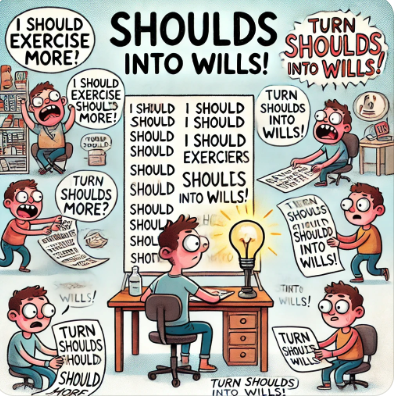
Shoulding Ourselves: Turning Shoulds into Actions

We’ve all heard the saying, “Don’t say ‘should,’ say ‘I must.'” For me, turning a should into a must feels even worse. It’s like an authoritative command that doesn’t inspire me at all. In fact, it feels easier to ignore. What if, instead, we started with the things we will do? Then, explore the things we are willing to do but might have steps that we subconsciously have a problem with but haven’t articulated.

Perhaps we merely need to flesh out the exact steps for things we’ve been shoulding around with. I know for me, my “shoulds” or things or projects that are stuck all have a reason. Some require agreement from a partner or at least clarity. Some involve multiple steps.

I often hear myself saying things like, “I am going to put out my first supplement.” Well, hello? I know this stuff, been there, done that. That means deciding on which website, what brand, what name, who designs the label, what is the price point, the shipping, what shopping cart, what forms of payment, what processor, what gateway. That’s just 10 steps right there. Then there’s the question of how much more research I want to do. Even deciding on which supplement, which manufacturer has the best formulation, what about the copy, and which lawyer for the claims and labels, and which nutritionist and doctor to review the label. So I might actually have 20 steps.

The point I am trying to make is that I suspect that some of the things you know you should do have a plethora of similar steps, and each one of those steps has multiple choices. It might be easier to go back to my “shit for brains” path of choice that I wrote about earlier. I know people who are all in multilevel marketing companies where they just take everything said to them as gospel truth and are off to the races selling what might be an inferior product that is grossly overpriced to pay seven levels of commissions. I am not capable of doing that.

But aren’t I then denying dozens, hundreds, or thousands of people the ability to buy the best possible product at the best price? Perhaps for all of us, that should be the test: If you know your course, your book, your product, or your service is the best value, it’s time to pull the trigger.

Steps to Turn Shoulds into Actions

  1. Identify the Will Dos:
    • Start by listing the things you will do without hesitation. These are your non-negotiables, the tasks you feel confident and clear about.
  2. Explore Willingness:
    • Identify the tasks you are willing to do but might have reservations about. Break these down into smaller, manageable steps.
  3. Clarify the Steps:
    • For each “should,” list all the steps involved. Flesh out the details to identify where you might be stuck.
  4. Seek Agreement and Clarity:
    • If a task involves others, seek agreement and clarity. Ensure everyone is on the same page to move forward smoothly.
  5. Prioritize and Plan:
    • Prioritize the tasks based on their importance and urgency. Create a step-by-step plan to tackle them.
  6. Test Your Value:
    • Assess whether your product, service, or idea offers the best value. If it does, take action confidently, knowing you are providing something worthwhile.

Conclusion

Stop shoulding on yourself. Instead, focus on what you will do, explore your willingness, and break down the steps needed to turn your shoulds into actionable tasks. By doing this, you can move forward with clarity and purpose, ensuring you provide the best possible value to those who need it.

I

Not Just for Men: Acknowledge, Don’t Fix

The first step in every encounter is to acknowledge. This is a simple yet profound truth that transcends gender. Men, especially, often feel an urge to jump straight into “fixing” mode. However, everyone, regardless of gender, wants to feel seen, heard, felt, and understood.

Jumping right to solutions can make the person you are speaking to feel ignored or undervalued. They might think you didn’t really listen or that you didn’t care enough to understand their feelings. In fact, after you have acknowledged their problem, their loss, or their frustration, you can then ask for permission to help. Sometimes, people just need to be heard and will say, “I just wanted you to listen to me. Thanks for listening; I don’t want you to do anything.”

This approach is something I’ve had to learn personally. I often find myself wanting to alleviate discomfort immediately, saying things like, “I don’t want you to feel bad, suffer, or deal with that problem for one more second. Here is what you can do.” This well-intentioned rush to fix often results in a loss of rapport. Recently, a friend literally told me twice in one conversation that they just wanted me to listen, even after I explained my good intentions.

It’s a valuable lesson: Acknowledge how they feel first. This practice is essential for building and maintaining strong relationships. Remember, this principle is not just for men. Everyone can benefit from prioritizing acknowledgment over immediate problem-solving.

Key Takeaways:

  1. Listen First: Ensure the other person feels heard and understood before offering solutions.
  2. Ask Permission: After acknowledging their feelings, ask if they want your help or if they just needed to vent.
  3. Understand the Need: Recognize that sometimes people just need to be listened to and not fixed.
  4. Build Rapport: Acknowledging feelings first helps build and maintain strong, empathetic relationships.

By practicing acknowledgment first, we foster deeper connections and understanding with those around us.

The Golden Retriever Approach: Another Distinction on Rapport

In my journey of understanding rapport, I’ve often seen myself as a golden retriever. I get so happy and excited to see a friend that I run to them, jump on them, and smother them with enthusiasm before even checking in to see how they’re doing. This approach, while full of love and energy, can sometimes be overwhelming and not quite what the other person needs in the moment.

A memorable instance of this happened with my dear friend Dr. Oz Garcia. I eagerly approached him with my usual exuberance, only to realize he was in the middle of a session with a client. Whoops! It was a clear reminder that my energy needed to be more attuned to the situation.

This idea was beautifully expanded upon in a conversation with Fernando Valencia. He said, “Great, let’s go with your golden retriever analogy. Imagine you’re with a sad person. Sure, the overactive dog might get a half-baked smile, but what if the dog gently placed its head on that person’s lap and waited? As the person feels a little better, perhaps they might be ready to come out and play.”

This simple yet profound image stayed with me. It highlighted the power of matching energy and being present at the other person’s pace.

In a serendipitous twist, Judy Katz, a renowned writer, shared with me a manuscript of her upcoming book, Galaxy: Lessons Learned from a Canine Hero. This touching story is about a severely abused bulldog who became an extraordinary therapy dog. One of his greatest healing moments involved a deeply wounded veteran who isolated himself in a dark room. The bulldog, sensing the veteran’s pain, didn’t nudge or seek attention. Instead, he just placed his head on the veteran’s lap, patiently waiting. Over time, this gentle presence led to the veteran inviting the dog in, and eventually, it helped him heal.

This story encapsulates the essence of meeting someone at their emotional level. Sometimes, it’s about being there quietly, offering comfort through your presence, and waiting until they’re ready to engage.


Final Thoughts

The lessons from these experiences and stories show that caring alone isn’t enough. Listening alone isn’t enough. Even love, in its most exuberant form, isn’t always enough. True rapport and connection come from making the other person feel seen, felt, heard, and understood. These are four distinct aspects, each deserving deep exploration and practice.

If you’re eager to delve deeper into these nuances and learn how to build meaningful connections, I highly recommend exploring the teachings from Unblinded and keeping an eye out for Judy Katz’s upcoming book, Galaxy: Lessons Learned from a Canine Hero. When it’s released, grab a copy – and if it doesn’t move you to tears, I’ll personally refund your money.

Remember, building real rapport often means slowing down, matching their energy, and being a comforting presence. It’s a practice that, when mastered, creates magical and transformative connections.


Procrastination: A Doctor who has written 7 books knows nothing about it.


I’m listening to all these experts, and it’s clear—they don’t have a procrastination bone in their bodies. They are doctors with degrees and have authored multiple books. Easy tasks for a procrastinator, right? Not exactly. You need to hear from someone who truly understands the struggle—someone like a crack addict, the ultimate dopamine seeker, who knows nothing about postponing pleasure to get something done.

Now, crack was after my time. I stopped using drugs in 1980, 44 years ago, long before crack and even before Richard Pryor’s infamous freebasing accident. So, I’m as close as you’re going to get to an expert.

From the Lowest of the Low to Success

How did I go from the lowest point to becoming extremely successful, making nearly a million dollars a year in commissions, and running a $30 million-a-year company? I also ran for Congress—both the United States Congress and subsequently the New Jersey Congress. I transmitted the first PDF advertisement to Time Magazine after contributing to the PDF standards. Then I founded and managed a non-surgical cosmetic office that has delivered over 20,000 successful treatments and has become an international destination with patients flying in weekly.

I could go on, but I find people who boast about their accomplishments boring and in need of a shrink. Just know that I was the lowest form of life and reached reasonable levels of success. Now, let’s segue into what worked for me and, more importantly, what can work for you.

What Works for You?

Assuming you’ve managed to prepare or order a meal and aren’t sitting in your own mess, you have some level of motivation to get things done. Maybe your dishes are piled to the ceiling, but at least you made a meal or ordered one.

I’m pondering this today because, after listening to all the experts—doctors, best-selling authors—I’ve heard a few good ideas but nothing close to an aha moment. So, it’s time for me to tackle this topic.

Let’s Get Down to It

  1. Just Get Started: One expert suggested working for five minutes. I agree. For me, during tax season, I didn’t set a time limit. I just promised to start, and an hour flew by. Don’t let fear of failure stop you. It will get done imperfectly, as all things do. Promise yourself one minute or whatever works for you. Just get started.
  2. Good Procrastination for Energy: Huh? Sometimes, I clean or clear clutter to open up space and get started. Clearing clutter can release energy, but you know when it crosses the line into procrastination. This isnt the time to vacuum the whole house.
  3. Clear Your Desk: Put papers into one pile, Apps like Getting Things Done or Things recommend just clearing the desk and making a pile without sorting or reading each paper. Open space and eliminate distractions.
  4. Time of Day: Identify when you’re most productive. Telling someone when to do something is idiotic. You might be most productive at 6 am, 10 am, 2 pm, 8 pm, or 10 pm. Study yourself—this is my number one rule for life.
  5. Study Yourself Again: When are you successful at getting things done versus procrastinating? Is it after your second cup of coffee at 8 am or 10 am? Is it when you’ve had protein and fat for breakfast? For me, eggs work best—they provide all the amino acids, fatty acids and choline for the brain.
  6. Don’t Waste Your Most Productive Time: Do the hardest mental tasks when you have your best energy. Don’t clean the house during your magic hours of productivity. That’s a rote task you can do anytime.
  7. Understand Your Task: I’m addressing people procrastinating on mental tasks that require research and trial and error. If you’re procrastinating on physical cleaning, the rules might be different. You might want to reverse the rules and do a little paperwork to break up house cleaning.
  8. Celebrate Your Successes: There’s a book called The One Minute Manager that suggests catching even the worst worker doing something right and congratulating them. If you’re treating yourself as the “worst worker” or procrastinator, celebrate your successes. Notice what led to the moment when you started on your taxes. Was it after a good meal? How long after eating? What supplements did you take?
  9. Different Forms of Procrastination: Eustress is good stress, coined by Hans Selye in 1976. I’m inventing “euprocrastination”—beneficial procrastination.
  10. Euprocrastination (Good Procrastination):
    • A 5-minute exercise break.
    • A 5-minute cleaning break.
    • A 5-minute clutter clearing break.
    • A 5-minute walk.
    • 5 minutes of stretching.
    • 5 minutes of meditating.
    • 5 minutes of visualizing how good you’ll feel when it’s done.
    • A 5-minute break for water or a protein-based snack.
    • A 5-minute important phone call with a timer.
    • 5 minutes of “task changing.”
  1. Task Changing: You have to do your taxes, but you also need to schedule your yearly physical, send out a client invoice, and call your mother-in-law. Bringing a number 2 priority item to the forefront isn’t the end of the world. For some, it helps you get the hard task done. For others, it might lead you down a rabbit hole.
  2. Avoid Rabbit Holes: You know when you’re going down a rabbit hole. Don’t use replying to emails or Facebook comments as an excuse to procrastinate. Be aware of what you’re doing and stay focused.
  3. Study Yourself: Did I say that already? Repeat it. No one knows you better than you. We can all offer suggestions, but only you know what works for you and what you might still be hiding.

Final Thoughts

If you take nothing else away, remember to study yourself and be aware. You are the expert on you. Recognize what leads to procrastination and what leads to productivity. Great suggestions are everywhere, but only you can determine which ones apply to you.

Unless you’re Tinker Bell, Jiminy Cricket, or Kazoo from the Flintstones, no one knows exactly what you’re doing except for you. I may be repeating myself, but it’s important to remember. This might lead to our next blog. Dont ask anyone about something specific. No one was there.

A Post Away From Happiness

Throughout our lives, we encounter bits of wisdom—some that stick with us forever. These nuggets of knowledge can come from anywhere: a grandparent, a mentor, or a line from a book that resonates with us on a deep level. For instance, my father once told me, “As long as you are healthy, you can dig ditches and make money.” While it might not seem like the most profound statement at first, it underscored a vital truth for me—the paramount importance of health.

This simple saying from my father shaped my perspective, making it easier for me to prioritize healthy life choices. It’s a perfect example of how sometimes, the smaller sayings, not the grand declarations, are what truly change our lives.

Everyone has their own set of maxims that guide them. Perhaps this post might offer you a new one that could shift your perspective or reinforce your current path. Moreover, it’s crucial to reflect on the sayings you repeat to yourself and others. Are they positive? Do they encourage growth and happiness? If not, it might be time to let go of the negative ones.

The sayings we choose to live by can significantly influence our outlook and decisions. They can be reminders of our values and goals, helping us navigate through life’s complexities. By choosing to adopt and repeat positive and empowering phrases, we can shape a more optimistic and proactive approach to life.

Take a moment to think about the words that have impacted you. What are the sayings that have helped you the most? Sharing these can not only affirm their value in your life but also potentially inspire others. Remember, the right words at the right time can be a beacon of hope and a catalyst for change.

So, as you go about your day, consider the power of words and the impact they can have. You might just find that happiness is truly just a post away.

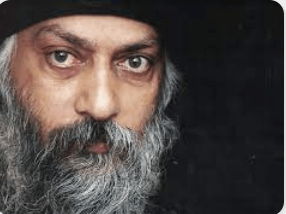
Osho. The Best Wisdom you will ever read

How could I forget him? For those who have heard about him, he gets a bad rap. Some call him the sex guru. I heard his retreats are free-sex romps. I don’t know; I have never been. I disagree with his free-sex advice. But what he says is stunning, and he never wrote a book. All of the books are his speeches that people transcribed into books. They couldnt have been written more perfectly. It makes me wonder if his genius was channelled. I have never read words so perfectly put together with great effort, let alone in extemporaneous speech.


The reason he included sex in his retreats was because he believed Westerners had no idea what bliss is, with the only exception being orgasm. His goal was to teach us how to get to bliss. But reading what he said is so profound. He never wrote a book because he believed that if you are following anyone, you are already off the path. As you know, all religions are entirely narcissistic, and the leaders are often fraught with scandals. I am just suggesting that you read some of his extremely profound statements.

The fact that he never wrote a book speaks to the unique honesty in what he was teaching. No other spiritual or religious leader ever said, Don’t follow me, don’t praise me, follow yourself.

A tiny sampling.
“The greatest fear in the world is the opinion of others, and the moment you are unafraid of the crowd, you are no longer a sheep. You become a lion. A great roar arises in your heart, the roar of freedom.”

“Listen to your being. It is continuously giving you hints; it is a still, small voice. It does not shout at you, that is true. And if you are a little silent you will start feeling your way. Be the person you are. Never try to be another, and you will become mature. Maturity is accepting the responsibility of being oneself, whatsoever the cost.”

“Drop the idea of becoming someone, because you are already a masterpiece. You cannot be improved. You have only to come to it, to know it, to realize it.”

“Life begins where fear ends.”

“The moment you start seeing life as non-serious, a playfulness, all the burden on your heart disappears. All the fear of death, of life, of love – everything disappears.”

These quotes reflect Osho’s emphasis on individual freedom, self-awareness, and the exploration of one’s true nature beyond societal conditioning.
He represented a real danger to society and organized religion. I can easily see why he probably was eliminated. He was jailed just long enough for a specific poison to be undetected in his autopsy. Makes sense to me. Everything I read that he said makes sense to.I have to put more here. Each one is magical.


“Truth is not to be found outside. No teacher, no scripture can give it to you. It is inside you and if you wish to attain it, seek your own company. Be with yourself. ”


“The real question is not whether life exists after death. The real question is whether you are alive before death.”


“Be — don’t try to become”


“Life in itself has no meaning. Life is an opportunity to create meaning.”


“The great appeal of drugs in the West is only because the West has succeeded in destroying the right hemisphere completely because of compulsory education.” I agree 100%. Look at all of the geniuses who dropped out.


“Everybody is born creative, but very few people remain creative.”


“To be creative means to be in love with life. You can be creative only if you love life enough that you want to enhance its beauty, you want to bring a little more music to it, a little more poetry to it, a little more dance to it.”


“Be realistic: Plan for a miracle”


“Intelligence is dangerous. Intelligence means you will start thinking on your own; you will start looking around on your own. You will not believe in the scriptures; you will believe only in your own experience.” hmm do you think they killed him?


“The less people know, the more stubbornly they know it.” I know a few of those people


“Courage Is a Love Affair with the Unknown”. Exactly


“A certain darkness is needed to see the stars.” even better than it is always darkest before the dawn

You chose that

Probably a bad choice to make my point. Because now you are focusing on so many different things. But maybe accidentally it was the perfect choice. What are you thinking?

Did you choose what you are thinking about? Of course you did. And everything about who you are brought you to making that choice. Are you thinking, “what a slut” or your a guy, “thats hot” or “I would never wear that”. Funny this could be a post I did not intend to create.

Indulge my ADD for a moment. The point I wanted to make in this post was that we choose what we think about just as certainly as we choose what to wear. This probably only applies to women. But women get it. They can pull a red or a blue dress out of their closet as easily as they can pull a positive or a negative thought out of their brain to focus on.

What if your closet is merely a metaphor for you mind? So you can pull out a happy thought or choose a shitty thought out of the closet of your mind.

That was the point I wanted to make but by my choice of photos I landed up opening up this post to a plethora of other thoughts and ideas. So it was probably a bad choice. Because the simple point of choosing what we think is no different then choosing what to wear for the day.

That particular dress probably brings up a whole bunch of thoughts unrelated to simple choice. But maybe its the perfect metaphor for how difficult it is to make a simple choice. Because we have a plethora of memories connected to everything we see and hear all day long that will hijack our brains.

So yes, you get to choose. No its not always simple and straight forward. It often is. And when it isnt you still need to make choices that work for you. I still maintain happy thoughts are a choice as is red or blue dresses. Think about what you want to wear or think today. PS assuming you have all meditated, why not let the negative thought simply pass, as you do when you are meditating and focus on something positive, something you are grateful for, or something that gives you joy.