Not Caring Is the Highest Form of Caring

I know it sounds backwards, but it’s true. The problem is we don’t have the right vocabulary to express it. Should I say “not being attached to the outcome”? Let’s explore this concept with the greatest love of all—not self-love, but the love for your children.

Of course, you should ensure your children don’t get run over by a car, but maybe that’s where it should begin and end. You’re probably aware that some of the greatest successes in the world dropped out of college: Bill Gates, Steve Jobs, Michael Dell. Even Quentin Tarantino and Richard Branson dropped out of high school. So, “caring” and trying to impose your ideas and rules on your child might actually be a bit selfish.

Now, let’s segue to your partner. If you “want” them to do something supposedly for their own good, why is that? It’s often for your own benefit. Are you starting to get it? I’m sure there have been times when you said, “I no longer care,” and then, like a bolt of lightning, everything changed for the better. Because, said or unsaid, you were trying to control the other person and the outcome. That is not love or unselfishness at all.

It’s hard, but it’s much like most parents know: there is definitely a time, sooner or later, when it’s time to let go. Calling it “not caring” might be easier for us Westerners to understand because we are venturing into Eastern philosophical territory here. Detachment, not indifference, allows for growth and true connection.

The idea is to love deeply and unconditionally while letting go of the desire to control the outcome. This kind of love respects the autonomy and individuality of others. It’s about supporting without dictating, guiding without forcing, and loving without binding.

Think about it. When you let go of the need to control, you create space for true growth, freedom, and authentic relationships. This is the highest form of caring—not imposing your will, but allowing the natural course of life to unfold, trusting that love and respect will guide the way.

Want further proof? What about parents who “spoil” their children vs those that insist their children work and do all the things that made them successful? I know my father actually told me, now that I am remembering it. “I worked hard so you wouldnt have to” Dont get a summer job, learn something. That didnt work out for me at all. I went through hell from 16 to 26. Just thought of those words as I was writing this. So to conclude, detach, its not about you, its what you can do to empower your loved ones, your children, your partner. Often it is allowing them to learn allowing them to be accountable, allowing them to learn the hard lessons of life. So maybe it might look like “not caring” to an outsider. But its the greatest gift you can give to people you love.

Need further proof. Nobody knows better than Alcoholics Anonymous. 2 million members in 180 countries. The most successful treatment program for the most ubiquitously available drug on the planet. What did they have to create? AL-anon. What do they teach? That helping is enabling. Most of what they teach applies to everyone and everything. Something as simple as the serenity prayer applies to every thing in every day. God, grant me the serenity to accept the things I cannot change, Courage to change the things I can, And wisdom to know the difference.

Lets leave it at that since it applies to everything including the subject of this blog.
Is It Crazier to Date Halfway Across the World or the Guy You Bumped Into on the Street?

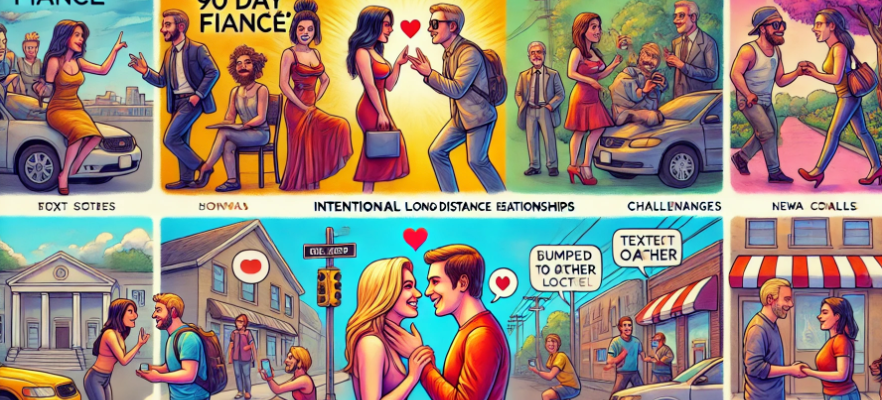
Is it crazier to date someone halfway across the world or the guy you bumped into on the street? The hit show “90 Day Fiancé” has become a cultural phenomenon, showcasing the chaotic and often humorous attempts of people trying to find love in a different country and culture. But who is crazier—the one who pursued someone based on an online profile, searching for their “soul mate” in the digital realm, or the person who started dating someone they met on the street or at work?

I don’t have the definitive answer. Maybe ChatGPT has some statistics on which relationships are more likely to succeed. Or perhaps the real answer lies in the commitment to making any relationship work. Relationships are complex, and they go through various phases. Are you willing to grow through these phases?

For instance, the dynamic of both partners working is different from one where one partner works while the other stays home to raise children. But that’s a topic for another post. Let’s focus on this one.

Where did you find your partner? Do you believe in soul mates? Is there a right or wrong way to find love? Whether you met your significant other through a chance encounter on the street, at work, or halfway across the world, the key is your willingness to invest in the relationship and grow together.

Personally, I don’t think people even begin to ask the right questions. Just yesterday, my younger friend admitted he doesn’t even know if the woman he married really wants to have kids. Talk about basics! The problem could also be that when you started dating, neither of you cared about having kids, but then one of you changed your mind.

Again, it all comes back to communication. Communication. That is step 1, step 2, and step 3.

At least the people in “90 Day Fiancé” were intentional in looking for someone, despite the often disastrous consequences. They made a conscious decision to seek out a partner, even if it meant navigating the complexities of different cultures and long-distance relationships. This intentionality is something to be admired, as it reflects a deliberate effort to find love.

Love can be found in the most unexpected places, and every relationship has its unique journey. The important thing is to be present, committed, and open to the growth that comes with each phase of the relationship. So, whether you found love next door or across the globe, cherish the connection and be ready to navigate the challenges together.

II just realized I forgot to share my own experiences, which you might find humorous and offer yet another perspective worthy of deeper thought and conversation. I dated a lot of Armenian girls in my culture. I also dated a woman I met at the impound at 4 a.m.—you know, the place where they tow your car? (I figured we both shared a disregard for the law). There was also a girl renting a house across the street in the Hamptons who was hitchhiking to town to buy more liquor for her party. And finally, I dated a surgeon I admired and respected for her smarts, intelligence, and beauty. I did learn one thing: They say don’t marry a litigator because they are trained to argue. A surgeon, on the other hand, must be right 110% of the time, or you could die—or be blinded in the case of an eye surgeon. So, I’ve had to grow exponentially.

Maybe that should be my final thought: No matter where you are or who you are with, what if you became the most peaceful, thoughtful listener with presence, so that your partner feels “seen, heard, felt, and understood?” I would bet that 99% of all relationship issues would dissolve if we merely listened with all of our hearts, no matter where we met our partner. Go re-read every post on listening. It’s the way you watch a movie—hang on their every word. Wait 5 seconds after they finish speaking, and then wait another 5 seconds. Ask if they have anything else they want to share, and then ask permission to speak. Again, that alone will solve 99% of your problems. I wish you were paying $5,000 for this advice—not to me, but to a charity—so that you would have an idea how valuable this advice is.

In Your Life or on Your Phone?

I don’t see anyone in their life these days. I challenge you to walk one block, whether you’re in the suburbs or the city. I’d bet that 90% of the people you pass are looking at a device, risking getting run over by a car, or they’re talking to someone on their device. Parents have to fight with their kids to get off their phones, even at mealtime. It’s actually rare to hear a parent say that devices are not allowed at the dinner table. That is crazy.

The whole “Be here now” concept no longer exists. Sure, you might be one of those who doesn’t allow devices at the dinner table—woo hoo! But what about the other 23 hours of the day when your kids or even your partner are glued to their devices?

I don’t know where this is going. I hope we don’t all get brain cancer. Cell phones have only been commercially available for around 40 years, compared to the millions of years humans have been on this planet. But even worse is that no one is present in their life anymore. The most important interaction in life is completely missing. How can you possibly listen to another human being while you’re looking at your device?

How often have you seen the person you are with distracted by a beep, buzz, or ding on their phone? How important does that make you feel? In fact, we all make allowances for that. “Sure, if you get an important call, no problem—just drop me, we are friends?” That’s a weird statement, but I make it all the time. So I guess that makes our device the most important person in our life, doesn’t it?

We all need to spend a lot more time trying to be present in our lives and turn our devices off. Or at least spend a lot less time on them. Being present is not just a quaint idea—it’s essential for meaningful connections and a fulfilling life. Let’s challenge ourselves to put down the phone and truly engage with the world and the people around us.

Facebook or Fakebook?

When was the last time anyone posted a photo of themselves taking a poop? Probably never. There have been 2.5 trillion posts on Facebook, and I doubt anyone has ever shared such a candid moment. Maybe a few weirdos, but the point is you could be living the most miserable life, and yet, the one time you are someplace exciting or on vacation, that’s the post you put on Facebook. You and your partner could fight 24/7, 365 days a year, but the one time you have your arms around each other smiling—even if it’s only for two seconds—that’s the photo that ends up on Facebook.

There are countless books on the Facebook effect, detailing how this social media platform distorts reality and amplifies feelings of inadequacy and FOMO (Fear of Missing Out). If you want to be miserable, spend more time on Facebook. You could have a 100-foot yacht parked in Palm Beach with 50 of your closest friends and family, but the moment you open Facebook, you’ll see a childhood friend in Ibiza or Monte Carlo with a 250-foot yacht surrounded by celebrities, friends, movie stars, and models. The comparing of status never ends. It’s just a natural human tendency.

Why do we compare ourselves? That’s a topic worth exploring. But for now, I have a proposal: don’t steal it! I propose “Worstbook” to compete with Facebook. On Worstbook, you are only allowed to post your worst moments so others will know you also go to the bathroom, have had diarrhea, and have been sick and miserable here and there. You aren’t allowed to post happy times. It’s simply an honest collection of your worst, most embarrassing, and funniest moments. And don’t try to sneak in a photo of a movie star spilling a drink on you while you were on a yacht—you’ll be canceled from Worstbook.

Stop looking at everyone else’s best day of their life and start enjoying the depth of your own life. Get off your device. Stop looking at posts, stop scrolling through Twitter and TikTok. It’s all not real, and it’s not here right now.

Enjoy the moment you are in, with all its imperfections and challenges. After all, those are the moments that make life real and meaningful.

Your Nuclear Family is Constantly Changing

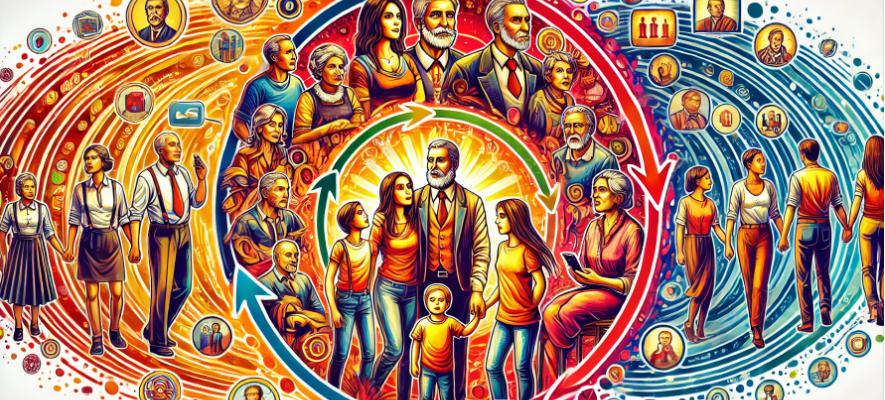
Family. It’s a word that holds so much weight and emotion. Yet, the concept of a nuclear family is not static. It evolves, shifts, and sometimes, it can be a painful transition.

I remember a time when it was always myself and my two sisters. We were inseparable, and I believed that nothing could come between us. I thought it would always be just us, standing together above everyone else, forever. But then life threw us a curveball. My father passed away, and suddenly, we were thrust into discussions about his estate. I was shocked, stunned, and incredulous. I lost it completely because their partners had different opinions, and I just couldn’t understand why. But then it hit me—they had their own nuclear families now. And naturally, loyalty to your nuclear family comes first.

That phase passed, and now we are back to being as close as possible, even though we live in different places.

Recently, I spoke with someone who had grandchildren and great-grandchildren. Unsurprisingly, he doesn’t speak or see his children much, as they have their own families and even grandchildren. Generational nuclear families are a reality. The dynamic changes with each generation, creating new families within families.

There are those Kodak moments—remember those? I guess Kodak moments have been replaced by Facebook moments. That’s a topic for another post. Yes, you will see that picture when everyone is together, spanning three generations. It might happen once a year. When I was little, we all gathered at grandmother’s house for most of the holidays. Sadly, most families today don’t spend much time with three generations present very often. As much as I loved seeing all my cousins, it really didn’t happen that often, maybe at Christmas and Thanksgiving.

As the family grew, each side started having their own gatherings. The nuclear family is constantly expanding, breaking off, and even contracting. The elders are not necessarily always revered, especially in this country. I admire cultures where families remain closer, where the elders are respected and cherished.

Sadly, the true essence of family life seems to be getting lost and replaced with, well, I don’t even know what—iPhones?

It’s natural for your nuclear family to change. It’s part of life. Embrace the transitions, cherish the moments, and remember that family, in whatever form it takes, is a constant evolution.

The Grass Is Yellower on the Other Side of the Fence

We’ve all heard the saying “the grass is greener on the other side of the fence.” But let’s flip that on its head for a moment. The grass isn’t just greener; it’s yellower, browner, bluer—it’s every color under the sun. And yes, there’s a fence.

First, let’s consider the numbers. There are 7.9 billion people in the world. That means there are probably millions of potential partners for you. But with 87,600 hours in a decade, it would take you around 120 years to spend just one hour with each of them—without a wink of sleep. Clearly, meeting everyone isn’t practical.

Then there’s the fence. The partner you’re with might lock that fence the moment you leave, never letting you back in. While you’re busy thinking the grass is greener on the other side, remember it’s also all other colors. People come in all shapes and sizes: better looking, richer, poorer, kinder, stronger, smarter, weaker, more or less successful. The variety is endless.

But why are you so focused on the other side of the fence? Are you the type who is always looking elsewhere, always outer-directed, never happy, never looking inward? Are you expecting to get your feelings from outside yourself? This opens a Pandora’s box of questions about you.

Of course, there will always be people on the other side of the fence with qualities that attract you. That’s as certain as the sky is blue. You can choose to live a life of serial dating, or you can care for one person deeply. You can care for multiple people, or you can cherish those you’ve taken as your family.

It’s your choice. Stop asking the wrong questions and start looking within. What do you really want? The grass might be all colors on the other side, but where you are now can be just as vibrant if you choose to see it.

The 3,000-Year Journey: How Cats Domesticated Humans

Cats. These mysterious, graceful creatures have been part of human history for millennia. But who really holds the leash in this relationship? It’s becoming increasingly clear that it’s the cats who have domesticated us. This journey spans from the reverence of ancient Egypt to the feline overlords of today.

Ancient Egypt: The Dawn of Feline Worship

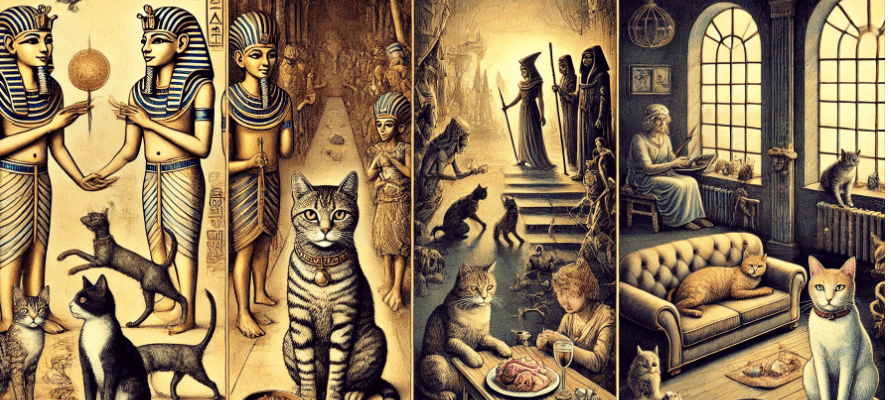
Our story begins in ancient Egypt, around 3,000 years ago, where cats were revered as gods. Bastet, the cat-headed goddess, symbolized home, fertility, and protection. Egyptians admired cats for their grace and hunting skills, which kept grain stores free of vermin. They believed cats had protective qualities, and harming a cat was punishable by death. Clearly, the ancient Egyptians were the first to fall under the spell of the feline mystique, setting a precedent for generations to come.

Medieval Europe: The Dark Ages for Cats

Fast forward to medieval Europe, and the status of cats took a drastic turn. During the Middle Ages, cats were associated with witchcraft and evil. In the 13th century, Pope Gregory IX declared cats to be instruments of Satan, leading to widespread persecution and killing of cats. This unfortunate superstition culminated in a significant decline in the cat population, which inadvertently contributed to the Black Plague. With fewer cats to control the rat population, the fleas on these rats spread the deadly disease more easily. It took a few centuries, but humanity began to see the folly in their ways, and the value of cats was rediscovered.

The Renaissance to the 19th Century: A Gradual Redemption

As the Renaissance blossomed, cats began to recover their place in human society. They were appreciated once again for their pest control abilities and slowly regained a more positive status. By the 19th century, cats were becoming popular as pets in Europe and America, with their charming aloofness and independent nature winning over many hearts.

Modern Times: The Age of the Feline Overlord

Today, cats have completed their long game of domestication. They have gone from gods to devils to demanding dictators of our homes. Modern cats have perfected the art of making humans cater to their every whim. Here’s how they’ve done it:

  1. Food Picky and Proud: Forget the days of catching their own meals; today’s cats have humans serving gourmet meals tailored to their discerning tastes. If the food isn’t up to their standards, you’ll know from the disdainful look they give you.
  2. Time Management: Cats have an impeccable sense of time, especially when it comes to meal times. They will ensure you know if you are late, with persistent meowing and even a gentle (or not-so-gentle) paw to the face.
  3. Personal Space: While cats can be affectionate, they are also masters of controlling the terms of engagement. Petting and cuddle time happen strictly on their schedule, not yours.
  4. Freedom to Roam: Cats today have free reign of their homes. They claim the coziest spots, from sunlit windowsills to your favorite chair, and woe betide the human who tries to move them.
  5. Subtle Manipulation: Cats have honed their manipulation skills to an art form. A purr here, a headbutt there, and you’re putty in their paws. They’ve trained us to provide treats, toys, and the best spots in the house without us even realizing it.

Conclusion: The Feline Triumph

Over the course of 3,000 years, cats have subtly and effectively domesticated humans. From divine beings in ancient Egypt to misunderstood creatures in medieval Europe, to the pampered pets of today, cats have mastered the art of making us their devoted servants. As we cater to their every whim, one can only marvel at the quiet genius of these feline overlords. In the end, it’s clear who the real masters are in our homes. We might have provided the shelter, but they provided the strategy, turning the tables and making us the ones who are truly domesticated.

4o

What is a Vacation? You Can Do It Right Here, Right Now

One of the biggest aspects or renewal factors of a vacation is that you are someplace different. Consider this: we all have 70,000 thoughts a day and 80% of them are the same as yesterday. We wake up in the same bed. We use the same coffee maker and make our coffee the exact same way. We have other countless routines. But these routines bring up routine thoughts. You pick up your phone, call the same friend or relative that you know might be up early. That person might suck you into a political conversation, or whatever. Are you starting to get the picture?

The Renewal Aspect of a Vacation

The renewal aspect of a vacation is not that you are in Paris or the Bahamas; it’s that you are someplace else, stimulating different thoughts. I remember one day when I was living on 59th and 1st in NYC. I walked out of my building and challenged myself to simply walk two blocks and notice things I never saw before. I remember it like it was yesterday, even though it might have been 30 years ago. I might as well have been walking down the Champs Elysee.

I looked up at buildings I had walked past for 20 years. I noticed they were all four- to five-story walk-ups with interesting cornices at the top. I never even noticed how many stores and restaurants were in that one block, as I usually went straight to the Chinese or sushi place. There were actually a few other nooks and crannies I had never seen before. I was so lost in the thought of noticing things I had never seen before, it was literally like a vacation. Normally, I would purposely walk down that street for 20 years, seeing nothing and planning or worrying about my day. It’s that simple. Think differently.

Ways to Take a Vacation Right Now

  • Meditate: Meditation can help clear your mind and bring fresh perspectives.
  • Reconnect: Call a friend you haven’t spoken to in years.
  • Play a Sport: Engage in a sport you haven’t played in years.
  • Take a Class: Enroll in a class on something of interest to you.
  • Learn a Language: Even try the first free module.
  • Get Involved: Engage in someone else’s life outside of your small circle.
  • Listen to Something New: Discover new music or podcasts.
  • Walk a Different Path: Walk down a street you’ve never walked down before.
  • Rediscover Your Routine: Walk down the same street but challenge yourself to see things you never saw before. Look only at the rooftops (PS: don’t trip).

The Uncomfortable but Renewing Experience

Creating the renewal of a vacation can be as simple as changing your routine. It might be uncomfortable, but that is the renewal aspect of a vacation. When you’re in Paris, you don’t know where you’re going to get a coffee, how to order it, how much it will cost, or what it will taste like. Your mind is 100% occupied with new and different things, and for most of us, that is a “break” or a vacation from the boredom and the unpleasant aspects of our daily routine.

Conclusion

You don’t need to travel far to experience the renewal of a vacation. By simply changing your routine and thinking differently, you can stimulate new thoughts and experiences that refresh your mind and spirit. So take a trip down a different path, engage in new activities, and see the world around you with fresh eyes. Your vacation can start right here, right now.

ROI for Your Life?

Everyone has heard of ROI, or return on investment. But what is the ROI for the biggest investment of your life? What is that, you ask? It’s your life itself.

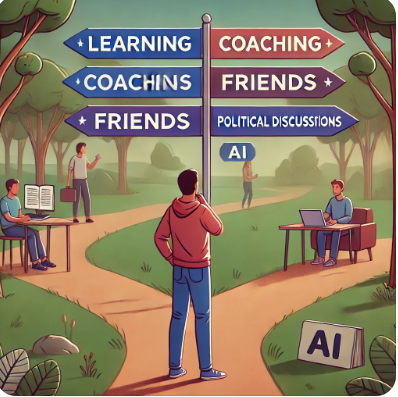
I love learning. In fact, I am part of four groups and have three coaches. Seriously? Yes. Granted, some are once a month. But just like we clear the clutter in our house, what’s more important than the ROI on your money is the ROI on your time. Your time is literally the currency of your life.

Evaluating Your Time Investment

I am constantly rearranging various things, spending more time here than there. It’s essential to periodically review how we spend our time and assess the returns we are getting. Are you spending three hours a week on political discussions? If so, that might be a clear waste of your life—unless, of course, that is your profession.

You get to decide where to spend the currency of your life and what return you are getting. This definitely requires occasional review, just like we do with our friends.

Leveraging AI for Astonishing ROI

PS: AI is insane. What I learn every few seconds on an AI call can save me weeks of work. That is something that will have an astonishing ROI for you. I didn’t even count my AI group when I said I am part of three groups. The point is, what is your ROI for YOUR LIFE?

Quality Time with Loved Ones

Just yesterday, I walked around NYC with my dearest friend for two hours while he was doing errands. I hadn’t spent time with him in years. I can’t think of anything better I could have done with my time, which is literally my life.

Reflect and Adjust

What are you doing? Reflect on how you’re spending your time. Are your activities bringing you joy, growth, and fulfillment? Or are they draining your energy and offering little in return?

Reevaluate and adjust your commitments and activities to ensure you’re getting the best ROI for your life. Spend time on what truly matters to you, be it personal development, relationships, or exploring new interests.


Take a moment to assess your life’s ROI. Make conscious choices about how you spend your time, and prioritize activities that bring you the highest return in terms of happiness, growth, and fulfillment. Your time is precious—spend it wisely.