Precision Aesthetics: The Ultimate Destination for Scientific Beauty Solutions

At Precision Aesthetics , we offer the most advanced non-surgical technologies available, expertly designed to deliver exceptional, natural-looking results. Our treatments—Thermage, Emface, Emtone, Carboxytherapy, Exilis, Emsculpt, Emsculpt Neo, and Emsella—are precisely tailored to target the root causes of aging, cellulite, and body contouring concerns. With over 20 years of experience in aesthetic medicine, we combine art and science to ensure our clients receive the highest level of care and results, all within the privacy of our discreet, luxurious office.


Thermage: Sculpting Beauty with Cutting-Edge Skin Tightening

Thermage represents the pinnacle of non-invasive skin tightening. It is trusted globally as an effective solution for clients seeking firmer, lifted skin without the risks and downtime associated with surgery. At Precision Aesthetics, we use this breakthrough radiofrequency technology to precisely target and rejuvenate sagging skin, delivering exceptional results that build over time.

Thermage: The Science Behind the Lift

  • Radiofrequency Precision: Thermage penetrates deep into the skin’s layers, stimulating collagen production and tightening tissue.
  • Natural, Long-Lasting Results: Collagen remodeling continues for months post-treatment, delivering lasting firmness and lift.
  • Versatile Treatment Areas: Face, neck, abdomen, arms, and thighs—all areas where skin laxity is a concern.

We customize each Thermage session to your unique facial structure and body contours, ensuring a subtle, refreshed look that appears completely natural. This is an ideal treatment for those who want a lifted appearance without the telltale signs of surgical intervention.


Emface: Facial Sculpting Redefined

Emface is a revolutionary, needle-free technology that combines radiofrequency and electromagnetic muscle stimulation to simultaneously tighten skin and lift facial muscles. This innovative approach provides a comprehensive solution for clients looking to achieve facial rejuvenation without toxins or downtime. Emface is the perfect blend of science and beauty, harnessing technology to deliver a youthful, contoured appearance.

Why Emface Is the Future of Facial Aesthetics:

  • No Needles, No Toxins: A purely non-invasive approach that respects the skin’s natural structure.
  • Muscle Enhancement Meets Skin Tightening: By lifting and tightening, Emface enhances facial contours in a way that looks and feels completely natural.
  • Quick and Painless: Sessions take less than an hour, allowing you to resume your day immediately.

At Precision Aesthetics, we tailor Emface treatments to enhance your unique facial anatomy, ensuring optimal lift and contour for a refreshed and youthful appearance. This is the ideal choice for clients seeking an effective, non-surgical facelift alternative.


Emtone: Scientific Cellulite Reduction

Cellulite is a challenge that many women face, regardless of fitness level or body type. At Precision Aesthetics, we leverage the power of Emtone—a sophisticated combination of radiofrequency energy and targeted pressure—to treat the underlying causes of cellulite. This dual-action technology improves skin texture, reduces fat cells, and enhances collagen production, resulting in a smoother, more toned appearance.

How Emtone Works:

  • Multifactorial Treatment: Emtone targets enlarged fat chambers, reduced collagen, and poor circulation—key factors contributing to cellulite.
  • Non-Invasive and Painless: No incisions, no discomfort, and no downtime.
  • Visible Results in Record Time: Most clients notice a significant improvement in just a few sessions.

Our advanced understanding of Emtone allows us to design individualized protocols for each client, focusing on areas such as the thighs, buttocks, and abdomen to achieve the smooth, firm skin you desire.


Carboxytherapy: Transforming Stretch Marks with Innovative Science

Carboxytherapy is a minimally invasive treatment designed to minimize the appearance of stretch marks. Using finely controlled injections of carbon dioxide (CO2), Carboxytherapy stimulates the body’s natural collagen production and improves blood flow, promoting skin regeneration and reducing the visibility of stretch marks.

The Precision Aesthetics Advantage:

  • CO2 Technology: A proven method that triggers the skin’s natural healing response, enhancing elasticity and collagen.
  • Versatile Application: Effective on both new and long-established stretch marks.
  • Tailored Treatment Plans: We customize each session to your specific skin type and stretch mark severity, ensuring maximum effectiveness.

At Precision Aesthetics, we have perfected the use of Carboxytherapy to deliver safe, scientifically backed results for stretch mark treatment, providing our clients with smoother, more even skin.


Exilis: Comprehensive Body Contouring

Exilis combines radiofrequency and ultrasound technologies to address stubborn fat, tighten skin, and sculpt the body. This dual-action approach allows us to safely and effectively target and reshape problem areas, creating a slimmer, more contoured physique without the need for invasive surgery.

Why Choose Exilis?

  • Precision Targeting: Exilis delivers controlled energy deep into the tissue, stimulating fat loss and skin tightening simultaneously.
  • No Downtime: A comfortable procedure that requires no recovery time.
  • Customized for Your Body: Effective for the abdomen, thighs, arms, and other areas in need of contouring and tightening.

Our expert team creates tailored Exilis treatments for each client, ensuring that you achieve your desired body contour and skin firmness efficiently and safely.


Emsculpt and Emsculpt Neo: Advanced Muscle Building and Fat Reduction

Emsculpt and Emsculpt Neo represent a breakthrough in non-surgical body sculpting. Using high-intensity focused electromagnetic (HIFEM) technology, Emsculpt induces powerful muscle contractions, toning and building muscles in the abs, buttocks, arms, and thighs. Emsculpt Neo takes it a step further by combining HIFEM with radiofrequency to simultaneously build muscle and burn fat.

The Science of Emsculpt and Emsculpt Neo:

  • HIFEM Technology: Each session stimulates thousands of muscle contractions, equivalent to intense workouts.
  • Fat Reduction Capabilities: Emsculpt Neo’s additional radiofrequency component enhances fat breakdown.
  • Fast, Effective Sessions: Each treatment is quick, with no downtime, making it convenient for even the busiest clients.

At Precision Aesthetics, our Emsculpt and Emsculpt Neo protocols are precisely customized to maximize muscle growth and fat reduction, providing you with the ultimate body sculpting experience.


Emsella: Pelvic Floor Strengthening and Wellness

Emsella is an FDA-approved, non-invasive treatment specifically designed to strengthen the pelvic floor muscles, offering relief from incontinence and improved sexual health. Using electromagnetic energy, Emsella stimulates thousands of pelvic floor contractions in each session, replicating the effects of thousands of Kegel exercises.

Emsella’s Benefits:

  • FDA-Approved: Clinically proven to treat incontinence and enhance pelvic health.
  • Sexual Wellness: A stronger pelvic floor improves sexual function and satisfaction.
  • Comfortable and Quick: Sessions are non-invasive, with clients fully clothed and no recovery time needed.

At Precision Aesthetics, we offer Emsella as part of our holistic approach to aesthetic and wellness treatments. Whether you’re looking to improve bladder control or enhance pelvic strength, our specialized team ensures you receive the best care possible.


Precision Aesthetics: Combining Art, Science, and Expertise

With over two decades of experience, Precision Aesthetics is your trusted partner for non-surgical beauty solutions. Our commitment to using state-of-the-art technology, combined with a deep understanding of facial and body anatomy, allows us to deliver results that are both transformative and natural. Our discreet, private setting ensures that every client receives the personalized, confidential care they deserve.

Our Promise:

  • Excellence in Every Treatment: We take pride in our meticulous approach, ensuring every client achieves their aesthetic goals safely and effectively.
  • Discreet Service: Our practice is located in a private, residential building with no external signage, providing absolute privacy for our clients.
  • Personalized Plans: Our consultations are designed to create individualized treatment plans that align with your unique needs and desired outcomes.

Schedule Your Consultation

Experience the science of beauty at Precision Aesthetics. Whether you’re interested in skin tightening, cellulite reduction, body contouring, or pelvic wellness, our expert team is here to guide you through your aesthetic journey. Schedule your consultation today and discover how our innovative, non-surgical solutions can enhance your natural beauty.

Non-Surgical Facelift Miracle

Before and After Thermage

I think most people would expect that after 35 years, you’d see more loose skin, more loss of collagen, a saggy jawline—or at the very least, you’d look older. And from those who try to “look younger” we see disasters: botched facelifts, frozen faces that are overfilled with fillers, and unnaturally plumped-up cheeks. Let’s face it, we’ve seen it all.

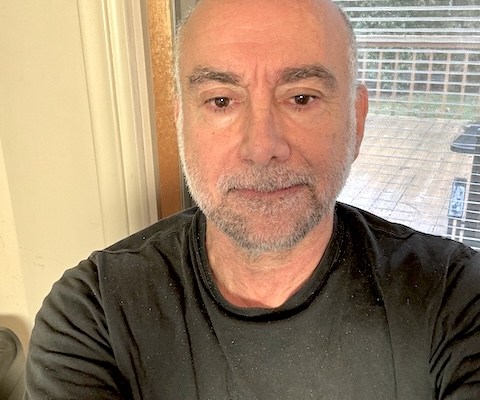
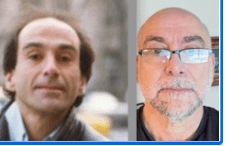
With that in mind, let me show you something different—myself at 35 vs. 71. No surgery, no needles, no toxins, no fillers. We simply did what we do best at Precision Aesthetics. I started Thermage treatments in 2007. In my fifties, I might have done one or two. In my mid-sixties, I started doing it every other year, and now, I do it twice a year, along with Exilis, Emface, and Silk Peel.

I don’t mind revealing it because it takes a lot of skill and at least 20 years experience to operate these devices optimally. Thermage is a powerful deep radiofrequency device. Few people, if any, can operate it optimally for the best results. Very few have Silk Peel to infuse vitamins into the skin, or Exilis to add a little extra skin tightening. Even fewer have Emface—and know how to adjust it perfectly. You’d be surprised how different the left and right sides of your face are. There are countless vectors involved: the right temperatures, the number of pulses with all of the decvices I mentioned. I’ve read horror stories about people losing collagen in their cheeks or even getting burned.

A famous Beverly Hills plastic surgeon admitted to me they don’t even perform Thermage treatments. Another friend doesn’t use Ulthera. It’s a catch-22: the medical devices that get the best results can also make a mess out of your face. And no, the board-certified doctor is the last person you want treating you. Think about it—he or she is busy with surgeries or injectables. Do you really think they operate these technologies every day? Of course not. The Doctor is the least experienced person at the practice, when it comes to operating these technologies. They didnt go to medical school to operate these technologies.

Anyway, here I am—great results from a great combination of treatments. No retouching or anything, just a selfie in my living room vs. a photo a friend sent me.

Stretch Marks Be Gone

My answer. One of many that has garnered over 2 million answer views. https://qr.ae/p2FjZb

It is also the favorite of our clients. Only because it is so vexing and elusive. Personally I love the fact that my face is obviously at least 20 or thirty years younger. In fact I used my photo from 35 years ago as a “before” photo, LOL.

The Quiet Virtue: Why the Best Services Often Go Unnoticed

Have you ever noticed that the loudest voices aren’t always the most trustworthy? It’s something that seems to happen all around us. The people or businesses shouting the loudest about what they have to offer may not actually have the best offerings. Meanwhile, those who have true value, the ones who focus on providing the highest quality, often remain quiet, drowned out by a sea of noise.

This isn’t just an observation about individuals—it spills over into services and businesses too. We all know how difficult it can be to find the best doctor, service, or even restaurant. Often, the places with the loudest advertising or self-promotion are the ones with the least to offer. They know that in a world filled with distractions, volume sometimes overshadows quality.

The Quiet Experts

Many of the most talented professionals in any field are, by nature or by culture, humble. They let their work speak for itself. There’s even a religious or cultural undertone to this—many spiritual teachings emphasize humility as a virtue. For example, Christianity speaks of “the meek inheriting the earth,” and in many cultures, humility is seen as a sign of wisdom and strength.

This emphasis on humility can sometimes mean that the best services are overlooked. Many professionals, especially in fields like healthcare or aesthetics, are more focused on perfecting their craft than shouting about it from the rooftops. Their work speaks for itself, but in today’s noisy world, sometimes that isn’t enough to get noticed. They believe in quietly doing what’s right and letting the results shine, rather than engaging in aggressive self-promotion.

The Challenge of Visibility

This creates a real challenge—not only for those professionals but also for the people who are searching for the highest quality. How can you know where to find the best doctor or the most effective service when they aren’t actively competing for your attention? Too often, we are left sifting through flashy ads or influencer promotions, only to find that the loudest voices don’t always have the best offerings.

As consumers, we’re often drawn to the loudest message, but volume is not always a guarantee of value. In fact, the best in the business might be the ones you haven’t even heard of yet because they’re too busy doing exceptional work to promote it.

Shifting the Dynamic

The truth is, finding the right service, doctor, or expert often requires us to look beyond the noise. It’s about asking deeper questions, seeking referrals from trusted sources, and doing the research rather than following the flashiest marketing. For professionals, the challenge is learning how to strike a balance between quiet humility and the necessity of being seen.

Imagine how different things could be if we valued quiet excellence over loud mediocrity. If the true experts found ways to make themselves just a little more visible—without compromising their values—perhaps the right people could find them. And for those of us searching for the best, it’s a matter of digging deeper, asking the right questions, and not being fooled by volume.

It’s time to value substance over style and start seeking out the quiet, excellent voices that may have the most to offer.

Hair Transplants: The Gold Standard in Balding Solutions—From My Personal and Professional Journey

Clearly an expert, who decided long ago that I didnt want to pursue surgery. However, over the years, I’ve played both guinea pig and professional in the quest to find effective solutions for hair loss. Like many, I’ve experimented with various treatments in hopes of finding that elusive cure. From personal trials to advanced technology at my practice, I’ve seen the evolution of hair loss treatments firsthand. But even with all the latest innovations, hair transplants remain the gold standard—a fact I’ve recently been reminded of, as a close friend’s son is undergoing the procedure today. And she has worked in the cosmetic medical field for 30 years. So she is close to many doctors in New York and aware of the options.

My Personal Experience with Hair Loss Treatments

Years ago, after failing with Minoxidol. Propecia, and Finasteride, still in the early stages of exploring solutions for my own thinning hair, I decided to try mesotherapy. This involved tiny injections of biotin and other vitamins into my scalp, a treatment I hoped would stimulate hair growth. If I remember correctly I believed we even injected progesterone, of course superficially, into the scalp. Unfortunately, it didn’t yield the results I was after, and I quickly learned that, while mesotherapy could be promising for skin, its effectiveness for hair growth was limited.

Cold Laser Therapy at Precision Aesthetics

Fast forward to my professional experience at Precision Aesthetics. As someone deeply interested in cutting-edge treatments, I was drawn to the potential of low-level laser therapy (LLLT). I invested $150,000 in a cold laser device for our office, with high hopes of offering a breakthrough treatment for hair loss. Here’s a bit of background on cold lasers: they received their first FDA approval in 2002 for treating carpal tunnel syndrome in GM workers. While the exact mechanism is still not fully understood, it is believed that cold lasers promote healing by stimulating the mitochondria (the energy factory of the cell) to produce more ATP, thereby enhancing cellular repair.

The rush was on after that initial FDA approval, as cold lasers began being applied to a variety of other conditions—each at a different wavelength. In the case of hair loss, it’s the approximately 800nm wavelength that is thought to stimulate hair follicles. We offered this treatment to our patients, believing in its potential. But there was one catch: patients had to come in every other day for sessions. As you can imagine, most New Yorkers weren’t keen on committing to that frequency, no matter how effective the treatment promised to be.

Around that time, laser technology began to miniaturize, and laser caps—which could be worn at home—took over the market. While these caps were much more convenient, the results still only offered about a 10% improvement in hair density. For women with 100,000 hairs on their head, that small percentage could be magical. But for someone like me, going from 10 to 11 hairs on my head was, quite frankly, not a cosmetic improvement!

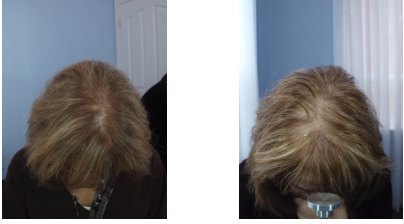
However if you are a woman seeking to fill in the “part” the extra 10,000 hairs as well as the quality of the hair is clearly worth it. Even with this poor photo, you can see the after on the left has filled in the part and the quality of the hair is improved as well. This photo was supplied to me by a doctor friend in Canada of one of her actual patients.

Patient Requests for Viviscal

An interesting event occurred around the same time. A number of our existing patients began asking us to carry the professional version of Viviscal, a hair supplement known for promoting hair health and growth. While supplements like Viviscal can be helpful for supporting healthier hair, they aren’t magic pills that stop balding or regrow lost hair, especially in cases of advanced hair loss. But that was probably the only time patients asked us to carry a product. I cant speak to head to head results vs Nutrafol which is currently advertising a lot today.

The Gold Standard: Hair Transplants

Despite the various new treatments available, the reality is that hair transplants continue to be the most effective and permanent solution for significant hair loss. Just today, a dear friend of mine is in Florida with her son, who is undergoing hair transplants. This reinforces what I’ve long known—while newer options like laser therapy, PRP, and supplements have their place, hair transplants remain the gold standard. They offer permanent, natural-looking results and have stood the test of time, especially as non-surgical treatments have yet to prove themselves on a large scale.

Why Hair Transplants Are Still Popular

  1. Permanent Results: Unlike topical treatments or medications, hair transplants provide a permanent solution to hair loss. The transplanted hair follicles are typically resistant to the hormone DHT (dihydrotestosterone), which causes balding in androgenetic alopecia, ensuring that the hair continues to grow even after the procedure.
  2. Natural Appearance: Advances in transplant techniques, particularly Follicular Unit Extraction (FUE) and Follicular Unit Transplantation (FUT), have made it possible to achieve very natural-looking results. The precise placement of individual follicles makes it nearly impossible to detect a transplant.
  3. Customization: Hair transplants can be tailored to each individual’s hair loss pattern, ensuring that the density and hairline design fit naturally with the person’s overall appearance.

Modern Hair Transplant Techniques

  1. Follicular Unit Extraction (FUE):
    • In this method, individual hair follicles are extracted one by one from the donor area (typically the back of the head) and transplanted into the balding areas.
    • Advantages: Minimally invasive, no large scars, faster recovery, and less discomfort.
    • Disadvantages: More time-consuming and often more expensive than FUT because it requires more precision.
  2. Follicular Unit Transplantation (FUT):
    • This technique involves removing a strip of scalp from the donor area, dissecting it into individual hair follicle units, and then transplanting them to the balding areas.
    • Advantages: It can cover larger areas in a single session and may be more cost-effective for extensive hair loss.
    • Disadvantages: Leaves a linear scar in the donor area, which can be visible if the person chooses to wear their hair short.
  3. Robotic Hair Transplants (ARTAS):
    • Some clinics use robotic systems to assist in FUE procedures. The robot helps in identifying and extracting the healthiest hair follicles for transplantation, potentially increasing precision and reducing the time needed for the procedure.

Non-Surgical Alternatives on the Rise

While hair transplants remain a reliable option, non-surgical treatments are becoming more popular due to their minimally invasive nature, with treatments like:

  • PRP Therapy: Involves injecting platelet-rich plasma from your own blood into the scalp to promote hair growth.
  • Low-Level Laser Therapy (LLLT): Non-invasive laser treatments that stimulate hair follicles.
  • Medications: Options like minoxidil (Rogaine) and finasteride (Propecia) are still widely used to slow down hair loss and promote hair regrowth.
  • Exosome Therapy: The use of exosomes to stimulate hair regrowth is an emerging treatment, showing promise in rejuvenating hair follicles.

Conclusion: Personal and Professional Lessons

Through both personal and professional experiences, I’ve learned that while the world of hair loss treatments is constantly evolving, the fundamentals remain the same. Hair transplants are the gold standard because they provide lasting, visible results—especially for those who are losing hair at a rapid rate. While the convenience and promise of newer technologies like low-level lasers and supplements can be appealing, they often fall short for those seeking a real transformation.

As someone who has played the role of guinea pig and offered the latest in hair loss solutions, I can say with certainty that when it comes to hair loss, there is no one-size-fits-all solution. But for those looking for something tried, tested, and proven, hair transplants still reign supreme. To be continued. Very intrigued to follow the latest developments in stem cell genetic therapy and exosomes.


The Cage, the Guard, and the Key in Your Pocket

We all live in cages that we’ve built for ourselves—cages of old beliefs, fears, or shame that hold us back from who we truly are or could become. These cages may not always be obvious, but they exist within the stories we tell ourselves: “I’m not good enough,” “I can’t do that,” or “I don’t deserve better.” We may even come to accept these limitations as a part of our identity. But here’s the thing: we are both the prisoner and the guard.

A friend of mine, Fernando Valencia, shared a profound metaphor that resonated with me deeply. We are the guards of our own cages, holding the keys in our pockets. Think about that for a second. We have the power to unlock these cages at any time, but so often, we continue to stand guard over them, protecting the very limitations that trap us. Why? Because stepping out of that cage means confronting what’s beyond—sometimes it’s unknown, other times it’s old wounds, guilt, or shame we haven’t faced.

I’ve carried my own shame around certain moments in my life, and this metaphor hit me hard. It made me realize that I’ve been standing at the cage door, key in hand, but too focused on guarding the past to set myself free. And the truth is, we can’t move forward until we stop holding ourselves hostage to those old feelings or beliefs.

What’s inside your cage? Maybe it’s a belief from childhood, something someone told you that stuck, or an experience you feel you can’t move beyond. Maybe it’s fear—fear of failure, fear of being seen, or fear of not being enough. Whatever it is, it’s likely you’ve been standing guard, believing it’s protecting you. But the irony is that the cage limits you, and the protection is just an illusion.

The key has been in your pocket all along.

This idea isn’t new. Philosophers like Jean-Paul Sartre have touched on it with the concept of “bad faith,” where we limit ourselves by deceiving ourselves into thinking we don’t have the freedom to choose. Spiritual teachings like Buddhism talk about attachments that create cycles of suffering, a form of self-made prison. Even more recently, thinkers like Orlando DeFranco have explored the concept of self-imposed limitations. But here’s the distinction: No one has gone as far as to say that we not only hold the key, but we are also the guard standing at the door. That’s the twist, and it’s what I want to emphasize here.

This distinction—that we guard our own cages while holding the key in our pocket—strikes at the heart of what keeps so many of us stuck. We’re not waiting for someone else to free us. The power has been in our hands the whole time.

So how do we start unlocking these cages? It begins with awareness—recognizing when we are both the prisoner and the guard. Once you see that, you can decide to reach for the key. Sometimes that means facing what’s uncomfortable or confronting old feelings of shame, guilt, or fear. But that’s where freedom lies—on the other side of acknowledging that you hold the power to change.

Here’s what I’m reminding myself, and maybe it will resonate with you too: The cage isn’t real, and I can walk out anytime. The key is in my pocket.

So, what’s holding you back?

Truth vs Lies

The Sad Truth: Lies Often Outshine the Truth

There’s an old Armenian saying, “Coc tzoon e doc chee menar,” meaning “you can’t hide the shit under the snow.” I’ve seen this play out in real life—like watching men in the advertising industry take millions in kickbacks, decades later some did end up in jail. But many others get away with it. So, what do we do about this?

First, let’s get real. Take politics as an example. Both sides can’t be right, yet they say things that are completely opposite. One side claims Trump is authoritarian and will imprison his rivals, while the other says the Democrats are doing just that without cause. Hopefully, I didn’t trigger you too much with that example. The point is to talk about influence, lies, and truth.

Understanding Influence: How Repetition Shapes Beliefs

If your friends believe the opposite of what you do, they aren’t crazy. They may have spent 30 years hearing a different version of events every night on the news. Imagine that—30 years times 365 days. Even if they just watched the news for one minute a day, they’ve heard 10,000 different “facts” than you have.

If you’ve never surfed to an opposing viewpoint, shame on you. What if they watched or listened for 30 minutes or an hour a day? Now, multiply that by 60. It’s entirely possible they’ve been exposed to 100,000 differing facts from you.

The Power of Repetition: Lies vs. Truth

In my industry, I see a big chain of aesthetic providers claiming they are less expensive and more transparent. Yet, after all their “sales” and “bonuses,” their final price is higher than ours. And we are a safe private doctor’s office with decades more experience offering lower, fair transparent pricing without phony untrue sales. It pisses me off that they blatantly lie about their pricing.

So, why are they successful? Because they say it relentlessly. It’s the old adage: Say a lie often enough, and it becomes accepted as truth.

But what about the truth? How often do we need to say it? If someone has already made up their mind after hearing something 10,000 times, or in politics, 100,000 times, or even a million times—can the same number of truthful messages counter it? what about twice as many? I think we all know the answer to that. Once someone is predisposed to an idea, especially if they heard it first, it’s nearly impossible to convince them otherwise.

The First to Market Advantage

This is why the first to market often prevails forever. Just read The 22 Immutable Laws of Marketing by Trout and Reis. A few quick examples: First college? Harvard. First cola? Coke. Second is often forgotten or seen as worthless. PS the second college was William and Mary.

The Importance of Critical Thinking

So, what’s the takeaway? Be aware that what you think are truths might not necessarily be true. It might just be something that was repeated so often that you believed it must be true. Use your critical thinking. If you lived 500 years ago, would you have been one of the people who put Galileo on trial for saying the Earth is round?

Common sense is your ally. If something doesn’t pass the smell test, it might be a lie. Trust your gut—the one that has guided you away from bad decisions in the past and encouraged you to pursue your dreams.

A Final Thought: The Snow Will Melt

Don’t waste your energy arguing with people, or even worse yet friends or family, who have an unshakeable belief in something they have heard 100,000 times. You can’t hide the shit under the snow. I just hope the snow melts soon enough for us to see the truth before it’s too late. PS if you remain friends we can all have a good laugh about it in the next few years or decades, assuming we havent all been blown up or fried by global warming.

Final thought. Politics was probably a poor example on my part because it goes right to the core of our deepest wants, according to the Sedona Method. 60% of us or 30% on each side literally believe that the other guy is too weak or too strong and will get you killed.

Getting Started is Simple Physics

I can’t tell you how many things I’ve read because I, probably like everyone, have trouble getting started on tasks. In fact, I was just reading yet another article that proposed the usual BS: breaking tasks into smaller parts and other hints we’ve all heard so often that if they actually worked, I wouldn’t be reading yet another article on the topic—nor would you. Maybe the solution is a lot simpler and staring us right in the face.

Not only that, but I would bet real money you’ve experienced this phenomenon—or should we call it a fact? It’s a fact, no different than gravity. But let’s not only use it but embrace it on every level. It’s simple physics.

What if it’s truly that simple? It’s true in the universe. Ask yourself: How many times have you said, “I’ll just put this one thing away,” and 15 minutes later, you’ve embarked on cleaning the whole room? How many times have you procrastinated doing your taxes, week after week, in February after you get your W-2? In March, you finally said you’d begin downloading some 1099s, and then realized you were all done and just needed to send them to the accountant? How many times have you said you’d just walk one block and found yourself walking a mile? How many times have you said you’d give up sugar, alcohol, or whatever for just one day, and it became a lifetime habit? ““A body in motion tends to stay in motion” 

In fact, that’s what AA is based on. Life is a lot simpler than we make it out to be. By the way, guess what all the books on habits are based on? It’s all the same: do it once or for a few moments, and you’re often off to the races.

But don’t forget another part of the first law: a body at rest will tend to stay at rest. Or closer to how it’s written: Newton’s First Law of Motion states that a body at rest will remain at rest unless acted upon by an unbalanced force. This law is also known as the law of inertia.

So, you have to apply a disproportionate amount of force to get back in motion.

Have you also noticed how many of your 5-minute breaks turned into an hour? Talking to the guys here (I know you’re the gamers)—you took a break after working for an hour or a few hours (probably because you’re working from home), then decided to play one video game, and it turned into three or four? Or what about turning on the TV to catch up on the news, only to hear something designed to trigger you, and you just had to share it with a friend? (Okay, that one applies to all the myriad sexes.)

But don’t take my word for it. I’m merely asking you to look back on your life, even the past few weeks, months, or years, and ask if Newton’s Law applies to you. How many times have you gotten started on something difficult simply because you started—aka got in motion? I think it’s that simple. It applies to cleaning, decluttering, working on difficult things, and even the creative process. I’m pretty sure creatives are told to just start throwing out random ideas, thoughts, or paintings to see what evolves. Let me know with a comment.

PS: My previous idea a few posts ago was to do something for just one minute. That worked for me. My posture is almost perfect—better than it was even going back to my twenties. All I do is, for a moment—not even a minute—apply what the physical therapist taught me: stick your chest out and up a bit to open up your chest and relieve your back. The chest is where we get tight, and that rounds our shoulders. I often look to the right and left, up to 90%. That range of motion has also improved. I often grab the door frame to open up my shoulders, and on and on.

The point is, as in that post, even adding up one minute a day here and there—or, God forbid, a few times every hour (assuming you’re awake 18 hours a day, that’s 54 minutes a day)—I’ve now exceeded the amount of time you work out. And I would bet getting your body in motion all day is probably more beneficial than going to the gym for an hour and being a slug the rest of the day.

Back to the point of this blog—it’s actually a corollary to the one-minute idea. If you want to get something big done that requires sustained action, simply start. Or maybe it doesn’t require sustained action. But be cognizant that all you need is the initial push. Newton’s law is obvious. Does it take more motion to continue watching TV or scrolling on your phone, or does it require a certain amount of push just to get up out of bed or off your chair? It’s almost comical that I’m even posing this question.

Perhaps I need to hook up a pulley with a device to measure how many pounds of force it requires to lift your hopefully not-too-heavy body. So be cognizant of how many pounds of real physical and mental strength it takes to get started. And while you’re at it, how about making a habit of stretching your neck too? Otherwise, X, Z, and the youngest ones are all going to be hunched over, looking like 90-year-olds by the time they’re 40.

Sorry if this is too much information. I still have a functioning brain that brings other good things to mind when I try to convey even the simplest idea. So to recap: just get in motion. Hmm, what would be a good saying for that? Maybe “just do it”? How about “just start doing it”?

I would bet that might catch on. Just start doing it. Just start doing anything. Sure, the new AI, website, or article is going to hit some bumps and require a bit more work, but just start doing it. And if it ends up only being a minute, but you try every hour, that’s 18 minutes a day. And if you weren’t using a stopwatch, I would bet it might turn into an hour.

But one more time: the point of this is just get in motion. Often it’s actually easier to stay in motion.

PS It actually takes energy to stop a body in motion. Chew on that one. What if you became a perpetual motion machine. We have had days like that. We all certainly have had hours like that where we were on what we call “a tear” ripping through and getting an enormous amount of things done.

Self Confidence: Outdated Beliefs: vs taking Responsibility for Who You Are Today

We all carry messages from our past that continue to influence us today—whether we realize it or not. These messages often come from our parents, teachers, or other significant figures in our early lives. Even church which teaches humility. Sometimes, these beliefs are so ingrained that we don’t even question them, even when they seem absurd in hindsight. But holding onto these outdated beliefs can be a form of self-sabotage. To articulate, “I am this way because of my parents” or “what someone said in the past” is crazy talk.

How many times have you heard a stupid story told by a friend where they were so humiliated or embarrassed at school? Let me help you out a little, that too is crazy talk. You cant go back to that now dead teacher and ask her not to make fun of you or whatever happened and change it.

There is evidence that every time we recall a memory it changes. So it is more likely that you can modify or change your memory because you literally do it anyway, every time you recall a memory.

For example, I vividly remember how my parents never gave compliments. One day, my mother came home from tennis, complaining about her partner who constantly praised her children. She told me it was obnoxious, and I questioned, “What’s wrong with that?” Those children will grow up believing in themselves, landing the best jobs, finding great partners, and living wonderful lives. But for my parents, compliments were taboo, sacrilegious and absolutely non existent.

In business, I relinquished my salary and went into sales to be paid commission only because I didnt want to be the idiot son since it was my father’s business. I acquired three to five million in sales, for many years. For perspective commissions at that time went as high as 25%. I also took over as CEO. I hired the top technical expert from California. We went on to help write the standards for PDF and transmitted the first PDF to Time magazine. I hosted educational seminars at the Harvard Club for the advertising agencies, bringing in companies like DuPont, Adobe, and Time Magazine to educate. Despite these accomplishments, my father never gave me a single compliment. The closest I got was hearing from my CFO that my father mentioned once that he thought I was doing a good job.

It’s easy to fall into the trap of thinking, “If only I had received more praise, I’d have more confidence today,” or actually saying, “This is why I am the way I am.” But that’s crazy talk. At some point, we have to take responsibility for who we are now. We can’t change the past—unless you’re willing to exhume some bodies—but we can change who we are today, how we let it affect us, or totally discard those notions.

There are a few ways to move beyond these old messages:

Take Responsibility: First and foremost, take responsibility for who you are today. No matter what happened in the past, you have the power to shape your future. And you choose your identity every single day when you wake up.

Play with Hypnosis or Subconscious Techniques: If you’re interested, you can use techniques like hypnosis to reprogram your subconscious mind. There are some great methods for imagining or rewriting your past.

Imagine a Different Past: You can also use a technique inspired by Dickens’ “A Christmas Carol.” Just as Scrooge revisits Christmas past, present, and future, you can imagine a different past for yourself—one where you received the praise and recognition you deserved. Simply pretend, imagine a different childhood. Ask yourself, what if they said I was the smartest, most capable, attractive person that everyone wants to work with and or be with, how would you feel?

Ultimately, we need to get over these outdated beliefs and take control of our lives. The past may have shaped us, but it doesn’t have to define us.

PS Dont forget the most famous, successful iconic people of all times do not have any initials after their name. In case you forgot, a few notable drop outs, Steve Jobs, Michael Dell, Bill Gates, So if you even have a college degree you have more status recognition or diplomas then quite a few and if you even graduated High School you have one more degree than Richard Branson and Quentin Tarantino.