Inside the ($30–$90+ Billion) Business of Aesthetics: A 20-Year Story of Innovation, Hype, & Real-World Practice

By John Aslanian

Aesthetic Medicine Practitioner | Former Graphic Arts Executive & Contributor to PDF Standards – Precision Aesthetics

The global aesthetics market has quietly grown from a niche corner of medicine into a mainstream, multibillion-dollar industry. When surgical and non-surgical aesthetics are combined, current estimates range from roughly $30 billion to north of $90 billion, with some analysts projecting $150–$200 billion by the mid-2030s.

Surgical procedures—facelifts, liposuction, body contouring—remain high-ticket but are limited by recovery time, risk, and patient tolerance. Non-surgical aesthetics, by contrast, is where the real growth has occurred: repeatable treatments, lower risk, and far broader consumer adoption.

I’ve spent the past two decades in New York—arguably the richest and most competitive aesthetics market in the world—focused exclusively on the non-surgical side. We were likely among the first practices to go 100% non-surgical, recognizing early that many patients wanted results without surgery, rather than being a plastic surgery practice that simply added Botox and fillers.

Today, forecasts suggest the non-surgical market alone could more than double—from roughly $19.5 billion in 2025 to over $40 billion by 2031, with global estimates for injectables and energy-based devices exceeding $80 billion.

2001: The Beginning — Just Botox and Fillers

Twenty years ago, non-surgical aesthetics was simple. There were essentially two tools: Botox and dermal fillers. They offered predictable, short-term results, but there was no real technology behind rejuvenation—no way to address the structural aging of skin, only temporary fixes for wrinkles or volume loss. That changed with the first meaningful device breakthrough.

Thermage: Collagen Without Burning the Skin

In 2001, the first true aesthetic “device” entered the market. Radiofrequency (RF) energy was introduced as a way to heat deeper layers of skin without damaging the surface. For the layperson, the analogy is simple: it’s the frustration of trying to brown chicken skin in a microwave. Thermage figured out how to harness that energy and direct it precisely to the collagen layer, tightening skin and stimulating collagen production without burning the surface—and patented the approach.

Our medical director, Dr. Lisa A. Zdinak, along with Danielle Braz, was directly involved in testing and validating the technology. At the time, we shared space with one of New York’s most respected plastic surgeons. His verdict was blunt: “It’s a toy.” Within a few years, that same surgeon was asking us to tighten and build collagen before performing facelifts.

2009: Exilis and the Next Wave

Another inflection point came in 2009 with the introduction of Exilis by BTL. Dr. Zdinak was lecturing on Thermage at the Monte Carlo Anti-Aging Congress, presenting one of its most meaningful upgrades. At that conference, after meeting BTL’s president—now best known for Emsculpt—we were tasked with bringing the first Exilis system to the United States. It combined radiofrequency and ultrasound to address both skin tightening and fat, reinforcing the idea that multi-layer treatment would define the future of non-surgical aesthetics.

The CoolSculpting Phenomenon—and Its Problems

In 2016, the industry experienced one of its biggest marketing explosions with fat-freezing technology, most notably CoolSculpting. The concept was elegant: kill fat cells by freezing them. The company backed that idea with an estimated $100 million marketing budget in a single year, rivaling legacy consumer brands. Suddenly, even my male friends in Tennessee—far outside the traditional aesthetics demographic—were seeing billboards and knew the term. Clinically, however, the reality was far more complicated.

When fat cells are destroyed via freezing, the body doesn’t automatically retract surrounding tissue. The result can be loose skin and a deflated appearance. Worse, a rare but real complication—paradoxical adipose hyperplasia—occurs in roughly 1 in 100 patients, causing fat to grow back harder, denser, and larger, often requiring surgical removal.

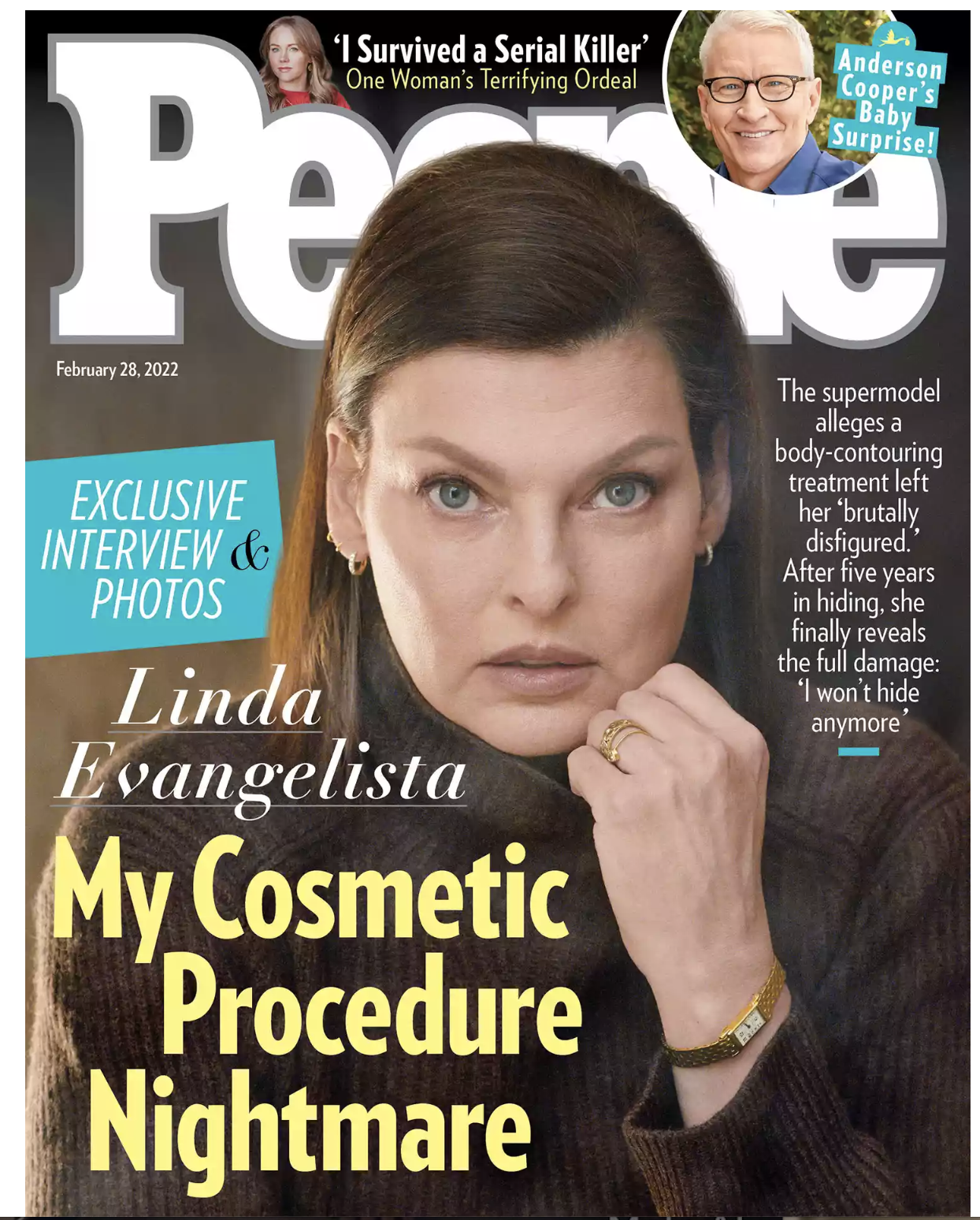
Despite the millions in revenue it generated for those who offered it, it was a hard pass for us. Public perception shifted after a high-profile case involving Linda Evangelista, reinforcing a lesson this industry repeatedly learns: marketing momentum can outrun clinical reality.

2018: Muscle Stimulation Goes Mainstream

In 2018, another category exploded with the introduction of Emsculpt, a muscle-stimulation platform. Fueled by social media, professional athletes, fitness influencers, and pop stars openly showcased six-pack abs achieved without traditional workouts. For the first time, non-surgical aesthetics wasn’t just about appearance—it was about strength and function, including measurable benefits like core engagement and back support. Treatment volumes and social media impressions were staggering, pulling an entirely new audience into the industry.

2020–2025: Microneedling Meets RF—and Its Dark Side

Around 2020, another surge followed with devices combining radiofrequency and microneedling. Adoption accelerated rapidly and peaked around 2025. But delivering RF energy below the skin’s surface—particularly in unskilled hands—introduced real risks, including scarring and tissue damage, prompting recent FDA warnings.

The Core Tech Stack

Despite the constant stream of “revolutionary” devices, the underlying technology hasn’t fundamentally changed. It still comes down to a few energy categories under different brand names:

•  Radiofrequency for deep tissue heating and skin tightening

•  Muscle stimulation using electromagnetic energy

•  Acoustic wave therapy, adapted from physical therapy, effective for cellulite

•  Ultrasound, useful on the body but riskier near facial nerves

•  Lasers, primarily superficial

Most new platforms are variations on these themes, marketed as breakthroughs despite incremental differences.

Business Realities: Bottles, Bills, and the One-Off Model

Injectables operate on tight margins. At $300–$600 per unit, providers must choose between being generous and eroding profit, or conservative and risking unhappy patients. Unlike traditional B2B businesses, aesthetics has no contracts. Every day starts at zero. Patients are in and out within an hour, and if no one walks in tomorrow, revenue stops tomorrow. Even surgery doesn’t solve this. Facelifts costing $30,000 to $250,000 don’t stop aging. Collagen and muscle decline roughly 2% per year after age 40, meaning even the most expensive surgery fades with time.

Manufacturers as the Hidden Competitors

One of the biggest challenges in aesthetics isn’t other practices—it’s the manufacturers. Devices costing hundreds of thousands of dollars are quickly followed by “upgrades” promising marginal gains. Direct-to-consumer marketing trains patients to demand the latest version, forcing providers onto a technology treadmill. Many devices now include planned obsolescence—limited pulse counts, mandatory service contracts, or pay-to-play models that create a permanent cost per treatment for the practice.

The Bottom Line

Aesthetics sits at the intersection of medicine, consumer desire, and marketing hype. Clinical innovation has been incremental, not revolutionary, despite what advertising suggests. Friends regularly send me the “next big thing.” It’s almost always a variation on energy sources discovered years ago. The winners in this business aren’t defined by who owns the newest machine, but by judgment, restraint, experience, and business fundamentals.

Old truths still apply. If a tree falls in the forest and no one sees it, it doesn’t matter how advanced the technology is. With devices capable of generating $1,000–$4,000 an hour, many assume aesthetics is an easy entry. It isn’t. Unlike B2B, you can’t put people under contract. The real challenge—now more than ever—is building a predictable, sustainable stream of clients. And no machine can do that for you.

About the Author

John has spent two decades running a non-surgical aesthetics practice in New York City. He also ran a notable graphic arts company retouching iconic brands and women—digitally doing what his current company now does physically—and contributed to developing and validating early PDF standards.

Precision Aesthetics | 10 West 74th St Suite 1A, New York, NY 10023 | http://www.PrecisionAestheticsMd.com

Not sure which treatment is right for you? Book a free consultation at Precision Aesthetics. We’ve been doing this for 20 years—honestly it aint easy unless you have been literally doing it for 20 years. Visit http://www.PrecisionAestheticsMd.com or call us 212 799 1411. A staff member with 20 years experience will answer your call 7 days a week. You might even get me.
NAD, NMN, NR, and Injectable NAD: What Actually Makes Sense?

If you spend any time around the longevity world today, you will quickly hear about Nicotinamide adenine dinucleotide (NAD) and the supplements that are supposed to raise it.

People talk about NAD like it is the master switch for aging, energy, brain function, and metabolism. Podcasts, clinics, and supplement companies all have their version of the story.

And like most things in health and longevity, there is some real science mixed with a lot of marketing.

Let’s break down what NAD actually is, what NMN and NR do, and where injectable NAD fits into the picture.

What NAD Actually Does

NAD is a molecule found in every cell in your body. It plays a central role in cellular metabolism and energy production.

Without NAD, your cells cannot efficiently convert food into usable energy.

NAD is also involved in:

• mitochondrial function
• DNA repair
• cellular stress responses
• activation of longevity pathways including Sirtuins

One of the reasons scientists became interested in NAD is that levels decline with age. Some research suggests that NAD levels may drop significantly between youth and older age.

That decline has led researchers to explore ways to restore NAD levels in the body.

Why People Don’t Just Take NAD Directly

You might think the simple answer would be to just take NAD itself.

The problem is that NAD is a large molecule, and when taken orally it does not easily enter cells intact. The body tends to break it down before it can be used.

That led researchers to focus on molecules the body can convert into NAD. These are called NAD precursors.

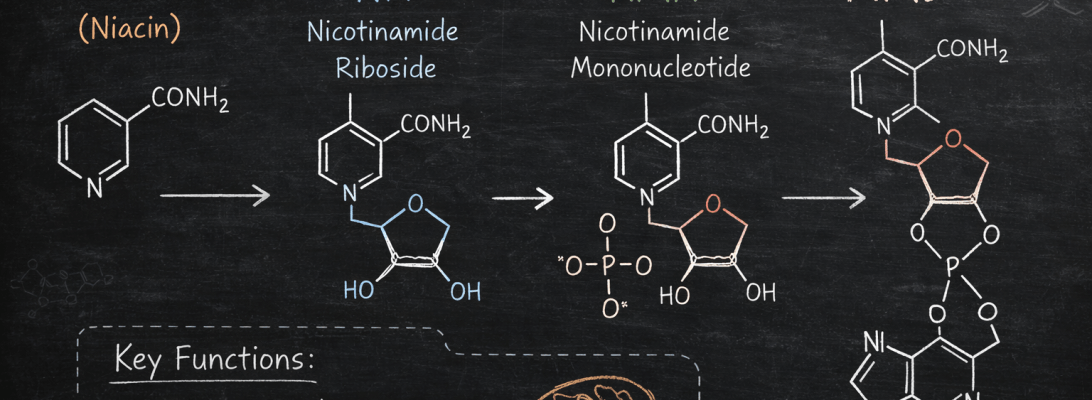
The two most widely discussed are Nicotinamide mononucleotide (NMN) and Nicotinamide riboside (NR).

Both of these compounds exist naturally in the body and are part of the pathway that produces NAD.

Very simply, the pathway looks like this:

Vitamin B3 → NR → NMN → NAD

Taking NMN or NR essentially provides the body with raw material to rebuild NAD through its normal metabolic pathways.

What the Research Shows So Far

The science around NAD and aging is fascinating, but it is still developing.

Animal studies have shown that raising NAD levels can improve mitochondrial function, metabolism, and certain markers associated with aging.

In humans, research has shown that NMN and NR do increase NAD levels in blood.

However, the big question remains unanswered.

Does raising NAD actually slow aging or meaningfully improve long-term health?

The answer today is: we don’t know yet.

The research is promising but still early.

The Rise of Injectable NAD

Because NAD itself is such a critical molecule, many wellness clinics now offer IV NAD infusions or injections.

The idea is that if NAD is delivered directly into the bloodstream, it could quickly boost cellular NAD levels.

These treatments can cost several hundred dollars per session, and patients often report feeling:

• increased energy
• improved mental clarity
• improved mood
• reduced fatigue

There is even some exploration of NAD infusions in addiction medicine during detox programs.

But scientifically, the picture is still unclear.

Even when NAD is injected into the bloodstream, it may still be broken down into smaller components before cells use it. In other words, the body may end up rebuilding NAD through the same pathways it would use with NMN or NR.

Another interesting detail is that NAD infusions often have to be administered very slowly. If the drip runs too fast, patients commonly experience flushing, chest pressure, nausea, or abdominal discomfort.

A Personal Perspective

I have been around the supplement and longevity world for a long time.

One of my close friends is Oz Garcia, who has spent decades advising actors, athletes, and people who are extremely serious about their health.

Oz has seen just about every supplement trend come and go.

When I asked him about NAD injections, his answer was simple and very practical.

He suggested that instead of paying $200–$250 per session for injectable NAD, it makes more sense to take NMN or NR powder and allow the body to build NAD naturally.

In his view, the metabolic pathway already exists. The body knows how to convert these precursors into NAD efficiently.

And from a cost perspective, it is dramatically cheaper.

The Bigger Picture

The NAD story highlights something interesting about the longevity field.

We are learning that aging is closely tied to cellular energy systems, mitochondrial health, and the body’s ability to repair itself.

NAD sits right in the middle of those systems.

But it is unlikely that one molecule alone will solve aging.

The strongest drivers of cellular health are still the basics:

• exercise
• metabolic health
• sleep
• nutrition
• stress management

Supplements like NMN or NR may support those systems, but they are not magic bullets.

My Approach

My personal approach is fairly simple.

I try to combine:

• the emerging science
• advice from people I trust who have spent decades studying nutrition
• and a little bit of common sense

When someone like Oz Garcia — someone who has been working at the highest level of nutrition for decades — suggests using NMN or NR powder instead of expensive NAD injections, that makes sense to me.

It respects the biology of how the body works, and it respects your wallet.

In the end, my philosophy has always been the same.

Blend good science, practical experience, and cost awareness.

That combination often leads to better decisions than hype alone.

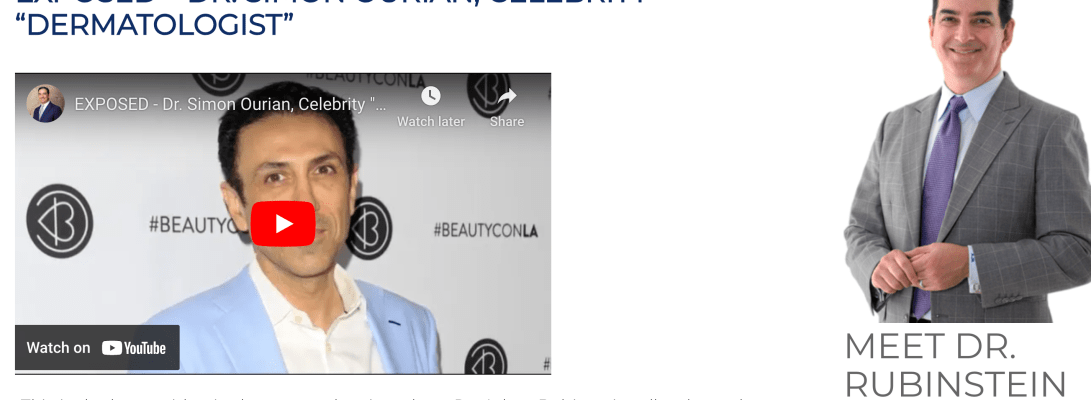
Check out this shit show!

Coolsculpting Side effects

Exposed Dr Simon Ourian.

They are both wrong. Coolsculpting by the manufacturer’s own admission does cause paradoxical hyperplasia 1% of the time. It is a horribly disfiguring side effect that causes a hard mass that has to be removed surgically. But it gets worse. You have to wait a year and it has to be removed surgically.

I am not a doctor. But our medical director, Dr Lisa Zdinak read about the side effects and absolutely banned any remote idea of subjecting her patients to that risk.

100% transparency. Because I created this to educate not to sell. There are around 100 different technologies that use ultrasound and radio frequency that will help you with body contouring and fat melting. So you can go to whoever you trust that is in your locale. Just choose a radio frequency or an ultrasound device. Or better yet choose a device that offers both. like Exilis, so you get body shaping, fat loss and tighter skin with just one treatment. Or you can choose an RF, muscle building, fat melting device like Emsculpt Neo. The only caveat there is you will add muscle, which most of us need. Its just common sense. But to be honest I gained 10 pounds after covid, but added 4 inches to my waist. How much of that is muscle? I dont know. But in retrospect, a few Exilis treatments, instead of all Emsculpt might have benefitted me.

Coolsculpting causes paradoxical hyperplasia, admitted by them at least 1% of the time. Check out Linda Evangilista’s experience. She sued them for $50 million dollars for disfiguring her. Its truly a no brainer. Do the research and make your own decision. But it is a no brainer. Smoother tighter skin, or more loose skin and a risk of paradoxical hyperplasia. Maybe I should make this my mission.

About me. So I was part of the team at Precision Aesthetics to bring the first radio frequency and ultrasound device to NY, Exilis. It melts fat and tightens skin simultaneously. Coolsculpting at best, when it works, causes more loose skin. I have answered 3 phone calls a day for 17 years. The one person who said they got good results, gasped when I said great. Because it was only in that moment she realized that was when her loose skin issues began.

PS I was so upset in 2016, when we passed up on this technology because the dangers were articulated on their own website, that I created two websites to warn people. Coolsculpting.nyc and Fatfreezing.info.

But alas you cant fight 100 million dollars a year in advertising and celebrity endorsements, armed with merely the truth, and better safe results.

Most of us see ourselves less than what we truly are?

The Imposter Syndrome

What if what we think of as our imposter is actually our real identity? And what we think of as our real identity is just miles below what we truly are—and how others see us?

I see this in myself and in many of my friends—really accomplished people in their respective fields. And yet, I don’t think I have a single friend who truly sees how great they are. Let’s face it—we’ve all accomplished great things. We are doing things that are on par with some of the most famous people in the world. The only difference between us and “them” is that they have no humility. Or maybe it is us that is too humble.

I see this same pattern in all my friends. They’ve done incredible things—helped people find homes, in NJ Miami, secure financing, build websites more beautiful than those of the most prestigious studios in Beverly Hills. And yet, they don’t see themselves as remarkable. The only difference between them and those with millions of followers? Their opinion of themselves.

I see many doing astonishing things—raising an autistic child completely drug-free against doctors’ orders and standard of care, creating awards shows for legends like Quentin Tarantino and Robert De Niro, building things, helping people, coaching people, creating new paradigms in real estate—residential, commercial, even wholesale. The list is endless.

We all grew up with parents or guardians who, even with the best intentions, warned us about dangers to protect us. But in today’s world, there are no lions, tigers, or bears roaming the streets of New York City. Instead, we fear humiliation, rejection, or failure. We hesitate to start businesses, share our opinions, or take bold chances. And yet, the ones who do—who see themselves as capable—often meet with obscene success.

Most of us, aside from a few creatively or scientifically gifted individuals, have roughly the same abilities. The only real differentiator is how we see ourselves—or more precisely, who we believe ourselves to be.

The billionaires brag all the time about ordinary things. Their only difference is that they shout to the world that they are the best at what they do. I’m not talking about physical achievements, which can be easily measured. I mean in real estate, financing, law and other every day industries and professions.

In mine the gap is extraordinary. I can’t tell you how many lectures I’ve attended where a doctor is promoting CoolSculpting. Now, CoolSculpting is finally being recognized for the dangers it poses. In fact, supermodel Linda Evangelista sued them for $50 million. I was horrified by this technology back in 2016 and created two websites—coolsculpting.nyc and fatfreezingnewyork—to warn people. Yet there are still over 5,000 doctors still offering it, when there are dozens of safe radiofrequency alternative that dont post the risk of disfigurement and actually have a side effect of smoother tighter skin. 

Every day, I talk to people who have gone through unnecessary procedures because they didn’t trust their own judgment. Today, I spoke with a young woman who got so much Botox that she now thinks she needs a brow lift. That’s insane. Too much Botox—shame on that doctor. The Botox will wear off in three to five months, and now he is recommending a surgery? A brow lift could permanently disfigure her. Instead, we’ll likely reinvigorate her muscles with Emface.

I’ve done many things that, by any objective measure, I could consider myself world-famous for. In my old career in Graphic Arts, I lectured at the Harvard Club in New York, helped create the standards for PDF, and transmitted the first digital ad to Time Magazine. But

The only difference between you and the ones with millions of followers is how you see yourself. PERIOD. No one can see you higher than you see yourself. And often, we see ourselves much lower than everyone else does.

It’s time to shift that perspective. PS kudos to Anthony Robbins, he alluded to attaching ourselves to our “imposter” version of ourselves.

Your Life is ONLY what you are thinking!

Not the first person to say this. But I would like to amplify it. Kudos to all of the people in history, who have articulated it. Anthony Robbins, Your experience of life is simply what you are thinking. Actually just went through his top 20 quotes, nothing on this. So sorry Tony you didnt say it.

I Apologize: for Not Sharing the Beauty Secrets I’ve Learned Over 20 Years

Before and After Thermage

In an ultimate act of selfishness, I’ve been holding back. I was worried—worried that someone might criticize me, that someone might not like me. Protecting my feelings took priority. I haven’t shared the magic I’ve learned about beauty over the past 20 years. Plus, I needed to see 17 years of results to be positive about what the treatments have done for me. Our thousands of clients will never tell. They are too high profile. Let me tell you what’s really going on in the world of non-surgical beauty, and why so many are getting disfigured, overfilled with fillers, or over-paralyzed with Botox.

Non-surgical skin tightening is magical, and we’ve mastered it. Over the years, we’ve achieved results that others can only dream of—results backed by objective proof.

Conversations with Legends

A few years ago, I was chatting with Dr. Brian Kinney, one of the most famous Beverly Hills plastic surgeons (may he rest in peace). During our small talk, I mentioned how many Thermage treatments we perform and shared our little secret: we give patients a painkiller so we can safely reach the highest, most effective temperature. This ensures the best results for a one-time treatment. He admitted something surprising: he’d never trust his technician to do that.

But that’s where we’re different. Danielle, our technician, has delivered more Thermage treatments than anyone in New York for multiple years. We’ve invested over $150,000 annually for years just on the treatment tips. Why? Because every patient deserves great results with zero downtime. Our treatments don’t even cause a slight sunburn. I have videos of myself driving home after my sessions, ready to attend a party if I wanted to. That’s how confident I am in our process.

Innovating Thermage Treatments

Let’s talk numbers: With the NXT device we used 1200-pulse tips for full face and neck treatments. While most others used 600 pulses—not even half a treatment! You dont have to be a geek to understand half a treatment isnt worth much, especially since the results are additive. PS in case any geeks are looking to find fault, the numbers are different with the Newer FlX which we do offer. We’ve gone further, offering two treatments a year (a protocol the company doesn’t officially recommend but that has proven results). The results speak for themselves. Ask the folks at Thermage—Danielle’s track record is unmatched.

Carboxytherapy: Magic for Stretch Marks

While we’re on the subject of Beverly Hills plastic surgeons, let me address a comment from a particularly famous one who’s on not on one but two TV shows. He claimed Carboxytherapy isn’t safe. Want to laugh? Carbon dioxide (CO2) is the most commonly used gas for insufflation during laparoscopic surgeries. Quarts of CO2 are used daily on each patient in operating rooms. We use barely a drop for Carboxytherapy to treat stretch marks. And while you were reading this you exhaled Co2, thats known as breathing. It is something we all learned in grade school. I dont comment on things I dont know.

Here’s how it works: the stretch mark is broken up with a needle, which also delivers a tiny drop of CO2. This encourages circulation and stimulates the area for healing. It’s pure magic. Clearly, our TV celebrity physician has never stepped into an operating room. So yes, in this instance, I’ll confidently say I know better.

Why Expertise Matters

Both Thermage and Carboxytherapy are powerful tools, but they absolutely require expertise. Look up reviews on Thermage, and you’ll see the difference between good and bad practitioners. It’s all too easy to deliver the wrong number of pulses to the wrong areas. Do any of us have perfectly symmetrical faces? Does everyone have the same needs under their chin, on their cheeks, or around their jawline? No.

Now here’s a funny one for you: I’ve had callers ask if we use the grid. The grid! This is something painted on the face on day one of training—20 years ago. It suggests evenly distributing pulses: 200 along the jawline, 200 mid-cheek, 200 upper cheek. That approach? A disaster waiting to happen. Everyone’s face is unique, and a one-size-fits-all approach simply doesn’t work.

Years of Listening

Or that I have answered three calls a day for 17 years—around 17,000 phone calls—and have asked each person what treatments they’ve done and what their results were. So yes, I know better than literally anyone what works and what doesn’t. Take, for instance, the last CoolSculpting seminar I attended. The salesman whipped out his phone, Googled “bad CoolSculpting,” and showed me an image that looked like a shark bite. He explained that you’d need at least eight treatments for the stomach area: four on the front and two on each flank. Even then, you’d have eight shark bites, not a smooth result.

Or consider the Cutera seminar, where their fat-melting treatment involves a dozen pads stuck in place. I asked the doctor lecturing about the difference between that and handheld treatments like Exilis. With a wand, you can keep moving, allowing higher temperatures and smoother results. His response? “I’ve never operated one; I have no idea.”

The Apology

So here I am, finally shouting from the rooftops what thousands of our patients already know. These treatments, when done right, are transformative. But they must be done by someone skilled, someone who knows how to customize every pulse, every injection, every treatment to the individual. I’m sorry for holding back, for not sharing sooner. It’s time to change that.

If you’re ready to experience beauty treatments done right—by someone who truly knows what they’re doing—you know where to find us. Let’s do this the right way.

PS: It is your choice if you want lips, tits, and butt too big and completely frozen faces and want to take out a mortgage for it. Just not what we do.

The Aesthetic Integrity Charter: The Beauty Wellness Manifesto

In the ever-evolving world of beauty and aesthetics, it is vital to approach each decision with integrity, mindfulness, and a deep sense of purpose. This manifesto outlines guiding principles to ensure that all aesthetic choices contribute to personal well-being, happiness, and authenticity.

1. First Do No Harm

Prioritize safety and health above all else. Ensure that any aesthetic procedure or treatment is conducted with care, using the safest methods and technologies available. Protecting your body and mind is the cornerstone of true beauty. Avoid treatments that have proven risky with some percentage resulting in negative outcomes, like CoolSculpting ( paradoxical hyperplasia) and Ultherapy ( many class action law suits for facial nerve damage) Consider carefully even deep microneedling with radiofrequency (known to occassionally cause scars) and proceed with caution.

PS Isnt bad Botox, overfilled lips and too much filler also harm? Is your goal to look like you have had a lot of work done, and completely incongruent for your age and even a bit plastic looking with no expression?

2. Authentic Happiness

Choose treatments for your own happiness, not to meet the expectations of others. True beauty stems from within, and any enhancements should reflect your personal values and desires, not societal pressures or the opinions of others. A doctor’s office with integrity will not treat you if you state you are actually doing the treatment for someone else. For example, a young woman recently mentioned she wanted to treat stretch marks because her superficial boyfriend didn’t like them. Remove the boyfriend, not the stretch marks.

3. Financial Well-Being

Avoid compromising your financial stability for cosmetic procedures. Beauty should be an enhancement, not a burden. Make choices that respect your financial limits and prioritize your long-term peace of mind. Beauty treatments are for discretionary income. If you can’t afford them and can’t even afford to put them on your credit card because they are all maxed out, then you shouldn’t be taking out a loan for the treatment. We are not going to put you into a loan, just like the mortgage on your home for a treatment. Every time I go to a seminar, the “doctors” tell me we could make 30% more money if we took financing. Its the norm in the industry. Is that right? You tell me. If you cant even afford to charge it on one of your credit cards, I dont think its right for us to trick or coerce you into entering into long term financing for a maintenance type treatment. Dirty little secret, you lose collagen and muscle every day of your life. Sooner or later you will need another treatment and or a face lift. And why not do a treatment like Emface, that increases collagen and muscles as much as approximately 30%? In my humble opinion, why not naturally stimulate and restore your muscles to naturally lift your face. And I am not going to even get into the scarring that will happen with multiple injections of fillers and Botox. Lastly when someone puts you into a financing arrangement, its a bit heartless. If you cant afford it go bankrupt, lose you house. Its between you and the financing company. The doctor or Med Spa have nothing to do with it, even if you claim you didnt get the results promised.

4. Realistic Expectations

Understand that beauty treatments can enhance confidence, but they won’t transform your life or solve deeper issues. Approach aesthetic decisions with a balanced mindset and a focus on complementing your natural beauty.

5. Less Is More

Prefer non-surgical options and the least invasive procedures when possible. Subtle, thoughtful enhancements often yield the most natural and satisfying results while minimizing risks and downtime.

6. Embrace Inner Beauty

True beauty is a reflection of your inner self. Maxwell Maltz, a renowned plastic surgeon, once observed that many patients who underwent significant surgeries still felt unchanged because they “didn’t see any difference.” Recognizing this, Maltz authored the groundbreaking book Psycho-Cybernetics, exploring the profound connection between self-image and personal fulfillment. As Maltz emphasized, it is not merely physical changes but the way you perceive yourself that shapes your confidence and happiness.

A Holistic Approach to Beauty

Let your journey in aesthetics be guided by these principles. Remember that external enhancements are merely a complement to the inner work of self-love, acceptance, and growth. By aligning your aesthetic choices with these values, you honor both your physical appearance and your deeper sense of self-worth.

And don’t forget: first drink water, quit smoking, use sunscreen, eat plenty of fruits and vegetables, and exercise. That alone may change not only how you look but how you feel about how you look.

Finally, not sure how to say this in today’s they/them world, but in the heterosexual world, real men find powerful, successful women attractive. It is also said that women are attracted to men that look like they have a little wisdom, vs a ken doll. I guess we all find those who are successful and doing something with their lives attractive.

Thermage Price

Let’s Talk Thermage Pricing, New York Style (With a Side of Common Sense)

PS I know its an AI face. I thought you might get tired of seeing mine.

Alright, let’s get down to brass tacks about Thermage. First off, we’re in New York, baby. You’re not getting treated on the sidewalk (hopefully), so there’s some serious overhead at play here—think sky-high rents and a clinic staff that includes a doctor. But here’s the kicker: the doctor is often the least experienced person in the room when it comes to actually running the Thermage machine.

No one spends years in medical school dreaming of operating a fancy skin-tightening device. Running a Thermage treatment? That’s a different skillset entirely, and spoiler alert—it doesn’t require an M.D. Technically, anyone can push the button on the machine, even someone who skipped high school. But here’s where it gets real: experience matters. Someone who’s done thousands of Thermage treatments is light-years ahead of someone who pulls the machine out of storage for the occasional patient who insists, “Only the doctor can touch my face!” Guess what? That doctor’s probably only doing one treatment a year—and that’s being generous.

Think about it: if a doctor’s schedule is packed with surgeries and medical consults, do you really think they’re clocking in enough time with Thermage to become an expert? Use your common sense here. If someone went through medical school, they’re likely focusing on stuff that actually requires, well, a medical degree—like surgeries.

Now, don’t let Thermage fool you—it’s not a “set it and forget it” kind of treatment. Done right, it’s tricky as hell. Why? Because the treatment needs to be delivered at high heat to be effective. The operator has to keep the handpiece moving constantly to avoid burning your skin while tailoring the treatment to your unique face. And let’s not kid ourselves: no two faces are the same. Ever noticed how the left and right sides of your face don’t exactly match up? Yeah, that’s normal. What about the person with loose skin under their chin? Or someone with cheeks that are either plump or barely there?

A skilled Thermage practitioner knows these differences and customizes the treatment. If someone whips out a grid and starts painting lines on your face like they’re mapping out a high school football field, run. That approach went out of style 20 years ago on day one of training. Real pros don’t just follow a cookie-cutter formula—they tailor the treatment to you.

Oh, and about pulses: for full face and neck, you need 1200 pulses, if its the NXT model, less with the FLX model. That’s a real treatment. Some places will give you 600 pulses, which is essentially a half-treatment. So, if you’re calling around asking for prices without understanding the difference between 600 and 1200 pulses, you’re wasting your time. But even more important than the number of pulses is the skill of the operator.

Here’s a pro tip: confront the doctor if you must. Ask them point-blank how many Thermage treatments they perform a week. I’d bet my coffee they’re not even doing one a month. This is your face we’re talking about. Now you know why some reviews for Thermage are glowing, while others are horror stories.

If you go to someone who just mindlessly delivers the standard number of pulses to each area without tailoring it, you might be the next person complaining about losing cheek volume or some other weird outcome. The moral of the story? Go to someone with at least 15 years of experience—and I mean the person actually treating you, not just a clinic that’s been around that long. If the person with the handpiece is fresh out of training, don’t risk it.

Remember, this is your face. Choose wisely. And if you see a grid, grab your bag and leave. Fast.

What makes people fly in from all over the world to Precision Aesthetics for their Thermage treatment?

We have the most experience. Danielle has performed more treatments than anyone else in New York, multiple years. I bumped into the Thermage rep a few years ago and she told me. That is crazy. There are huge practices in New York, and ones with multiple doctors as well. We also have patients that fly in from China, Russia, Italy, Korea. We also have patients that fly in from LA. Ever hear of Hollywood, Beverly Hills? Some of the best doctors in the world are there. The fact that we have patients flying in from LA, Miami, and other states is also amazing. Its a very tricky treatment to perform. The fact that Brian Kinney, top doctor in LA, who recently passed, he wouldnt even trust his people to perform it blew my mind.

It must be performed at a very high temperature to achieve effective results, which creates a major Catch-22—it requires constant movement and precision while accounting for natural facial asymmetries, making it incredibly complex. Fortunately, she trained under the best, Dr. Lisa Zdinak, and has since evolved her own advanced techniques over the past 20 years. Even better, she enhances results by strategically combining it with Exilis and Emface when needed to restore muscle tone.

Ever heard the term “facelift”? What could be better than lifting your face with your own restored muscles? When Emface received FDA approval, studies showed approximately a 30% improvement in muscle tone, loose skin, collagen production, and wrinkle reduction. Now, combine that with the single most effective collagen-boosting procedure, and you get a treatment that truly approximates a facelift—without surgery. This is, without a doubt, the best non-surgical facelift available today.

How to Play And Stay Active, Strong, and Beautiful for Life.

Are you active? Do you want to stay active for years to come? Whether you’re hitting the gym, practicing yoga, skiing, or playing tennis, staying strong, shapely, healthy, and beautiful takes a well-rounded approach. Here are four essential keys to maintaining an active and vibrant lifestyle—and the best part is they’re in alphabetical order for easy reference!


1. Acupuncture: Peter Caron, Gotham Acupuncture

Peter Caron, Gotham Acupuncture is my go-to for acupuncture. This ancient practice has stood the test of time for good reason—it helps reduce inflammation, improve circulation, and restore balance to your body. Whether you’re recovering from an injury or simply want to stay in peak condition, acupuncture is a powerful tool to keep you feeling your best.

Peter’s expertise lies in tailoring treatments to your unique needs, making him one of the best in the field. Regular sessions can enhance recovery, manage stress, and support overall health, ensuring you’re ready for whatever life throws your way.


2. Chiropractic Care: Dr. Josh Handt

Dr. Josh Handt is a chiropractor whose approach goes beyond quick fixes. He’s dedicated to helping you achieve optimal alignment and function, which is critical for staying active and avoiding injuries.

Proper spinal alignment isn’t just about relieving pain—it’s about improving mobility, flexibility, and overall performance. Whether you’re an athlete or simply want to maintain a healthy posture, chiropractic care is a cornerstone of staying active and resilient.


3. OsteoStrong

OsteoStrong is a cutting-edge system designed to strengthen your skeletal system, and it’s one of my favorite ways to support long-term health and mobility. By improving bone density, OsteoStrong helps you avoid fractures and maintain balance as you age.

But it’s not just about bones—this system also enhances muscular strength and joint health, making it a fantastic addition to your wellness routine. If you want to stay strong, flexible, and injury-free, OsteoStrong is an absolute game-changer. OsteoStrong New York. OsteoStrong Fort Lauderdale


4. Precision Aesthetics Beauty and Strength

Last but definitely not least, Precision Aesthetics offers the most advanced treatments for maintaining muscle health and avoiding injury. With recent FDA clearances, we now know that treatments like Emsculpt Neo do more than sculpt your body—they help maintain and strengthen muscles to prevent injuries and enhance performance.

From muscle re-education and increasing range of motion to improving circulation, Precision Aesthetics combines beauty and functionality in every treatment. Whether you’re looking to tone, tighten, or simply stay strong and active, their innovative approach makes them a vital part of your wellness toolkit.


The Bottom Line: Stay Active and Vibrant

Staying strong, shapely, healthy, and beautiful isn’t just about one thing—it’s about creating a holistic plan that supports your body in every way. By incorporating these four essentials—Acupuncture, Chiropractic Care, OsteoStrong, and Precision Aesthetics—you’ll be well on your way to maintaining an active and vibrant lifestyle for years to come.

So, whether you’re on the slopes, the court, or simply enjoying life, these favorites will keep you at your best. Give them a try—you’ll thank yourself later.

Keywords: Active lifestyle, acupuncture, chiropractic care, OsteoStrong, Precision Aesthetics, muscle health, injury prevention, bone density, holistic wellness.